
Govan Mbeki Municipality seeks to write off R4.3m payroll error
The error was identified by the Auditor-General of South Africa (AGSA) during its audit of the municipality’s 2024/25 annual financial statements.
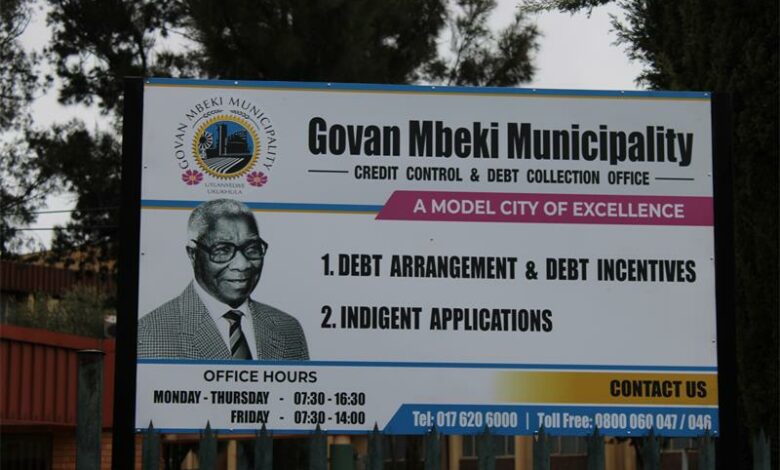
Govan Mbeki Municipality is seeking approval to write off more than R4.3m in overtime overpayments after an incorrectly configured formula in its Payday payroll system resulted in employees being paid the wrong rate for Sunday work.
The report was tabled during the council meeting on August 26. According to this report, the municipality identified cumulative overpayments of R4.3m relating to Sunday overtime processed during the 2024/25 financial year.
The error was identified by the Auditor-General of South Africa (AGSA) during its audit of the municipality’s 2024/25 annual financial statements.
The report states that the Payday system had been incorrectly configured when it was initially implemented and failed to distinguish between employees who ordinarily work on Sundays and those who do not. This distinction is required under Section 16 of the Basic Conditions of Employment Act.
Employees who work on a Sunday are generally entitled to double their normal wage for each hour worked, while those who ordinarily work on Sundays must be paid one-and-a-half times their normal wage.
ALSO READ: Eskom debt interest climbs as Govan Mbeki Municipality battles cash-flow constraints
The incorrect formula meant that certain Sunday overtime payments were automatically calculated at the wrong rate.
The overpayments involved about 3 058 overtime payment transactions across the municipality. However, the exact number of individual employees affected still needs to be confirmed through a detailed payroll reconciliation.
The municipality stressed that there was no evidence that employees had submitted fraudulent overtime claims or manipulated the payroll system.
According to the report, the affected employees had performed approved overtime duties and received payments calculated automatically by the payroll system.
Management nevertheless acknowledged that the incident exposed a weakness in the municipality’s payroll control environment.
While payroll was subjected to monthly controls, these checks mainly focused on employee information, approved overtime hours, payroll inputs, deductions and payment totals.
ALSO READ: GALLERY: Bethal Station Hall, once a landmark, is now a crime and health concern
They did not include detailed and periodic testing of the underlying system configuration and calculation rules.
The municipality subsequently corrected the incorrect Sunday overtime formula in November 2025, in consultation with the Payday service provider.
Written confirmation was received from the service provider that the correct payroll parameters had been configured.
The municipality has also revised its system-change delegation framework, requiring payroll configuration changes to be approved by the relevant head of department before they are implemented. The revised formula was tested against the requirements of the Basic Conditions of Employment Act.
Additional measures include monthly reviews of overtime calculations, exception reports to identify unusual overtime rates, hours and payments, and a requirement that future payroll parameter changes be documented, independently reviewed, tested and formally approved.
Council is being asked to approve the R4.3m write-off for accounting purposes in the municipality’s Annual Financial Statements for the year ended June 30. However, the proposed write-off does not end the matter.
The accounting officer has also been asked to investigate how the incorrect system configuration occurred, including who was responsible for submitting, configuring, testing, approving and monitoring the payroll parameters.
The investigation must also determine whether any recovery can be made from the Payday service provider or another responsible party.
Where warranted, corrective measures, recovery steps and consequence management must be implemented.
The accounting officer will also be required to submit a detailed investigation report to council outlining the findings and corrective actions taken or proposed.
The municipality said the final accounting treatment must still be assessed against the applicable generally recognised accounting practice standards, including whether the matter constitutes a prior-period error requiring retrospective correction or a receivable for which there is no reasonable expectation of recovery.
The report comes as municipalities face increasing scrutiny over financial controls, irregular expenditure and accountability for losses.
Council’s decision on the proposed write-off will determine how the R4.3m is treated in the municipality’s 2025/26 financial statements, while the investigation is expected to establish how the payroll error went undetected for an extended period.