Funding shortfall threatens hyacinth cleanup of Secunda Duckpond
With about 60% of the invasive water hyacinths removed from Secunda's Duckpond, the Groenstrook Gabbas are appealing for donations and volunteers to keep the cleanup going, with costs reaching R20 000 a week.
The Groenstrook Gabbas are appealing to residents and businesses for financial help to keep removing invasive water hyacinths from Secunda’s Duckpond, warning the operation will stop if funding runs out.
The team has already cleared about 60% of the water hyacinths, opening up more areas of the pond. However, the costly operation requires around R2 500 a day, with weekly expenses reaching about R20 000.
The cleanup began on July 13, with specialised equipment, volunteers, and workers tackling the invasive plants. Progress has depended on available funds, so the team hasn’t been able to work every day.
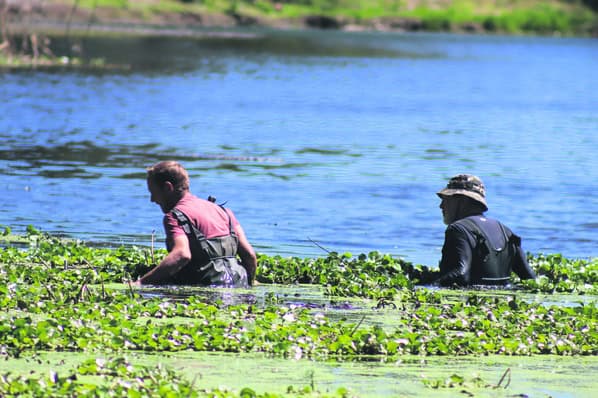
Groenstrook Gabbas member Ruan Lubbe explained that removing the hyacinths is physically demanding.
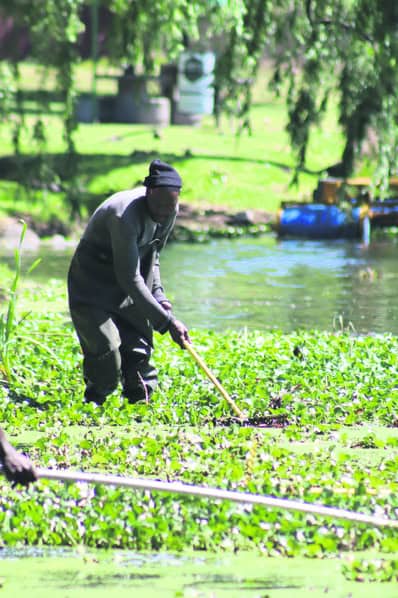
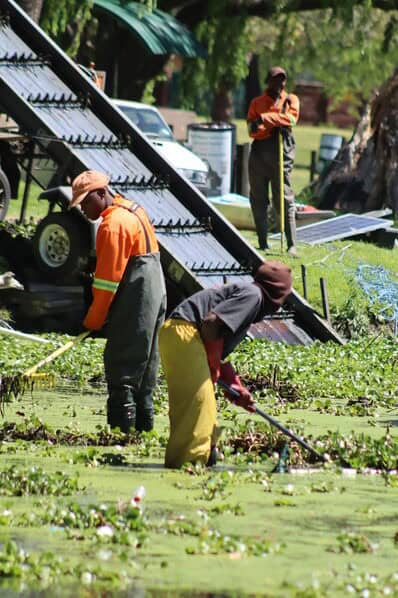
Workers enter the water and use their hands and rakes to move the plants toward the edge, where they load them onto a solar-powered conveyor belt. Workers then transfer the plants onto trailers and transport them to the dumping site.
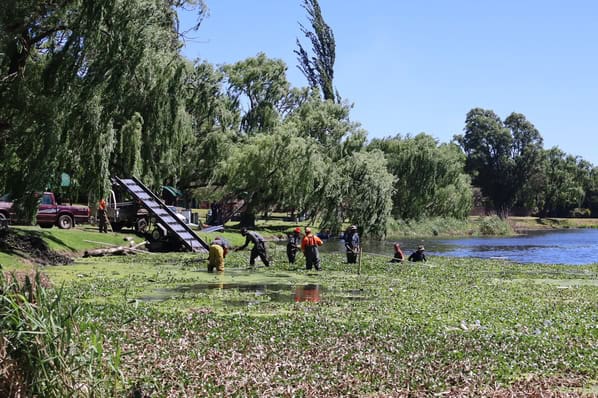
The operation faces several practical challenges, including equipment and rope wear and tear, shallow water with elevated sand beds, thick sludge, and limited access around the pond.
The steam train railway line around the Duckpond, along with limited space, also makes it difficult to manoeuvre equipment.
Lubbe said the team initially focused on Hamerkop Dam, which lies further up the green strip adjacent to the Duckpond.
“Most people like and access the Duckpond. Being a smaller dam, it should have been easier to clean and raise funds,” he said.
Completing the Duckpond cleanup would allow the team to return to Hamerkop Dam, where a larger volume of invasive plants remains.
“We are fighting against the growth of the plants. We have to work quickly, else the plants outgrow us,” said Lubbe.
The weekly cost of approximately R20 000 covers workers’ wages and substantial diesel expenses. A bakkie and trailer transport the removed plants to a collection point in the green strip.
The Govan Mbeki Municipality (GMM) then collects the piles and transports them to the rubbish dump.
The Groenstrook Gabbas are appealing to the public and local businesses for financial support to keep work going at both water bodies.
“Come on Secunda, we need your help,” pleaded Lubbe.
Donations of refreshments or lunch for the workers would also be appreciated. Volunteers are encouraged to bring their canoes to help move the plants towards the conveyor belt.
Maintaining the green strip
Apart from removing water hyacinths, the Groenstrook Gabbas maintain the wider green strip by cutting grass and emptying bins.
“It’s a huge area we maintain. There is not enough money. It is expensive to run lawnmowers and brushcutters,” said Lubbe.
He praised residents who have taken the initiative to cut the grass outside their properties and encouraged others to follow their example or contribute towards supporting those already doing so.
Lubbe also raised concerns about littering and public alcohol consumption around the duck pond.
He said workers must be paid to clean the area every Monday after the weekend, diverting funds that could otherwise go to maintenance and water hyacinth removal.
“We have to pay a team of workers on Mondays just to clean up the mess after a weekend, which could have gone to better use if the public just used the dustbins,” he said.
Lubbe also called on the GMM to enforce its public drinking by-laws.
“The volumes of alcohol people are consuming in front of children playing in a park set a bad example. Allowing children to play in a park covered in litter teaches them that littering is acceptable,” he said.
More hands and equipment needed
One of the biggest challenges is getting more people into the water to help move the plants towards the conveyor belt. The team also needs additional equipment, including winches to pull large masses of hyacinths.
Lubbe said the team is open to suggestions and practical ideas to speed up removal.
“Come try your ideas, bring your boats and help,” he said.
Rope barriers have been installed in the water to help prevent invasive plants from spreading back into cleared areas.
The Groenstrook Gabbas are urging the community to get involved and help protect the duckpond and Hamerkop Dam, ensuring the progress already made isn’t lost.
For more information, follow the Groenstrook Gabbas Facebook page or contact Rika Lamprecht on 082 948 6231 to donate. Groenstrook Gabbas thanked everyone who contributes monthly, saying that without their support, no work would be possible.
ALSO CHECK: Secunda’s duck pond water hyacinth removal gains momentum