WATCH: Help preserve indigenous species at the Kloofendal Nature Reserve
“If AIPs are not controlled in Kloofendal Nature Reserve, we fear that we will lose this critically endangered ecosystem. AIPs will replace our indigenous plants if they are not controlled."
Hidden between the buildings and roads of suburban Roodepoort sits an ecological masterpiece, the Kloofendal Nature Reserve.
Friends of Kloofendal (FroK) is a non-profit organisation of which the members have dedicated their free time to preserving the reserve and educating the community on the plants and animals in it. For years, FroK has been attempting to remove the alien and invasive plants (AIPs) that threaten to overrun the reserve’s indigenous animals and plants, and while they are getting a lot closer to reaching their goal, there is still a lot of work to be done.
Karin Spottiswoode, a FroK member and head of the AIP control team, explained that the reserve has identified 57 declared AIPs on the property, some of which are not only dangerous to indigenous plants and animals, but people as well. While Johannesburg City Parks and Zoo (JCPZ) has sporadically intervened to help in the AIP removal, Karin said they, unfortunately, cannot deploy any more EPWP workers until more AIP funding is allocated in the next financial year.
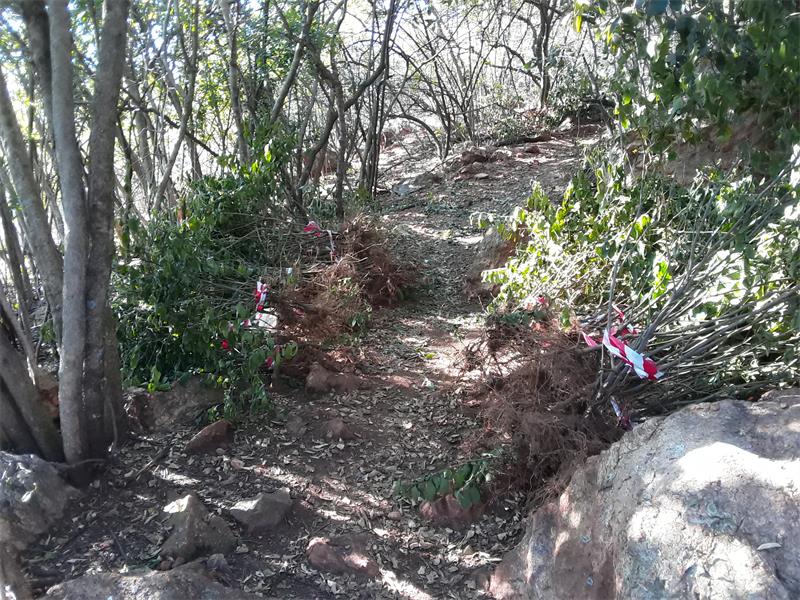
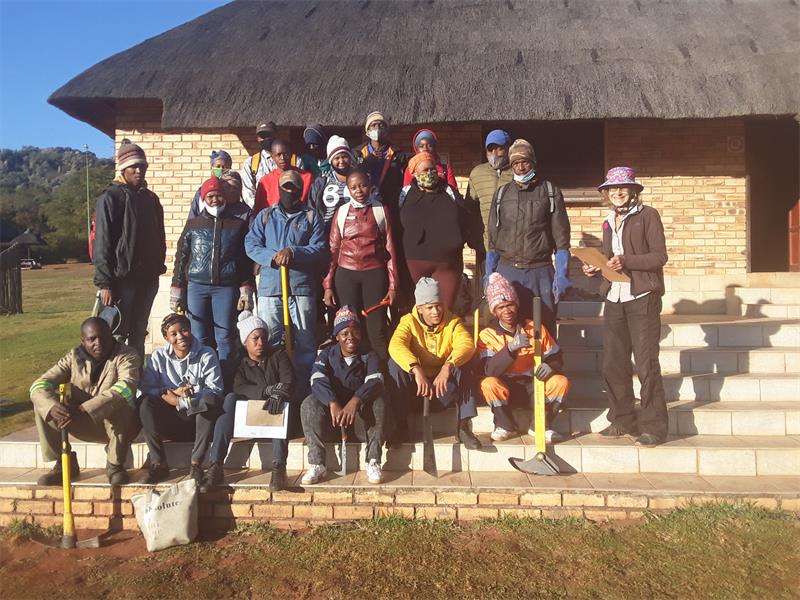
The contracts of the Expanded Public Works Programme (EPWP) workers who were assisting the FroK volunteers with AIP management unfortunately ended in March. In early May, light shone on the AIP control team when three teams of 20 workers were sent to the reserve to help with AIP control, with their salaries being paid by a very generous anonymous donor. Amazing strides were made and hundreds of alien plants were removed, but unfortunately, their three-week contracts have now also come to an end.
Karin expressed her deepest gratitude to all the workers, and FroK, and community volunteers, including the Scouts and the Voortrekkers, who have assisted with the removal of AIPs in the past. She is now appealing to community members to volunteer to assist FroK and the JCPZ AIP control project by removing AIPs on their hikes. The volunteers meet once or twice a week to remove the plants, and FroK teaches them everything they need to know about how to do this.
Volunteers and EPWP workers are taught how to identify the different AIPs, how to differentiate between them and some similar-looking indigenous plants, how to log them, and how to safely remove them. If you would like to join the AIP control team, contact Karin on 079 693 5608.
“If AIPs are not controlled in Kloofendal Nature Reserve, we fear that we will lose this critically endangered ecosystem. AIPs will replace our indigenous plants if they are not controlled,” concluded Karin.
AIPs are dangerous and invade the indigenous environments so successfully for the following reasons:
• AIPs absorb more water and minerals from the soil at the expense of indigenous plants
• Some AIPs exude substances that make water and soil toxic, thereby killing life in the water and surrounding soils; e.g. black wattle (one of the most common AIPs at the reserve) growing in streams can completely eradicate whatever else grows in its vicinity
• Many of the AIPs at the reserve are poisonous, so they can kill the animals that eat them
• Some AIPs exude a poisonous smell which can make people sick