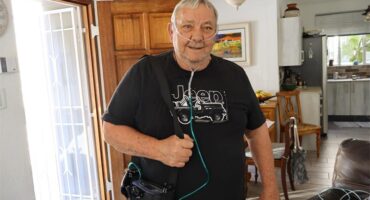
Night-time dialysis offers more freedom
Hospicare Dialysis Centre in Roodepoort recently announced the launch of their night-time dialysis programme.

Imagine having to juggle work, children and other responsibilities, all while having to go to the hospital three times a week to be hooked up to a dialysis machine for around four hours at a time.
Kidney dialysis is a way to replace the normal function of our kidneys if they were damaged temporarily or permanently. According to Hospicare Dialysis Centre Roodepoort’s COO, Delaine Hazelhurst, over two million people worldwide are currently receiving various forms of dialysis or renal replacement treatment to stay alive while awaiting a kidney transplant.
However, only 10% of people who need kidney treatment to live, actually receive it. While many patients receiving dialysis consider themselves lucky, the side effects can leave them feeling tired and exhausted with little energy to complete their daily tasks.
This has been the case for Sarah Sing who has been diagnosed with end-stage kidney disease, and has been a dialysis patient for the past 17 years.
As a working woman, she had to accept the fate of chronic dialysis, whilst entering a gruelling and expensive kidney transplant programme. She realised that she sooner had to own her fate, working in close compliance to her doctor’s suggestions as to avoid the myriad of looming complications that come with kidney failure.
Three times each week, Sarah would show up for work at 10:00 – after spending four hours undergoing in-centre haemodialysis (dialysis). The treatment left her tired while her legs got inflamed and her blood pressure ‘yo-yoed’ out of control.
“It was pretty harsh going to work right after dialysis,” recalled Sarah, a property manager.
“My employer seemed to have very little empathy and time for my physical and emotional trauma, putting more pressure on me to make up those lost hours in plain sight, rather than trusting my ability to manage time responsibly.”
These days her daytime schedule is back to normal. This is because she decided to receive her dialysis treatment during the night at one of few clinics offering it in Johannesburg.
Night-time dialysis or nocturnal intermittent haemodialysis (NIHD) is much longer and slower than a typical four-hour daytime dialysis treatment. Initially she was worried to learn that she had to commit to the seven to eight hour overnight sessions which meant giving up sleeping at home on a Sunday, Tuesday and Thursday night.

Her doctor explained the health benefits to her – the treatment would be much milder on her system, and because the pump speed of the dialysis machine is reduced from around 300 to 200 there was much less stress on the body, leaving you refreshed when you wake up. Longer treatments increase the amount of toxins removed from the blood while better controlling blood pressure and other complications, saving money on medication.
Sarah, now 50, has more freedom during daytime hours for work, for family, and other activities. Her blood results are ‘mostly perfect’. She is also experiencing much less mental and emotional strain knowing she has time to get things done.
She wishes kidney disease on no one as it takes its toll on family, friends and finances. However, for those with kidney disease who want to continue living life as normally as possible, she highly recommends making a paradigm shift towards joining a night-time dialysis programme near home.
In light of Sarah’s success story, Hospicare Dialysis Centre in Roodepoort recently announced the launch of their night-time dialysis programme based on the facts of better overall and more affordable health.
“We really want to provide these patients with a comfy bed and a comfy environment while they are undergoing their treatment. Night-time dialysis has really proven to make its patients more productive and less tired. We want to help create a better lifestyle for those undergoing dialysis,” Delaine said.
Dr Makhotso Moabi, the resident nephrologist and specialist physician at the Hospicare Renal Centre summarised the medical benefits as follows:
• Reduced cardiac strain with LVH regression, leading to improved BP
• Reduced interdialytic weight gain
• Reduced high phosphate
• Improved nutrition, pregnancy outcomes, and neuropathy
• Improved sleep patterns
• Reduced EPO requirements
• Improved sex life
• Improved quality of life, with reduced hospitalisation
Dr Moabi is dedicated to overseeing the night time dialysis programme to the benefit of those suffering from kidney disease in our Roodepoort community.
For more information and to be considered for enrolment for the night dialysis programme, contact Delaine on 082 787 6955 or 010 900 3799, or send an email to renal@hospicare.co.za.