Confidence Reef Mine: History uncovered during mine survey
The first-ever professional survey of the historic Confidence Reef Gold Mine at Kloofendal Nature Reserve was conducted in July.
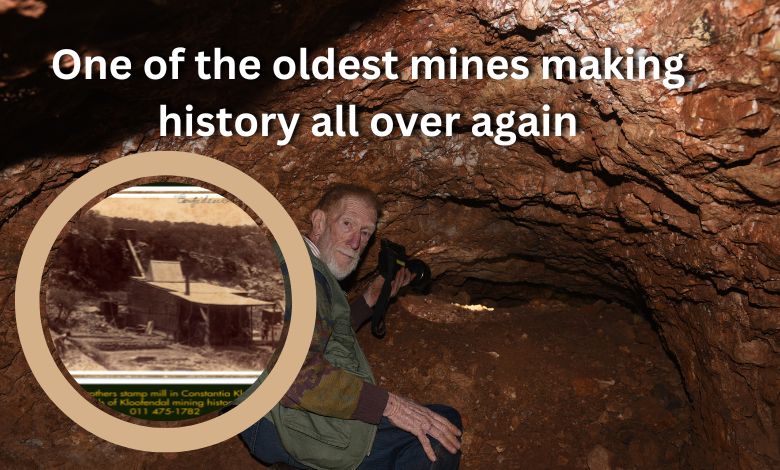
Local author, historian, tour guide, ballroom dancing champion, and Florida Park High School old boy, Rod Kruger, undertook the first-ever modern survey of the historic Confidence Reef Mine, situated in the Kloofendal Nature Reserve, on July 26.
The mine was established by brothers Fred and Harry Struben in the late 1880s.
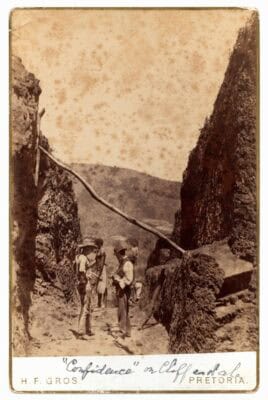
According to Kruger, Fred discovered what he considered to be a payable series of gold-bearing reefs while exploring the Witwatersrand in 1884.
“The first promising area was north of Krugersdorp, near the present Sterkfontein Hospital,” he says.
“He began mining with his brother Harry, and with two partners, they formed the Sterkfontein Junction Mining Syndicate.
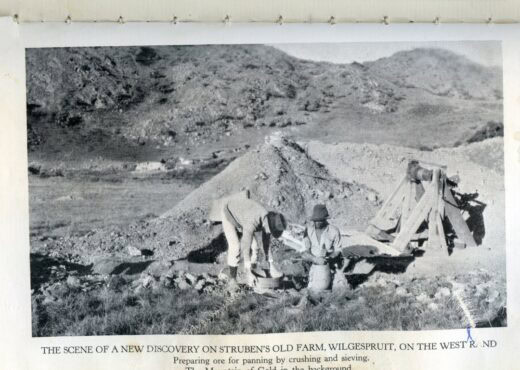
“However, the gold, plentiful on and near the surface, pinched out at about 15 metres. The mine was then abandoned.”
Kruger adds that, after searching to the east, Fred again found a good deposit on Wilgespruit, a farm then owned by Louw Geldenhuys, currently the site of the Kloofendal Nature Reserve.
“In his diary, Fred wrote that he was finding a grain of gold for every grain of sand. Harry, ever the poet and businessman, named it the Confidence Reef Mine.”
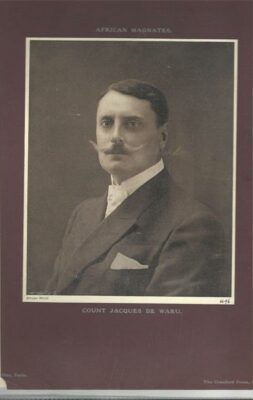
The Strubens and a couple of hardy Zulu workers worked the Confidence Reef Mine until 1888, after which they decided to hire the mine out, possibly to a French nobleman named Count Jacques de Waru, and retire to Cape Town.
Sporadic mining continued thereafter, mostly by a man from Roodepoort, George Brown, who also began mining further south. (Maps as recent as 1955 show his Browns Mine near Horizon, Roodepoort.)
During 1966, Kruger and his friend Douglas Sinclair explored all these old shafts and drives underground. Some of his photos appeared in the then West Rand Times.
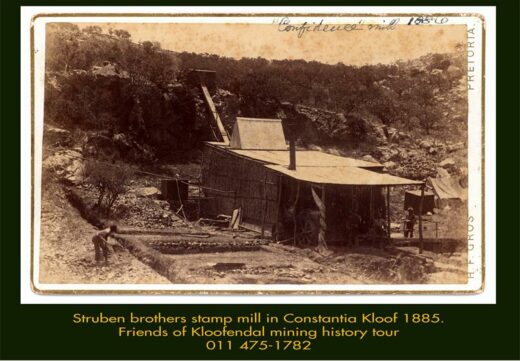
Today, the mine is an important heritage site in Roodepoort, and is fenced and gated, with the public only having limited entrance on conducted tours.
In 2023, massive floods caused a large landslide in the mine adit just in front of the two entrances. The additional entrance is suspected to have been made by miners who conducted some recreational illegal mining on weekends back in the day.
Eighty-eight tons of mostly soft iron slate were removed from the mine by Friends of Kloofendal’s Dr Steve Spottiswood and hired labour.
Kruger, who began conducting tours to the mines in 2009, says he was worried about the condition of the mines underground after the floods. He realised that no modern survey had ever been carried out on them.
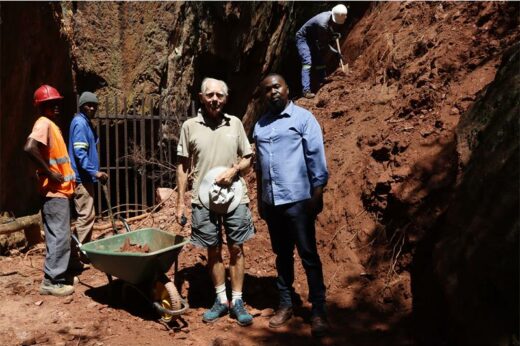
“A month ago, I spoke to the Speleological Exploration Club, whose members did a quick visual survey to check the condition of the two mines,” he says.
“They were satisfied that conditions were safe enough to carry out a survey.”
On Saturday, July 26, a team of three men, Teaghan Stoop, Dirk van Rooyen and Steven Tucker, joined Kruger, descending into the two Confidence Reef mines and several other shafts within the enclosed area.
“A detailed survey was undertaken using measuring instruments for cave survey. This allowed me to photograph the mines in detail.
“The ‘newer’ western mine proved to be quite small, with an entrance gallery easily accessed by tourists, and a vertical shaft of about seven meters deep, gated off.
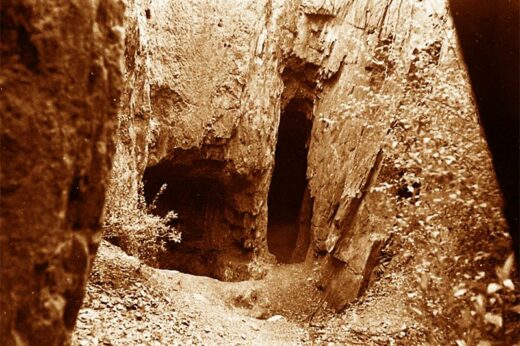
“At the bottom of this shaft, about two meters square, was debris consisting of old logs, tins and rubbish, and a very old 10 litre paint tin with had many pick axe holes and was used as a charcoal brazier for heat, probably by the original miners.
“The mine tunnelled off eastwards for about two meters and dipped about one meter. There were many stone chips from manual digging into soft iron mud, and a schist of a pearl-grey and blue appearance. This schist was also largely present in the walls of the tunnel.
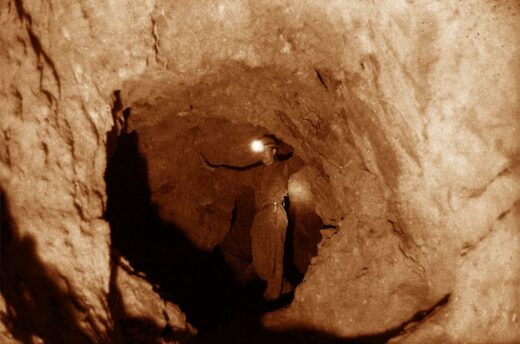
“The original Struben Confidence Reef mine was relatively easy to access but gated off at the surface. A steep incline shaft with a twist in it near the bottom gave way to a large shelf and what should have been the entrance to the drive or tunnel.
“During the big storm three years ago, a large mass of rock, mostly iron shale and water, had poured down the shaft between the bars of the gate. If not for the gate, the shaft would have been plugged solid.
“The top of the tunnel just showed above the rock, and it was flooded to the top. If this water is still there three years later, then the mine must be very impermeable.
“Sadly, no access could be made into the tunnel that my friend and I had explored back in 1966.”
Kruger concludes that the deepest point in the mine was 12 metres.
“All were surveyed, and I hope to have the survey maps soon.”