Experts question identity of trees planted during invasive species event
Specialists have raised concerns that trees planted by Johannesburg City Parks and Zoo at Manie Mulder Adventure Centre may include alien and hybrid varieties.
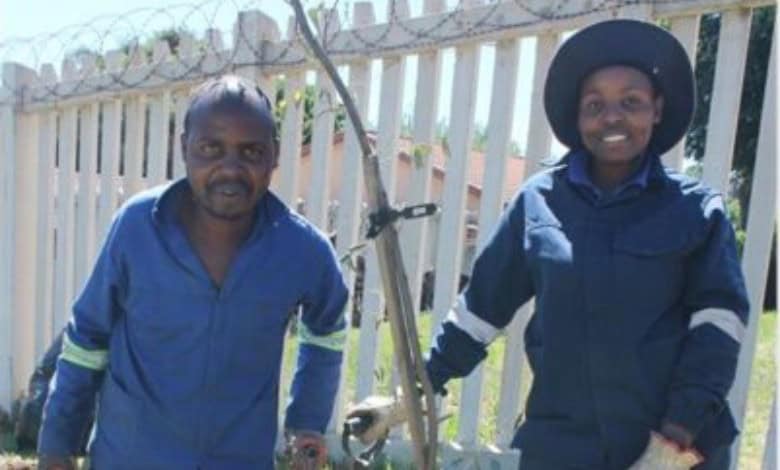
Johannesburg City Parks and Zoo (JCPZ) marked National Invasive Species Week at Manie Mulder Adventure Centre by planting indigenous trees on Thursday, October 22, but specialists warn that several may be alien or hybrid varieties.
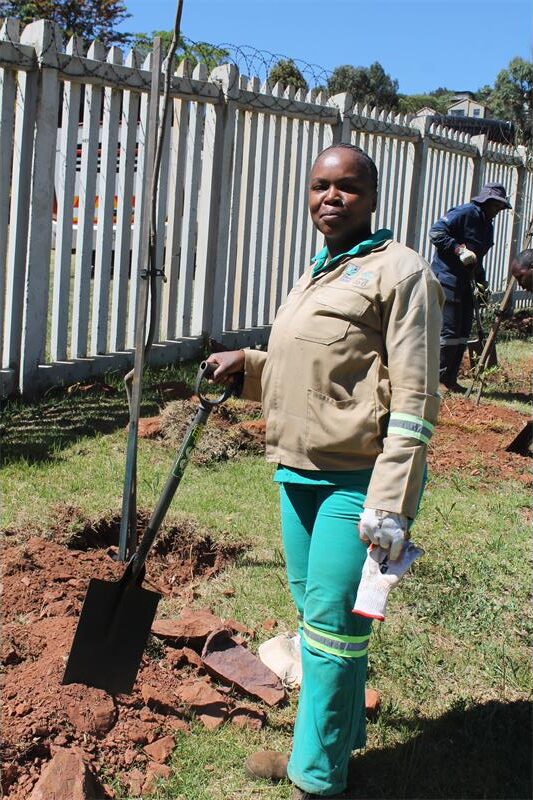
The entity marked the occasion with the removal and poisoning of invasive species, including eucalyptus, black wattle, bugweed, lantana, blackwood, privet, and other species, before planting about 40 indigenous trees consisting of river bushwillow (Combretum erythrophyllum) and white stinkwood (Celtis africana).
Closer inspection of the white stinkwood trees planted revealed a potential problem: The trees did not appear to be the South African variant of Celtis (africana), which is distinguishable from alien Celtis species by, among other traits, its dull green and velvety-textured leaf.
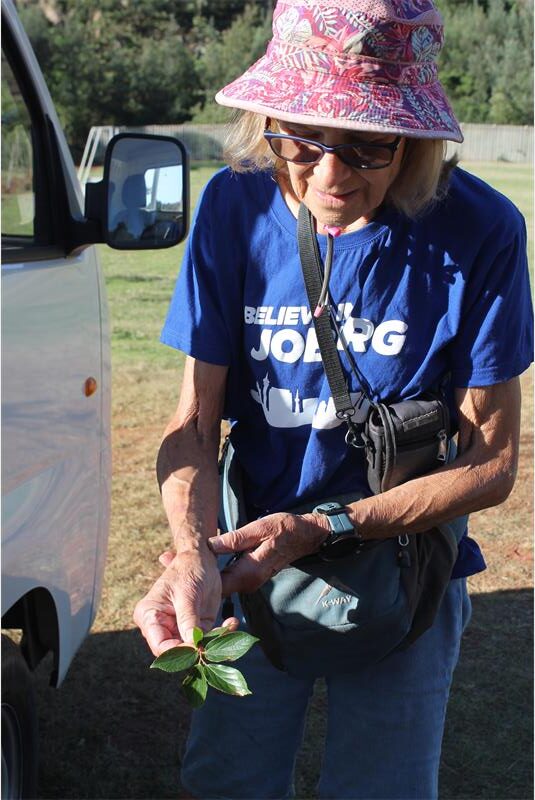
The Roodepoort Record immediately called in the help of Roodepoort’s most well-known authorities on alien invasive plant species (AIPs), Steve and Karin Spottiswoode, who agreed to a meeting at Manie Mulder Adventure Centre later that afternoon.
The Spottiswoodes, upon closer inspection of the trees in question, concurred that only one of the white stinkwood trees planted on the day appeared to be Celtis africana.
According to Karin, author of Invasive Alien and Problem Plants on the Witwatersrand and Magaliesberg – Field Guide, who is highly respected in the realms of alien invasive vegetation identification and control, the trees planted by JCPZ on the day appeared to include both Celtis australis, a declared Category 3 invasive tree, and Celtis sinensis, which is also an alien invasive tree. Karin acknowledged that this has not yet been officially declared as such in South Africa.
Celtis australis, commonly known as a nettle tree or the Mediterranean hackberry, has coarse leaves, typically with a more tapering tip than those of Celtis africana.
Celtis sinensis, also known as a nettle tree or European hackberry, has smooth, shiny leaves, also typically with a more tapering tip.
Karin adds that there are also documented instances of hybridisation of Celtis africana with both the European and Mediterranean species, including at Kloofendal Nature Reserve, where efforts to control the spread of AIPs have been ongoing for years.
Head horticulturist at the Walter Sisulu National Botanical Garden, Andrew Hankey, adds that though this hybridisation appears to be mainly prevalent in cities for the moment, it nevertheless poses a serious threat to the indigenous Celtis africana.
“With hybridisation, you never know which traits the tree will take on,” he says.
“It becomes very difficult to tell the hybrids from the real thing, which may lead to people planting the wrong trees.
“Also, one of the most prevalent ways by which Celtis is naturally distributed is through birds, which eat the seeds and then deposit them back into nature via their droppings. This may very well lead to the spread of the invasive variants and the hybrids throughout the country.”
JCPZ spokesperson Jenny Moodley says the entity takes concerns about tree identification and the protection of indigenous biodiversity seriously.
“We welcome scientific scrutiny and engagement with specialists to establish the facts and guide any corrective action,” she said.
“We invite the specialists concerned to share the scientific names, locations and identification evidence so that these concerns can be assessed jointly.”
She added that while JCPZ employs qualified and experienced horticultural personnel, they also recognise that closely related species and suspected hybrids can require specialist botanical assessment.
“We welcome expert input to resolve disputed identifications and strengthen quality controls where necessary.”
Moodley said the trees in question were sourced within South Africa through both procurement and propagation at JCPZ’s nursery.
“However, local sourcing alone does not establish that a tree is indigenous. The identity and provenance of the stock concerned would need to be assessed against the relevant nursery and supplier records.”
JCPZ is prepared to undertake a targeted assessment with suitably qualified specialists, covering the identified planting sites and relevant nursery stock. Any confirmed misidentification would inform corrective action. Decisions on removal and replacement would follow the findings, applicable requirements and ecological advice.
“Published botanical research recognises hybridisation concerns involving indigenous white stinkwood and related alien Celtis species.
“Whether this affects the particular trees supplied or planted by JCPZ requires verification. JCPZ is prepared to engage directly with the specialists concerned to resolve the matter.
“Any stock confirmed as incorrectly identified would require appropriate corrective action.
“Decisions on withdrawal from planting, removal or disposal would be guided by verified identification, specialist recommendations and applicable requirements.”
Moodley concluded by emphasising that JCPZ’s priority is to protect Johannesburg’s biodiversity and ensure that its tree-planting programme contributes to a healthy, sustainable urban forest.