Food security is a foundation for learning and development
Obesity now rivals underweight as malnutrition's face, and it's rooted in poverty, not abundance, says the Hyde Park-based leading youth development organisation.
The face of malnutrition in South Africa has changed. Once defined by images of children who were too thin, hungry, and visibly undernourished, today’s crisis looks very different and, in many ways, is far more complicated.
As the country marks National Nutrition Week and World Food Day, organisations like Afrika Tikkun, based in Hyde Park, are witnessing first-hand how South Africa’s nutrition challenges have evolved, and why a comprehensive approach is essential.
Read more: From Facebook foodie to cookbook author
Nellie Zembe, Group Head of Monitoring, Evaluation, Research, and Learning at Afrika Tikkun, said, “Malnutrition doesn’t only look like an underweight child anymore. We are seeing children who are overweight or obese because they are not eating the right foods. Families are filling stomachs, not nourishing bodies.”
Zembe added that according to Unicef’s latest global report, obesity has overtaken underweight as the most common form of malnutrition among school-aged children and adolescents. South Africa faces a growing double burden, poor-quality diets fuelling both malnutrition and obesity within the same communities.
“The link between poverty and obesity is direct. When food prices rise, the first thing families drop is nutritional value. Many rely on cheap, energy-dense, starch-heavy meals that fill hunger gaps but offer little nutrition.”
Also read: Food without emotion is just fuel – chef
She pointed out that at Afrika Tikkun, a leading youth development organisation, food security is woven into its unique Cradle-to-Career 360° model, a comprehensive approach spanning early childhood through employment.
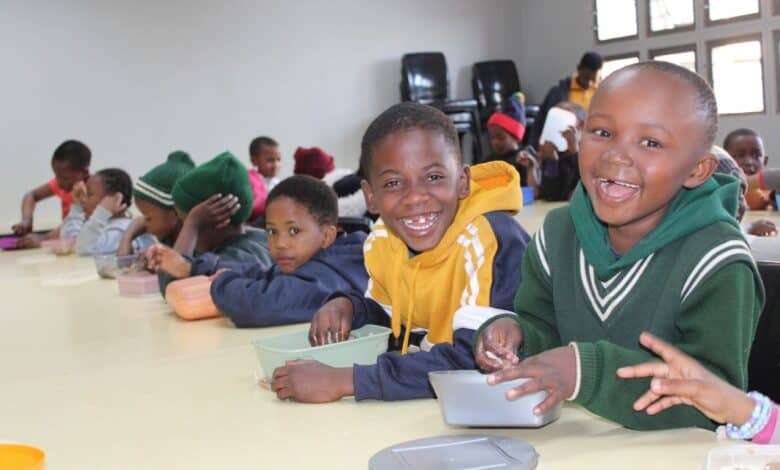
“The organisation’s nutrition programme serves over 5 000 children and youth annually across five centres. Young children in the Bambanani Early Childhood Development (ECD) programme receive up to four meals a day, while school-going children receive two. Each meal is carefully planned to include fruits, vegetables, and protein, directly supporting cognitive development and school readiness.”
She explained that these aren’t just feeding programmes.
“We monitor every child’s BMI twice a year and integrate nutrition education throughout our academic support, ensuring children understand the connection between what they eat and how they learn and thrive.”
Follow us on our WhatsApp channel, Facebook, X, Instagram, and TikTok for the latest updates!