Thirty Years of the South African Constitution – The Path Toward Unity
The path toward unity is not simply about remembering the Constitution’s promises, it is about realising them.
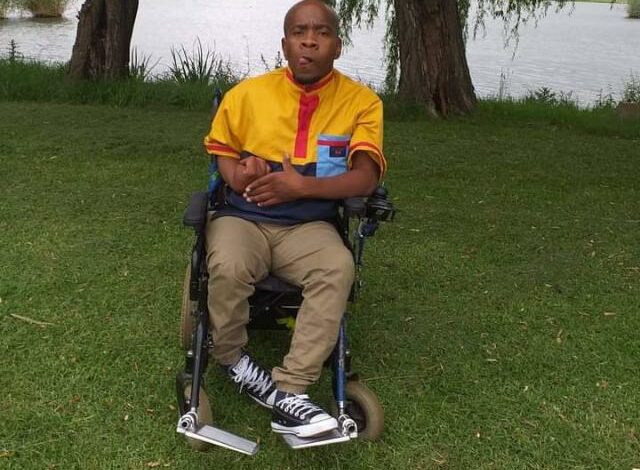
SEDIBENG.- 2026 marks three decades since the adoption of South Africa’s democratic Constitution, a document celebrated globally as one of the most progressive charters of human rights. It promised equality, dignity and freedom for all, including persons with disabilities.
Yet, the lived realities of disabled South Africans reveal both the transformative power of constitutional democracy and the stubborn persistence of apartheid-era divisions. The Constitution opened doors, but many remain locked by systemic inequality, fragmented advocacy and the unfinished business of dismantling apartheid’s social architecture.
During apartheid, disability services were deeply racialized. Access to healthcare, education and social support for disabled people was determined not only by impairment but by race. White disabled South Africans often had access to specialized schools, rehabilitation centers and welfare grants, while Black disabled South Africans were relegated to underfunded institutions or excluded altogether.
This entrenched inequality meant that disability was experienced differently depending on one’s racial identity, with Black disabled communities bearing the brunt of systemic neglect.
Beyond material deprivation, disabled people lived under a form of invisible oppression. Disability was rarely considered in broader liberation struggles, leaving disabled people doubly marginalized, by race and by impairment.
Their voices were seldom heard in political discourse, and their struggles were overshadowed by the larger fight against racial apartheid. This silence reinforced the notion that disability was peripheral to freedom, rather than central to justice.
Moreover, disability was framed through the lens of charity rather than rights. Black disabled communities were often dependent on churches or NGOs, with little state support. This charity model reinforced paternalism, positioning disabled people as passive recipients of aid rather than active citizens entitled to dignity and equality. The apartheid state’s neglect entrenched dependency and denied disabled people the opportunity to define their own futures.
The advent of democracy brought significant shifts. The Constitution enshrined equality and prohibited discrimination on the basis of disability, marking a historic departure from the charity model toward a rights-based framework. This legal recognition was a milestone, signaling that disabled people were full citizens whose rights deserved protection.
Policy frameworks followed suit. Initiatives such as the Integrated National Disability Strategy of 1997 and South Africa’s alignment with the UN Convention on the Rights of Persons with Disabilities in 2007 created a roadmap for inclusion. These frameworks provided a vision of integration and equality, though implementation has often lagged behind aspiration. The gap between policy and practice remains one of the defining challenges of South Africa’s disability rights journey.
Education and employment remain areas of uneven progress. While inclusive education policies exist, many disabled learners, particularly in rural and township schools, remain excluded from mainstream schooling. The persistence of segregated special schools reflects the difficulty of dismantling apartheid’s legacy. Inclusive education requires more than policy, it demands investment in infrastructure, teacher training and a pedagogy that affirms diversity.
Employment opportunities are similarly scarce. Disabled people face some of the highest unemployment rates in the country, with workplace discrimination and inaccessible environments compounding exclusion. Economic justice remains elusive, as disabled South Africans are often excluded from entrepreneurship funding, vocational training and labor market participation.
Healthcare and social support have improved, but disparities persist. Disabled people in urban centers often benefit more than those in rural areas, reflecting the geography of inequality. Access to rehabilitation, assistive devices and specialized care remains uneven, leaving many disabled South Africans without the support they need to thrive. The uneven distribution of resources underscores how apartheid’s spatial inequalities continue to shape access to services.
Thirty years later, apartheid’s divisions have not disappeared, they have merely transformed. White disabled South Africans often retain generational advantages, better access to private healthcare, education and networks, while Black disabled South Africans continue to face systemic exclusion. This racial divide underscores how historical privilege continues to shape present realities.
Intersectional barriers deepen these inequalities. Gender and disability intersect in ways that compound discrimination. Disabled women, particularly in rural areas, face heightened challenges in education, employment and safety. Their experiences reveal how disability cannot be understood in isolation but must be analyzed alongside race, gender, class and geography.
The disability movement itself remains fragmented. Advocacy is often divided along race, class and impairment lines, weakening collective bargaining power and perpetuating inequality. Without unity, the movement struggles to challenge systemic exclusion effectively, leaving disabled people vulnerable to ongoing marginalization. Fragmentation dilutes political influence and undermines the Constitution’s promise of collective dignity.
To honor the Constitution’s promise, South Africa must move beyond symbolic inclusion toward substantive equality. Disability must be reframed as central to democracy rather than treated as a peripheral issue. Courts and policymakers should interpret equality clauses with a disability lens, ensuring proactive enforcement that addresses systemic barriers.
Unity across race, gender and disability is essential. Coalitions that cut across racial and impairment divides can foster solidarity rather than fragmentation. Intersectional leadership must be encouraged, with disabled women, disabled youth, and disabled LGBTQ+ voices placed at the center of advocacy efforts. Only through inclusive leadership can the movement reflect the diversity of disabled people’s experiences.
Education must be transformed to dismantle apartheid’s legacy. Investment in inclusive education infrastructure in rural and township schools is critical, alongside teacher training that embraces diversity. Inclusive education is not merely about access but about reshaping pedagogy to affirm the dignity of disabled learners.
Economic justice is another cornerstone. Employment equity measures must ensure that disabled people are not only hired but supported to thrive in workplaces. Targeted entrepreneurship funding for disabled South Africans, especially women and youth, can create pathways to independence and empowerment.
Representation in governance must also be strengthened. Municipalities and national government should institutionalize disability desks with real power, not symbolic roles. Disabled people must be represented in policymaking spaces, ensuring that lived experience informs decisions. Representation is not a matter of tokenism but of democratic legitimacy.
Thirty years after the Constitution’s birth, South Africa stands at a crossroads. The promise of equality for disabled people has been partially realized, yet apartheid’s racial divisions and systemic exclusions persist. To move forward, the Constitution must be interpreted and implemented in ways that are explicitly pro-disability, uniting disabled South Africans across race, gender and impairment. Only then can the nation fulfill its vision of a democracy that truly belongs to all who live in it.
The path toward unity is not simply about remembering the Constitution’s promises, it is about realising them.
It is about transforming disability from a marginal issue into a central pillar of democratic justice. And it is about ensuring that thirty years from now, South Africa can look back not only on a progressive Constitution but on a society that has truly lived up to its ideals.
Lucky Tumahole – Disability Advocate and Political Writer