
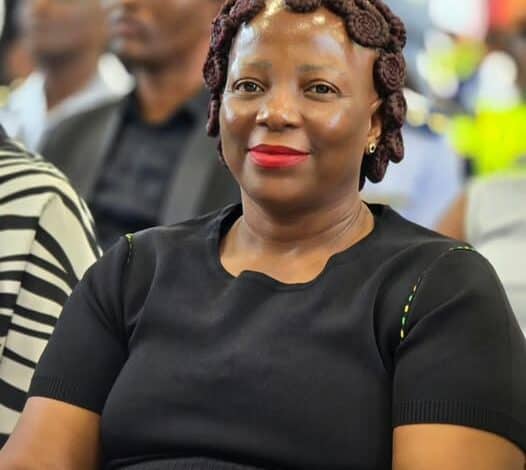
Sedibeng African National Congress Women’s League (ANCWL) Secretary Disebo Tlebere, who is also the Chairperson of GPL Portfolio Committee on Sport, Arts, Culture and Recreation writes:
Zacharia Nale’s editorial in your publication titled, “History is going to judge us harshly!” dated 24 March 2026, refers.
Having read the opinion piece several times, I am convinced that Nale should retain his day job as a local sport writer and stay away from political commentary as he is clearly out of his depth.
It is incorrect…
To suggest that Human Rights Day is “becoming a thing of the past”; simply because the day was used by the African National Congress (ANC), and its alliance partners, to raise its voice against the rising political noise from the United States Government and its hawkish president who seem hellbent on attacking and undermining South Africa’s sovereignty and ruling us from Washington, is not only incorrect but very much out of touch with historical facts.
Human Rights Day, 21 March, is rooted in the tragic events of Sharpeville in 1960 where the racist apartheid regime unleashed its violent security apparatus against thousands of peaceful anti-dompas marchers who had gathered at the local police to raise their voice against a system which was determine to control every facet of their lives from where they lived, and worked, and even the people they could fall in love with.
The National Party, a very close ally of the racist and oppressive governments such as the US and Israel, through the pass system, wanted to deny the people of Sharpeville, and the African majority throughout South Africa, the right to free movement; the right to assemble and the right to live in a democracy where their voices would be heard.
Racist rulers were determined…
Through the baton and the bullet, Pretoria’s racist rulers were determined to ensure that the African majority never lived to see the dream of a free South Africa as espoused in the much-heralded Freedom Charter of 1955. At the heart of that struggle was the right to decide how we would run our affairs. In short, the people of Sharpeville did not march so that they could have a commemoration, as Nale suggests.
Rather the thousands who converged at the Sharpeville police station marched so that they, and future generations after them, could live in a country where no foreign power, be it in the form of the National Party or Donald Trump’s America, could subvert the will of the people for their own selfish interests. They marched to tell the bullies in Pretoria that our human rights were sacrosanct and would not be handed over to anyone without a fight.
Human Rights Day is not owned by a single party
It is in that spirit that in 2026 we continue to fight for our rights as those gallant marchers of 1960. It is in that spirit that we, as South Africa, have, since 1994, commemorated the sacrifices of the people of Sharpeville; not as the ANC but the entire political spectrum. We do that with the knowledge that Human Rights Day is not owned by any single political formation. It belongs to the Pan Africanist Congress (PAC) as it belongs to the Economic Freedom Fighters (EFF).
It belongs to all of us and is thus a national commemoration. It is observed annually by the democratic government of South Africa, led by the ANC, and attended by government officials, community members, civil society, and all who value the constitutional democracy we have today.
Every year, the government marks this day through official programmes, reflections, and public participation. These commemorations are not partisan rallies. They are national moments of remembrance, reflection, and recommitment. To suggest that the ANC has abandoned this responsibility because it did not send its ‘big wigs’ to Sharpeville on 21 March is simply not true.
In fact, the EFF held its own Human Rights Day commemoration in Johannesburg and its Commander-in-Chief, Julius Malema, was not present in Sharpeville. Neither was the mayor of the Democratic Alliance-run Midvaal. Yet Nale chooses to spew his bile only against the ANC leadership.
The struggle did not end in 1994
What Nale deliberately ignores, for some reasons only known to himself, in this narrative is that the struggle for human rights did not end in 1994. It continues. And it takes different forms depending on the challenges of the time. The march in Johannesburg, framed as a defence of sovereignty and democratic gains, must be understood in that context. It was not a replacement for Human Rights Day. It was an expression of it.
Defending sovereignty is not separate from defending human rights. The right to self-determination, the protection of democratic institutions, and the safeguarding of constitutional gains are all part of the same struggle that the people of Sharpeville died for.
To reduce participation in that march to “snubbing history” is to misunderstand the continuity of struggle. The same movement that led the fight against apartheid continues to mobilise society to defend democracy against new and evolving threats. That is not betrayal. The ANC has been consistent.
It is also important to be factual on attendance. Government representation was present. The Premier’s office was represented. MEC of Sports, Arts, Culture and Recreation was present. All delegations invited were present. The government did not withdraw from the commemoration. Nor did the African National Congress and all its structures.
Human Rights Day belongs to the people
But beyond officials, Human Rights Day is not validated by the presence of “top brass.” It is validated by the people. It belongs to communities like Sharpeville, Bophelong, Evaton, Ratanda and all those who carry the memory of loss and resistance. No political party can claim exclusive ownership of that history, including those now attempting to do so.
The pain expressed about past tragedies, including the loss of young lives in our communities, is real and must be respected. But it should not be used to draw false conclusions about present-day commitments. Honouring those lives requires more than symbolic presence. It requires more than wreath-laying ceremonies and speeches. It requires ongoing work to defend rights, strengthen institutions, and build safer communities.
The claim that the ANC “cannot be trusted” because of one programme choice ignores decades of consistent commemoration, policy, and legislative work that has entrenched human rights in South Africa. It also ignores the fact that democracy itself is sustained through both remembrance and active defense.
Human Rights Day remains important
History will indeed judge us.
But it will not judge based on headlines or selective outrage. It will judge based on whether we preserved the democratic gains won through sacrifice; whether we defended sovereignty, and whether we continued the work of building a just society.
Human Rights Day remains as important as ever. And so does the responsibility to defend the democracy that was born from it.
And Nale, an old hand in the Ster newsroom, should know that. Instead of celebrating local boy Relebohile Mofokeng’s hat-trick heroics this past weekend, the Ster sport writer chose to jump deep into matters he clearly lacks understanding of.
- This is a letter written by Sedibeng African National Congress Women’s League (ANCWL) Secretary Disebo Tlebere, who is also the Chairperson of GPL Portfolio Committee on Sport, Arts, Culture and Recreation. She writes in response to the article/comment written by Sedibeng Ster Journalist, Zacharia Nale, earlier this week.