Promoting Disability Inclusion in South African Democracy
Disabled people play a huge role in the community.
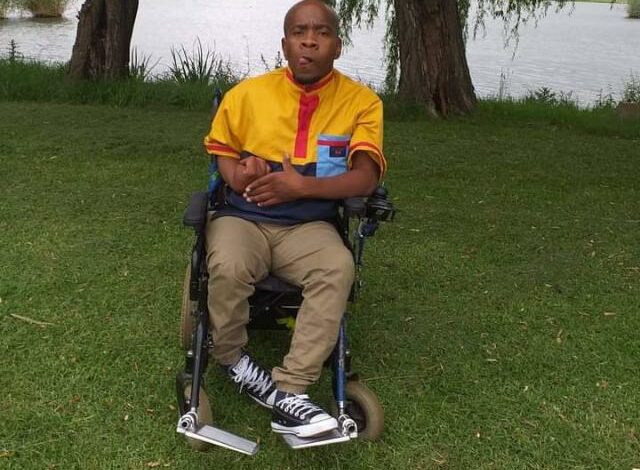
The history of disabled people’s participation in democratic processes is deeply tied to the struggle for recognition, dignity and equality.
In South Africa, the right to vote was not simply a constitutional guarantee but a hard-won affirmation that disabled people are citizens whose voices matter. For decades, disabled communities were marginalized, excluded from education, employment and political representation.
Yet, their insistence on voting was not only about exercising a right but about claiming visibility in a society that often rendered them invisible. Voting became a declaration of existence, a way to challenge stereotypes and assert that disability is not a limitation to civic participation but a vital perspective in shaping the nation’s future.
Disabled leaders bring lived experience into policy-making
Equally important is the reason disabled people must not only vote but also be voted into positions of power. Representation is not symbolic, it is transformative. When disabled leaders occupy public office, they bring lived experience into policy-making, ensuring that laws and institutions reflect the realities of accessibility, inclusion and justice. Their presence disrupts tokenism and forces political parties to confront the structural barriers that perpetuate inequality.
Disabled representatives embody the principle that democracy thrives when all voices are heard and their leadership ensures that South Africa’s vision of a non-racial, non-sexist and disability-active society is not aspirational rhetoric but a practical reality.
The Independent Electoral Commission (IEC), as the regulator of elections, holds authoritative power to shape this reality. By determining the percentage of disabled public representatives per political party, the IEC can move beyond procedural neutrality to active promotion of inclusion. This is not interference but stewardship, ensuring that democracy reflects the diversity of its people.
Disabled people can guide democracy
The IEC’s role is therefore constitutional and moral, to guarantee that disabled citizens are not relegated to the margins of political life but are central to decision-making. Such decisions can transform South Africa into a truly inclusive democracy, one that measures prosperity not only in economic terms but in the dignity and participation of all its people.
History offers powerful examples of disabled leadership that reshaped nations. Franklin D. Roosevelt, despite having polio, led the United States through the Great Depression and World War II, proving that disability does not diminish capacity for vision, resilience or effective governance.
His leadership stands as a testament to the fact that disabled people cannot only participate in democracy but can guide it through its most challenging moments. South Africa, too, must embrace this truth. Disabled citizens should be encouraged to vote, to stand for office and to claim their rightful place in shaping the country’s destiny. Democracy is incomplete without them and their active participation is the key to building a prosperous, inclusive and just society.
Lucky Tumahole is a Disability Advocate and Political writer, he writes here in his personal capacity.