
Youth Leadership and the Politics of Identity
Young disabled activists are reshaping the terrain of leadership.
SEDIBENG.- Youth, when treated as a philosophical category, is not simply a matter of age but a condition of openness, imagination and resistance.
It is a state of mind that refuses to be bound by resignation. Yet, this very concept can be manipulated. Youth is often politicised as a symbol of vitality, while simultaneously used to marginalise those deemed “too old” or “too different.” In this way, youth becomes a double-edged tool, celebrated as renewal but also wielded to entrench ageism and elitism.
Elitism emerges when only certain images of youth such as urban, non-disabled, fashionable and so on are elevated, while others are erased.
Ageism manifests when societies valorise youth as inherently superior, dismissing the wisdom of older generations. Elitism emerges when only certain images of youth such as urban, non-disabled, fashionable and so on are elevated, while others are erased. This exclusion is not accidental rather it reflects deeper structures of privilege that define who counts as “the future.”
To qualify this elitism is to recognise how the cult of youth can silence disabled voices, rural voices and those whose identities resist conformity to dominant ideals of vigor and speed.
Youth is not about physical capacity but about vision, courage and the ability to mobilise communities.
In response, young disabled activists are reshaping the terrain of leadership. They insist that youth is not about physical capacity but about vision, courage and the ability to mobilise communities. Their activism reframes identity itself, not as deficit but as difference, not as limitation but as a source of political imagination. By doing so, they dismantle the elitist notion that leadership must look a certain way or move at a certain pace.
Policy advocacy is central to this transformation.
Young disabled leaders are pressing for inclusive education, accessible infrastructure and recognition of disability rights as human rights. They are not merely demanding entry into existing spaces;, they are redefining those spaces altogether. Their interventions remind policymakers that accessibility is not charity but justice and inclusion is not accommodation but transformation.
Leadership demonstrates that youth is not only about inheriting the future but about dismantling the structures that deny futures to some.
At the level of community mobilisation, these activists are building solidarities across gender, race and class. They are forging alliances that challenge the rigidity of traditional movements, insisting that liberation must be intersectional. Their leadership demonstrates that youth is not only about inheriting the future but about dismantling the structures that deny futures to some.
True power of youth lies not in the body’s age but in the mind’s refusal to surrender.
Philosophically, their work reclaims youth as a radical state of mind, a refusal to accept exclusion, a determination to craft identities that are fluid, intersectional and unapologetically political. In their hands, youth becomes a force of liberation rather than a tool of elitism. They remind society that the true power of youth lies not in the body’s age but in the mind’s refusal to surrender hope.
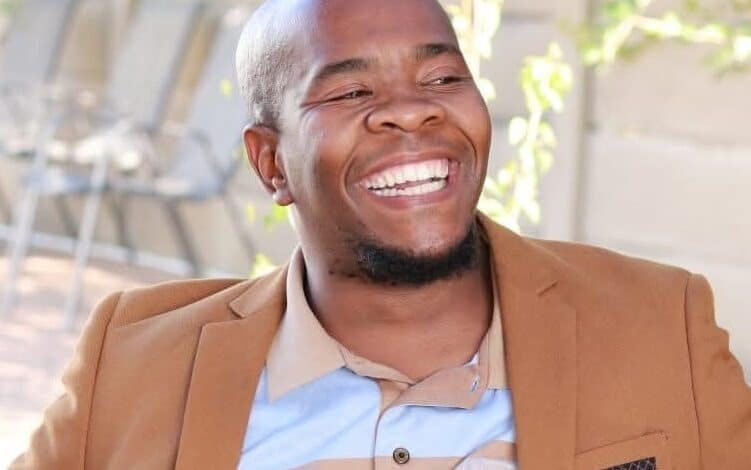
Lucky Tumahole – Disability Advocate and Political Writer