
Down side to St Lucia drought relief
With the breaching of the river mouth thousands of litres of fresh water will be lost.
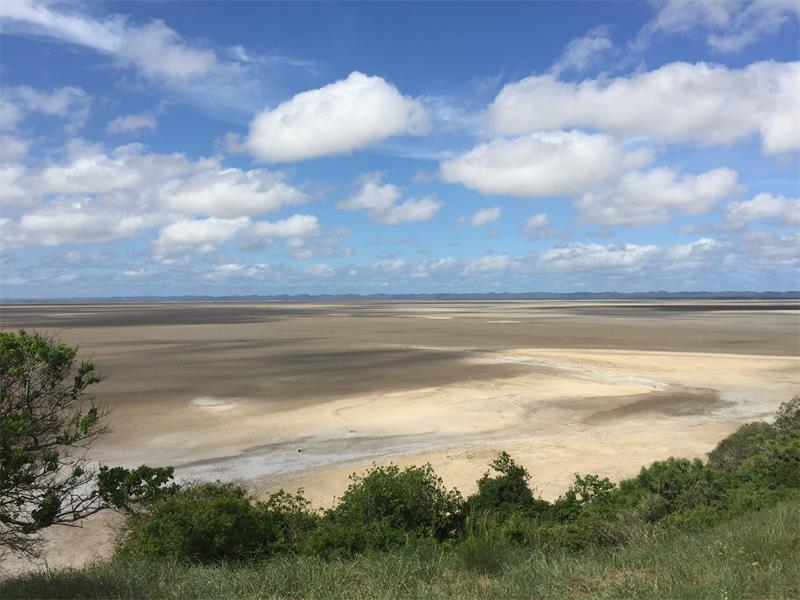
ALTHOUGH vitally needed after the prolonged drought, thousands of litres of fresh water now entering the St Lucia Estuary will flow out to sea.
The iSimangaliso Wetlands Park has been compelled by an interim court order to breach the uMfolozi River mouth.
With 90 percent of Lake St Lucia’s surface water dried up, the fresh water currently flowing into the estuary from the uMfolozi River as a result of recent rain is seen as a godsend. Management reports that about 315 square kilometres of the lake beds is exposed and barren, ravaged by the drought. In places, what little water is left is five times saltier than the sea.
“Between March 12 and 14, some 6.2 billion litres of fresh water entered the Lake St Lucia system, following rains both in the catchment and locally. This amounts to an average of 2.5 billion litres per day and provides an important buffer against the possibility of continued low rainfall over the next six months.
Given that 60 percent of Lake St Lucia’s fresh water comes from the uMfolozi, these are the first significant flows of water into the system since December last year. It is hoped that some of the negative impacts of the drought will be reduced,” said iSimangaliso chief executive Andrew Zaloumis.
On Tuesday, March 15, park officials were overjoyed to see water forcing its way into the 20km long Narrows. Soon the 50km long main body of the lake had received its first influx of fresh water from the uMfolozi River in six months.
Mr Zaloumis said fresh water in the main lake would have a tangible positive impact for the 15 000 rural households whose livelihoods relied on Lake St Lucia. It would also have a positive effect on the lake’s 800 hippo and 1 200 crocodiles, both listed as threatened species.
Unfortunately, the happy story has a down side. On March 12, iSimangaliso received notification from the sugar association, UCOSP. According to an interim court order made in October last year and valid until May, when the water levels reach a certain critical level the association would be allowed to breach the uMfolozi River mouth. iSimangaliso officials were sad to hear that the critical level had been reached and that excavators had been deployed to the beach. Thousands of litres of fresh water would soon be lost to the lake system.
“We are extremely concerned about the possible adverse ecological impacts to Lake St Lucia from the breaching of the uMfolozi River to the sea, as well as the possible knock-on effects on the livelihoods of many people, particularly in light of the poor winter rain that has been forecast. Last year was recorded as the lowest rainfall year since 1920,” Mr Zaloumis said.
The estuary is Africa’s largest estuarine system and a focal point of the UNESCO World Heritage Listing. More than 50 percent of all water birds in KwaZulu-Natal feed, roost and nest in this estuary. Of the 155 fish species that have been recorded in the Lake St Lucia estuarine system, 71 species use St Lucia as a nursery area and at least 24 of these are important in marine line fisheries. Harvests of raw materials is estimated to be worth around R7,5 million a year. The contribution of the estuarine floodplain areas to livestock grazing is estimated at R3,6 million per year.
Tourism related to the St Lucia estuary area employs an estimated 1 291 direct full-time equivalent jobs and 6 924 indirect jobs. There are about 510 000 visitors to the park every year of whom 42 percent are foreign visitors who spend R46-million on an estimated 157 000 tourism activities from local operators.
Mr Zaloumis said iSimangaliso had not been idle in working towards the hydrological restoration of Africa’s greatest wetland. Cyclone Engineering, the company awarded the contract to remove the dredge spoil, was establishing site. This was arguably the biggest wetland rehabilitation in the world and a milestone in the healing of the Lake St Lucia Estuary.
HAVE YOUR SAY
Like our Facebook page, follow us on Twitter and Instagram
For news straight to your phone, add us on BBM 58F3D7A7 or WhatsApp 082 421 6033


