Forgiveness sets convicted drug mule free
Vanessa spent more than 16 years in a Thai jail.
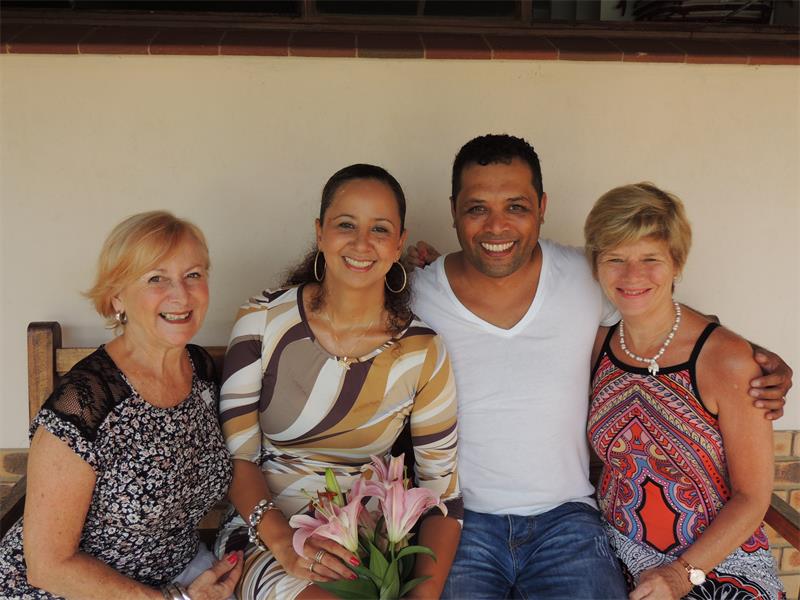
WITH her beautiful smile and engaging manner, it was hard to imagine that the attractive, self-confident and articulate young women at the podium had endured 16 and a half years in a jail in Thailand.
Vanessa Goosen, the guest speaker at the February Tuesday Rostrum lunch, explained how she was conned into becoming a drug mule, how she was caught and how the people who had used her had abandoned her and left her to her fate. Her jail sentence, originally 35 years, actually came as a relief. She was caught with heroin and could have received the death sentence.
All this is more than enough reason for Vanessa to hate those who destroyed her life, but central to her talk was a simple yet profound message.
“Forgive,” she told her listeners and she proceeded to explain how forgiveness and the letting go of hatred and bitterness had set her free.
In 1994, the future looked bright for Vanessa, a beautiful young woman who made the semi-finals in the Miss South Africa contest that year. She also had a thriving business, a men’s fashion store, which she co-owned with her business partner and boyfriend. They had a friend who was a particularly natty dresser and he told Vanessa that he shopped in Thailand. He persuaded her to visit Thailand to buy stock for her shop.
A young and an inexperienced traveller, she was so excited about her first trip abroad and about indulging in a buying spree in Thailand. While she was there she received a call from her boyfriend’s friend who asked her to contact his brother and collect and bring home some engineering books for him.
Vanessa didn’t think anything of it. Then, at the airport on her way home, she was searched. To her amazement, the custom officers found a white powder hidden in the books.
“I was worried it as cocaine but when they tested the powder and said it was heroin, I didn’t even know what that was, so I was relieved,” she explained. That was when she was shown a poster with the chilling words: ‘Heroin = death sentence’.
Her listeners were horrified as she told her grim story of how she was treated at the airport and of her harrowing experiences while she was awaiting trial. Alone in a country where everyone spoke a language she did not understand and with the death sentence hanging over her head, she was utterly overwhelmed by fear and confusion. She also had another concern. Vanessa was pregnant and had to think of her unborn baby.
At her trial, all conducted in Thai, judgement was deferred because of the pregnancy and she was taken to the Women’s Correctional Institution. This harsh environment would be her home for the next 16 and a half years. Existing in the jail, where you slept on the floor, where ablution facilities were utterly primitive and where you had to pay for everything from food to medication, was a constant struggle for survival. She worked during the day and the pittance she received for this barely covered the daily necessities.
There was not a dry eye in the hall as Vanessa described the worst part of her ordeal, the pitiless attitude of medical caregivers when she delivered her baby and, three years later, the heartbreak of sending her daughter back to South Africa with dear friends. She described the agonising goodbyes, the final kisses through the bars then the screams of her child, terrified by the outside world she had never seen.
It was later, though, when she finally felt she could not go on. Friends and family raised funds to pay for the legal work involved in asking for a royal pardon and she was sure that she would obtain one on humanitarian grounds. When it was turned down, she stopped eating, couldn’t sleep, suffered panic attacks and was plunged into a life-threatening state of depression.
It was a fellow prisoner who saved her. She reminded Vanessa that she had promised her daughter she would see her in South Africa and that, by giving up the fight, Vanessa was being selfish. Vanessa saw she had to give up the burden of the hatred she felt for those responsible for her plight. To forgive them would set her free of the power they still had to hurt her.
Gradually, her sentence was reduced, and after all those anguished years she found herself stepping out of prison, on her way to the airport. Even then, her home-coming was touched with much sadness. Her friend who had looked after her daughter had died two weeks before Vanessa returned home.
Her much-prized freedom has brought with it complications and difficulties. She had to build up a relationship with her 16-year-old daughter, a difficult proposition when they were almost strangers. She also had to help her friend’s husband and children deal with their grief.
All the same, she has managed to pick up the pieces. A job with an NGO, where she met her husband Rupert, a book on her experiences and a reputation as an inspiring speaker are among the successes she has notched up. Perhaps her greatest achievement is her daughter’s entry into university.
Vanessa told her audience she spoke to women to inspire them, to show them that they were much stronger than they realised and that, no matter what happened there was always hope.
Above all, she reminded her listeners of the power of forgiveness.