On this Day: Irish Free State declared
The Republic of Ireland turns 94 years old on December 6.
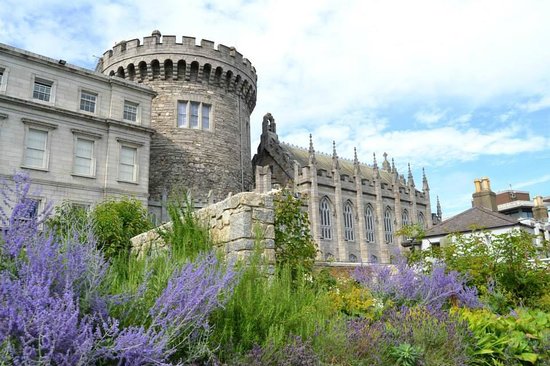
THE Irish Free State, comprising four-fifths of Ireland, was declared on December 6, 1922, ending a five-year Irish struggle for independence from Britain.
Like other autonomous nations of the former British Empire, Ireland was to remain part of the British Commonwealth, symbolically subject to the king.
The Irish Free State later severed ties with Britain and was renamed Eire and is now called the Republic of Ireland.
English rule over the island of Ireland dates back to the 12th century and Queen Elizabeth I of England encouraged the large-scale immigration of Scottish Protestants in the 16th century. During ensuing centuries, a series of rebellions by Irish Catholics were put down as the Anglo-Irish minority extended their domination over the Catholic majority.
Under absentee landlords, the Irish population was reduced to a subsistence diet based on potatoes and, when a potato blight struck the country in the 1840s, one million people starved to death while nearly two million more fled to the United States.
A movement for Irish home rule gained momentum in the late 19th century and in 1916 Irish nationalists launched the Easter Rising against British rule in Dublin. The rebellion was crushed, but widespread agitation for independence continued. In 1919, the Irish Republican Army (IRA) launched a widespread and effective guerrilla campaign against British forces.
In 1921, a cease-fire was declared and, in January 1922, a faction of Irish nationalists signed a peace treaty with Britain, calling for the partition of Ireland, with the south becoming autonomous and the six northern counties of the island remaining in the United Kingdom.
Civil war broke out even before the declaration of the Irish Free State on December 6, 1922 and ended with the victory of the Irish Free State over the Irish Republican forces in 1923.
A constitution adopted by the Irish people in 1937 declared Ireland to be ‘a sovereign, independent, democratic state’ and the Irish Free State was renamed Eire. Eire remained neutral during World War II and, in 1949, the Republic of Ireland Act severed the last remaining link with the Commonwealth.
Conflicts persisted over Northern Ireland, however, and the IRA, outlawed in the south, went underground to try to regain the northern counties still ruled by Britain.
HAVE YOUR SAY
Like our Facebook page, follow us on Twitter and Instagram
For news straight to your phone, add us on BBM 58F3D7A7 or WhatsApp 082 421 6033