Horses rhino’s new best friends
After decades horse power has been reintroduced in Kruger.
THE many South Coast nature lovers who regularly visit Kruger National Park will be interested to know that the park’s long association with horses has come a full circle.
And it is the park’s embattled rhinos and elephants who will benefit. According to SANParks Honorary Ranger Chris van Gass, horses are to be deployed in the fight against poaching.
Back in the days before Kruger was established traders and explorers used horses to travel through the area. They had to make sure only to do this during times when the tsetse flies were less active. Many horses fell victim to the deadly disease carried by the fly.
The Steinacker’s Horse Brigade, whose story represents a rather colourful chapter in the area’s history and its equine associations, was deployed by the British to patrol the area during the Anglo Boer War.
In Kruger’s early days rangers were dependent on horses as their primary means of transport to fulfil their daily duties. A good horse was invaluable, especially if it had gained immunity against horse sickness. History has recorded the legendary escapade of game warden Harry Wolhuter, who was attacked by a lion while on horseback in Kruger’s Lindanda area. Harry miraculously escaped by killing the lion with his sheath knife.
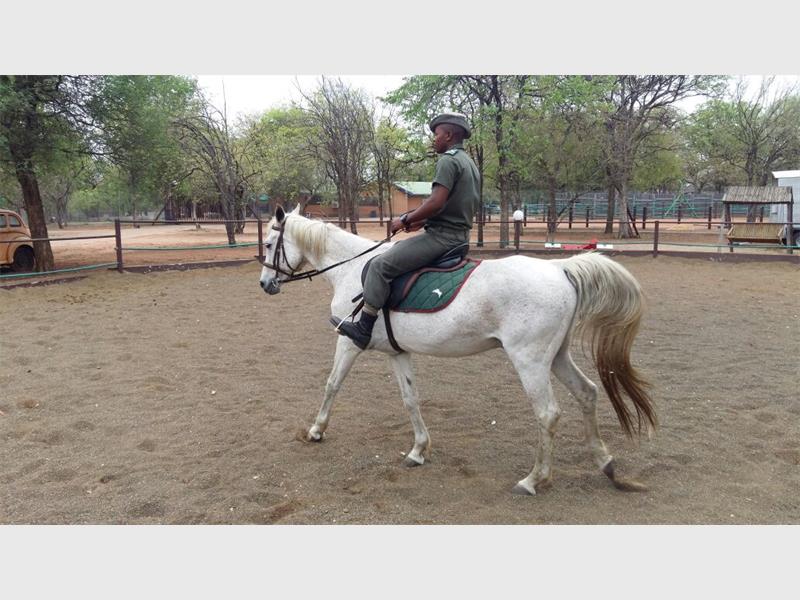
It has, however, been decades since the last horses were used in the Kruger National Park, as they have been replaced by motorised vehicles. Now this is about to change. Horses are being called back for active duty within the park and are being deployed for anti-poaching patrols. A pilot project has already been being launched to test the viability and effectiveness of mounted patrols.
Karien Keet, SANParks section ranger for Phalaborwa, is in charge of this. Karien is the ideal person to manage the experiment as she has a long association with horses and is an experienced rider. She believes it will not only be an effective tool in the fight against poaching, but that it will benefit conservation management too.
The Phalaborwa section of the park needs to be patrolled by field rangers on a daily basis. Horses are fast-moving and glide through the bush much more quietly than vehicles.
“Horses can become an anti-poaching force to be reckoned with,” she said.
The Bushveld and Highveld regions of the SANParks honorary rangers are funding the project. Karien’s husband, Dr Dewald Keet, a veterinary surgeon, will ensure the horses get the best medical attention. Honorary rangers and Arabian stud breeders Gerhard, Lizet and GD Kotze have carefully selected and made two of their endurance horses, Garribaldi and Sabot, available for the project.
Although lacking in experience with horses, young and brave SANParks field rangers warily agreed to be part of the project. After their first lesson, Karien almost had to rein in their enthusiasm.
The Kruger rhino and elephant populations are under threat from sophisticated poaching networks. The efforts of the Kruger rangers are starting to make a significant impact by preventing poachers from doing their terrible deeds. However, they need all the support they can get.
Perhaps horses will be the new best friend for both rangers and rhinos.
HAVE YOUR SAY
Like our Facebook page, follow us on Twitter and Instagram
For news straight to your phone, add us on BBM 58F3D7A7 or WhatsApp 082 421 6033