September 6: On This Day in World History … briefly
Most notable historic snippets or facts extracted from the book ‘On This Day’ first published in 1992 by Octopus Publishing Group Ltd, London, as well as additional supplementary information extracted from Wikipedia.
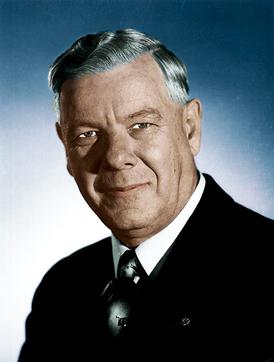
1966: ‘Architect of apartheid’ is stabbed to death in a Parliamentary meeting
Hendrik Frensch Verwoerd (8 September 1901 – 6 September 1966), also commonly referred to as HF Verwoerd and Dr Verwoerd, was a South African politician, sociologist and journalist. As leader of South Africa’s National Party he served as the last prime minister of the Union of South Africa from 1958 until 1961. In 1961 he proclaimed the founding of the Republic of South Africa, and continued as its prime minister from 1961 until his assassination in 1966 by Dimitri Tsafendas.
Verwoerd was an authoritarian, socially conservative leader and an Afrikaner nationalist. His goal in founding the Republic of South Africa, thereby leaving the British Commonwealth, was to preserve minority rule by white Afrikaners over the various non-white ethnic groups, including Bantu, Khoisian, Coloured and Indian people, who were the majority of South Africa’s population. To that end, he greatly expanded apartheid (apart-ness or separate development), the system of forced classification and segregation by race that existed in South Africa from 1948 to 1994.
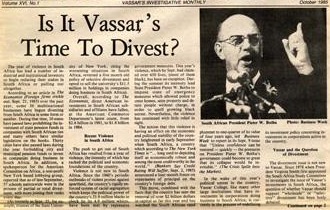
Although apartheid existed before Verwoerd took office, his efforts to place it on a firmer legal and theoretical footing, in particular his opposition to even the limited form of integration known as baasskap (boss-ship), have led him to be dubbed the ‘Architect of Apartheid’. It was the actions of Verwoerd that prompted the United Nations in 1962 to pass Resolution 1761 condemning apartheid, which ultimately led to international isolation and economic sanctions against South Africa. Prior to entering politics, Verwoerd was considered an exceptional student and achieved great academic success at a young age. He was appointed a professor of applied psychology at Stellenbosch University in 1927 at the age of 26, and later became head of the sociology department in 1933.
The National Party under Verwoerd won the 1966 general election. During this period, the National Party government continued to foster the development of a military industrial complex, that successfully pioneered developments in native armaments manufacturing, including aircraft, small arms, armoured vehicles, and even nuclear and biological weapons. Three days before his death, Verwoerd had held talks with the Prime Minister of Lesotho, Chief Leabua Jonathan, at the Union Buildings in Pretoria. Following the meeting, a joint communique was issued by the two governments with special emphasis on ‘co-operation without interference in each others’ internal affairs’.
On September 6, 1966, Verwoerd was assassinated in Cape Town, shortly after entering the House of Assembly at 2.15pm. A uniformed parliamentary messenger named Dimitri Tsafendas stabbed Verwoerd in the neck and chest four times before being subdued by other members of the Assembly. Four members of Parliament who were also trained doctors rushed to the aid of Verwoerd and started administering cardiopulmonary resuscitation. Verwoerd was rushed to Groote Schuur Hospital, but was pronounced dead upon arrival.
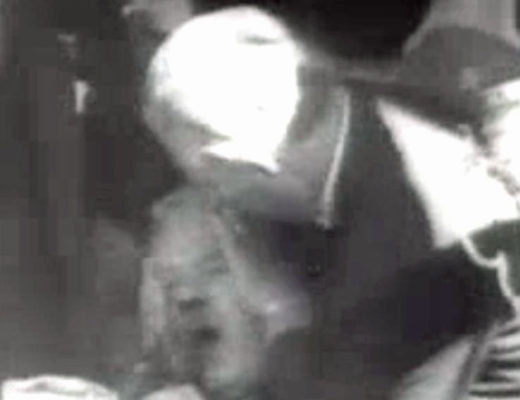
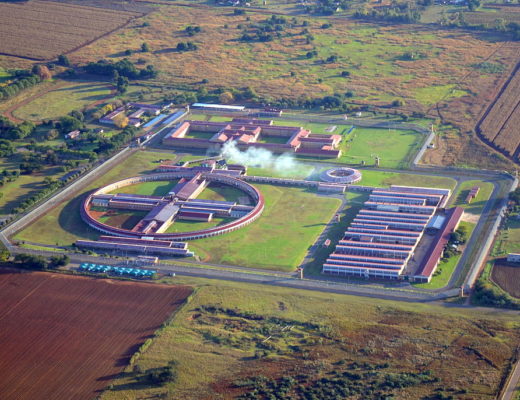
Tsafendas escaped the death penalty on the grounds of insanity. Judge Andries Beyers ordered Tsafendas to be imprisoned at Zonderwater Prison indefinitely at the ‘State President’s pleasure’; he died aged 81 still in detention. Verwoerd’s state funeral, attended by a quarter of a million people (almost entirely white), was held in Pretoria on 10 September 1966, during which his South African flag-draped casket was laid on an artillery carriage towed by a military truck. He was buried in the Heroes’ Acre.
The still blood-stained carpet where Verwoerd lay after his murder remained in Parliament until it was removed in 2004.
HAVE YOUR SAY
Like our Facebook page, follow us on Twitter and Instagram
For news straight to your phone, add us on BBM 58F3D7A7 or WhatsApp 082 421 6033