Almost back to normal for local teachers in China
The couple says China has shown there is light at the end of the Covid-19 tunnel.
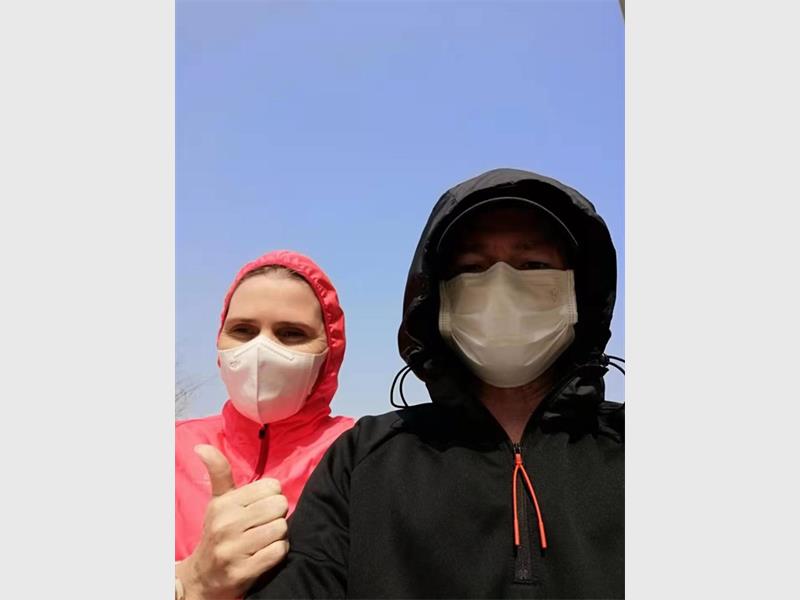
After 48 days of lockdown in Hefei in the Anhui district of China, South Coast kindergarden teachers Oliver (47) and Kirsty (46) Boyes say these restrictions have been lifted.
Kirsty taught at Port Shepstone Junior Primary for three and a half years.
ALSO READ : Covid-19: Lockdown procedures explained
Last week the government rolled out a new national health app on which people register, providing detailed information including details of travel, health and quarantine status and duration.
“When entering anywhere – shops, malls or work – you have to use the app to scan the QR code which is specific to each place.
“The app has three colours, green, yellow and red. If you scan the QR code and all is well, your app is green. If it changes to yellow, this means that either your temperature has changed dramatically or something else is wrong and you are to report to an official immediately.
“Without this app, you are not permitted to leave your complex, enter anywhere or board buses, taxis, trains,” he said.
On March 16 the government of China announced that 85 percent of all businesses were back to full operation, but many learning centers, including schools and universities were not yet open.
“In our province, learning centers should all be open by mid-April. In a neighboring province, schools will open on the April 1, so it is for each province to decide.”
Oliver said they had not heard of any new Covid-19 cases being reported for 19 days.
He added that in China, the pandemic had sparked some interesting new inventions, including facial recognition for people wearing masks; hand dryers which also sanitise; body temperature scanners and hologram programmes in banks and lifts which mean you don’t have to touch any actual buttons.
“In the major hospitals, a robot does a diagnostic test and then directs you to the relevant department without the need for hospital staff to be on hand. Again all of this is accessed via your phone, which is linked to your ID and bank.”
Life post Covid-19 is continuing, but Oliver said people were still advised to wear masks and take precautions, and most people are still very wary of others.
“Life has changed, and in my view, it will take time for everything to normalise. China has shown that there is a light at the end of this tunnel,” he said.
The couple shared some of their own personal tips on how to limit your chances of catching the Coronavirus:
This is by no means an exhaustive list, rather information gained from their own experiences.
1. Wear a mask when you leave home, and do not take it off while out.
2. Try not to touch your face at all, including rubbing your eyes.
3. Have a pair of shoes specifically for outside that you remove at the door BEFORE entering your home. Have a pair of indoor shoes/slippers that are only worn at home.
4. The couple has a shallow basin outside their apartment containing just enough water and disinfectant to cover the soles of their ‘outside’ shoes. When they get home they remove their shoes and place them in the basin. The mixture is changed every 24 hours.
5. Always have tissues, wet wipes, sanitising wipes or a damp face cloth kept in a plastic bag with you when going out.
6. Wear disposable gloves or thin fabric gloves so you don’t accidentally touch escalators, elevator buttons and shopping trolleys for example. If you wear fabric gloves be sure to wash them immediately when you return home. If you are really worried you can have a dedicated going out jacket/ top/ jersey which you can then wash daily along with the gloves.
7. Wash ALL veggies and fruit very well before consuming.
8. Use bottled or boiled water only, just to be on the super-safe side.
9. Keep your home clean by vacuuming and cleaning surfaces daily.
10. Keep your immune system strong with a good multi-vitamin, an extra dose of 1000mg vitamin C daily, and by eating healthy food and exercising.
Remember to check with your doctor before taking supplements or medicines that could interact with your current medication or health conditions.
11. Wash your hands like your life depends on it… and it may, so do it properly.
12. Don’t panic, buy and hoard stuff. Be sensible and have extra but don’t go overboard – remember everyone needs the same things you do. Let’s be kind.
13. Remain calm, and don’t get negative as this can lead to depression. Find something to be grateful for every day and laugh daily. I think that’s our survival guide!
HAVE YOUR SAY
Like the South Coast Herald’s Facebook page, follow us on Twitter and Instagram