Interesting read: Stalwart of the Jewish community celebrates 100 years
She served as vice president and later president of the Union of Jewish Women of the South Africa in the 1970s, at an important time in the country’s history.
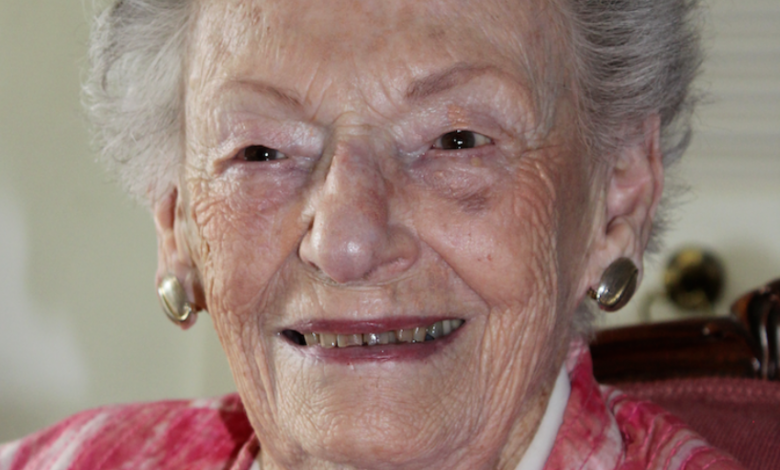
Rose Norwich, joint convenor of a groundbreaking project to document the history of Jewish communities in country areas of South Africa, including 14 in KwaZulu-Natal, last week celebrated her 100th birthday in Johannesburg.
Rose, who celebrated her centenary on January 2, 2021 co-headed a team with Adrienne Kollenberg and Phyllis Jowell that undertook the massive research project that began with an exhibition at the Tel Aviv University in 1980. It has since grown into the publication of six volumes by The South African Friends of Beth Hatefutsoth. With the title of “Jewish life in the South African country communities”, the books cover more than 1 500 centres across the country.
The collection provides a unique record of the estimated 10 000 to 20 000 Jewish people who lived in the country districts of South Africa at various times from as far back at the 1820 Settlers, to almost the present day. Today, Jewish life is now mostly concentrated in the large urban areas of Johannesburg, Cape Town and Durban (the books do not include these metropolitan areas).
The books are full of treasured photographs of families long deceased. Documents and scrap books reveal the names of those who struggled in small towns for years to make a living and uphold their Jewish traditions under difficult circumstances.
They have become important Jewish Africana and occupy a unique position in the history of South Africa. Rose’s father was a Lithuanian immigrant who came to South Africa in 1895 where he started work in a pharmacy. Her mother’s family originally came from England in the late 19th century.
They were married at the end of the First World War. Rose, one of four children who grew up in Johannesburg, attended the Barnato Park school. Between 1938 and 1941, she studied architecture at the University of the Witwatersrand, becoming one of few women to qualify in that field at the time.
By the time she graduated, however, the world was in the midst of the Second World War, and there were few jobs for architects – even fewer for women architects – but Rose was able to secure some work. During a holiday, she met her future husband, and chose to devote her immediate future to her marriage and four children. However, she put her architectural knowledge to great use later in life when she submitted a dissertation for her Master’s degree on “Synagogues on the Witwatersrand and in Pretoria before 1932: their origin, form and function”.
In 1988, she was awarded her Master’s degree, with distinction, from Wits University for this seminal work which took four years to compile. She regards this as one of her greatest achievement, for it documents a history that would otherwise have disappeared into the mists of time and be lost forever.
Another achievement that she rates highly is the organisation of the exhibition in Israel that gave rise to the publications mentioned above. Rose has always been involved in community life. She was an active member of ORT South Africa, an organisation dedicated to improving standards of education so that all can achieve a better life. Originally focused on assisting education in Europe, the organisation, under the influence of Rose and Judges Richard Goldstone and the late Basil Wunsh, changed its focus to South Africa.
During her association with ORT, she organised several art exhibitions in Johannesburg to raise awareness of ORT’s work. She served as vice president and later president of the Union of Jewish Women of the South Africa in the 1970s, at an important time in the country’s history.
She was outspoken in her opposition to apartheid, saying at the Union’s 1979 conference that “history has shown us that it is not possible for one section of the population forever to dominate another”. She has authored many articles in various academic journals, always demonstrating her meticulously careful and accurate research. Rose married her late husband, Isadore “Oscar” Norwich in 1945.
A well-known Johannesburg surgeon, he was an avid collector of Africana maps. After his death in 1994, the collection was sold to the David Rumsey Map Centre at Stanford University in the USA, one of the leading collections in the world. The Centre is one of the leading
In total, he wrote three books: Maps of Africa (republished after his death in USA), Maps of Southern Africa, and A Johannesburg Album: Historical Postcards. Three of Rose’s children live in the USA and the fourth in England. She has eight grandchildren and three great-grandchildren. Sadly, because of Covid-19, none of them were able to attend the birthday celebrations in early January, but celebrated with her via digital platforms.
She modestly describes herself as having been “lucky in life”, with good parents, an excellent education, a happy marriage, and a family who are all good human beings.
She ascribes her longevity to having had generally good health and being sensible about looking after herself. She is also grateful to her family and friends for the support they give her – “you can’t do it all yourself”, she says with a characteristic chuckle.
Submitted by Ruth Coggin. Copyright © 2021 Quo Vadis Communications, All rights reserved.