
Local newsNews
WARNING: Don’t pick up a snake that your cat brings into the house
The best advice is, if you are worried about snakes in your space – save snake catcher Sarel’s number on your phone – 082 683 1604.

Snake catcher Sarel van der Merwe came to the rescue, yet again!
This time, he received a phone call at 01:00 in the morning.
The caller’s son had been bitten by a snake that the cat had brought into the house.
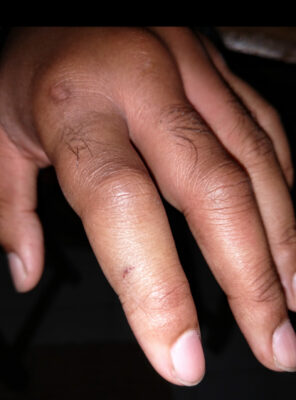
“I was sent a photograph of the snake, but the mouth of the snake was full of blood, so I couldn’t be sure if it was a Stilleto snake or not,” he said.
At 01:30, the family brought the snake to Sarel in Shelly Beach, and it was what he suspected… a Stilleto snake!
Sarel said that if gripped behind the head, the Stiletto snake just protrudes a fang and twists its head sideways to inflict a bite from a single fang.
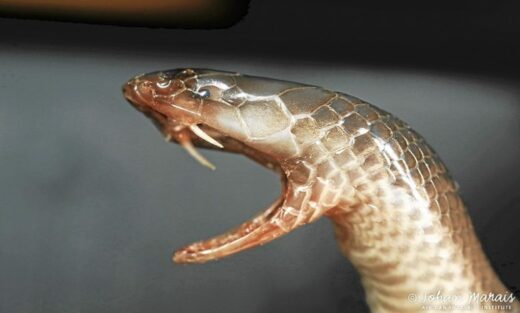
“The venom of this snake, though not generally considered potentially fatal, is potently cytotoxic causing severe pain, swelling, blistering and in many cases tissue damage. As there is no antivenom, doctors can only treat for pain, rehydrate the patient and then wait a few days to see how extensive the tissue damage is,” said Sarel.
According to the South African Snake Bite Institute, the Stiletto Snake or Sypikslang, is a small, highly venomous snake, that accounts for numerous snakebites during the summer months in Southern Africa.
Stiletto snakes are so named, because of their very large, hollow, mobile fangs situated in the front of the mouth, much the same as a stiletto dagger used by assassins.
Previously known as a Mole Adder or Moladder, these dark snakes are often confused with harmless-looking snakes, and people tend to pick them up with their hands – the consequences of such a mistake can be very painful.
Interestingly, after the Mozambique Spitting Cobra and the Puff Adder, the Stiletto Snake accounts for the majority of serious snake bites in South Africa.
At Caxton, every story is written by humans. We use AI only to perform quality checks - never to generate the news. Happy reading!


