Exploring the mathematics behind lotteries: A fascinating journey
Beyond the numbers, psychological factors play a significant role in lotteries as the thrill of potentially winning a large sum with a small investment, despite the low odds, drives many to participate.

The world of lotteries offers a unique and fascinating application of mathematical principles. While lotteries are often viewed as a form of entertainment or a chance to win big, they are deeply rooted in statistical and probabilistic theories. This article delves into some intriguing mathematical concepts behind lotteries, making them accessible to enthusiasts with a general interest in mathematics.
The role of probability in lottery outcomes
At the heart of understanding lotteries is the concept of probability. A lottery, essentially, is a probabilistic experiment. Each draw is an independent event, and the likelihood of a specific outcome (such as winning the jackpot) can be calculated using probability theory.
Calculating odds:
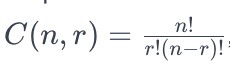
The odds of winning are determined by the total number of possible combinations. For instance, in a simple 6/49 lottery, where a player chooses six numbers from a pool of 49, the number of possible combinations is calculated using the formula for combinations: \( C(n, r) = \frac{n!}{r!(n-r)!} \), where \( n \) is the total number of numbers to choose from, and \( r \) is the number of numbers to pick.
In a similar vein, examining the Lottery Sambad, a popular lottery in India, also reveals intriguing mathematical probabilities. This lottery has different formats and prize structures, each with its own set of odds. Understanding these odds can provide valuable insights into the likelihood of winning in various lottery formats, much like the analysis of the 6/49 lottery
What this number signifies is that there are 13,983,816 distinct ways to pick six numbers from a set of 49. Therefore, if you buy one ticket, your chances of winning the jackpot are 1 in 13,983,816. It’s a clear illustration of how lottery odds are incredibly slim, underscoring the role of chance in these games.
The illusion of patterns
Many lottery players believe in ‘hot’ or ‘cold’ numbers, thinking that past draws influence future outcomes. However, in a fair lottery system, each draw is independent, meaning past results do not affect future draws.
For example, when examining teatime results in daily lotteries, one might be tempted to look for patterns or trends in these outcomes. Nonetheless, each teatime draw is a separate event, and any perceived pattern is simply a coincidence rather than a predictive tool.
Statistical paradoxes in lotteries
Lotteries also present interesting statistical paradoxes. One such paradox is the ‘lottery paradox’, which arises from the conflict between the high probability of someone winning the lottery eventually and the extremely low probability of any individual ticket winning.
Expected Value Analysis:
A critical concept in lottery mathematics is the expected value, which is the average amount a player can expect to win or lose per ticket. This is calculated by multiplying the payout of each potential outcome by its probability and summing these values.
Psychological factors in lottery participation
Beyond the numbers, psychological factors play a significant role in lotteries. The thrill of potentially winning a large sum with a small investment, despite the low odds, drives many to participate. This phenomenon is often explained through utility theory in economics, where the utility of a small chance to win a significant amount outweighs the disutility of losing the ticket cost.
In conclusion, the mathematics of lotteries is a blend of probability theory, statistical analysis, and psychological elements. While the chance dominates the outcomes in lotteries, understanding the underlying mathematics can provide a deeper appreciation of this popular form of gambling. Whether for entertainment or the dream of a life-changing win, the lottery’s mathematical underpinnings make it a uniquely intriguing subject for math enthusiasts.