How Online Games Influence Our Behaviour
There is debate about games and violence, and scientists have done a lot of research but have been unable to establish a connection between shooters and violent behaviour in real life.
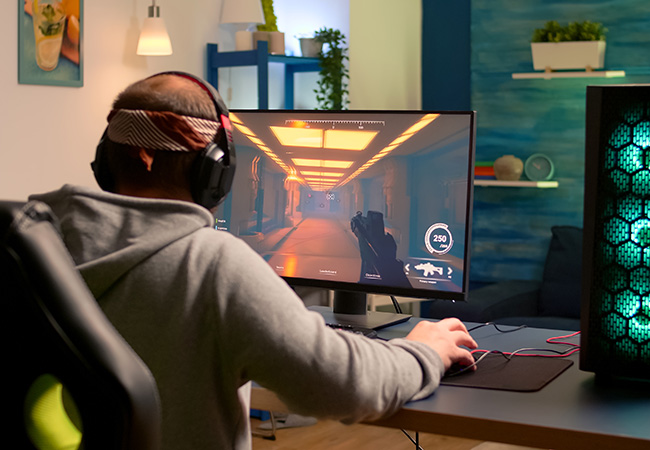
Online games are often accused of violence, stupidity, absent-mindedness, and antisocial behaviour. From their very childhood, kids are told that by playing, they would not achieve anything but would only kill time and become aggressive. However, is it really so? Let us discover how games on Game Karma affect our brain and behaviour and what the real consequences of playing are.
Online games and violence
There is a lot of debate about games and violence, and scientists have done a lot of research but have not been able to establish a connection between shooters and violent behaviour in real life. Rather, the situation is far from this scenario. For example:
- The British scientific journal Royal Society Open Science published an article on the connection between games and aggressive behaviour. None of the thousands of gamers surveyed showed aggression and antisocial tendencies.
- Scientists from the University of York conducted a similar experiment and its participants also did not demonstrate an increase in the level of aggression.
Of course, during the game, a person can express a riot of emotions, but this usually does not go beyond the computer. It will be difficult to force a mentally stable person to kill passers-by or crush police cars on the way home.
Are games addictive?
The World Health Organization has recently included online game addiction in the list of mental disorders. The boundary between the conventional norm and deviation is defined as follows: if the game has an advantage over other vital interests and daily activities, it is time to start worrying. Gamers cease to be interested in work or study, do not pay attention to their family, begin to sleep less, and may forget to eat.
Scientists and doctors recognise the problem of gaming addiction, but according to the same WHO, only a small percentage of people are at risk. Oxford researchers found that only 0.3-1% of respondents in the UK, the USA, Canada, and Germany may be addicted to online games.
Scientists believe that the formation of addiction is associated not so much with the game itself but with the psychological characteristics of people and the surrounding development factors like problems in the family and friends. Only those games become popular that manage to correctly build a reward system for their users. The person playing this game feels uplifted and motivated to keep going, which leads to repetitive behaviour.
Gaming and attention
The biggest danger to memory is the lack of sleep, so playing all night long is definitely not a good idea. Sleep deprivation increases the release of stress hormones, which can lead to a slower rate of brain cell repair. Moreover, absent-mindedness, irritability, constant drowsiness, and memory impairment are signs of overwork.
However, studies by scientists from around the world show that a moderate passion for games has a positive effect on memory and reaction. Games can even improve attentiveness several times. Teenagers who regularly play online games study better than their peers. By the way, those who spend time on social networks study much worse. Therefore, the advantage of video games, at least over Facebook and Instagram, is obvious.