Bluebottles wash ashore
It is not a single animal but a colony of animals living together, each performing a specialised function such as hunting, digestion and reproduction.
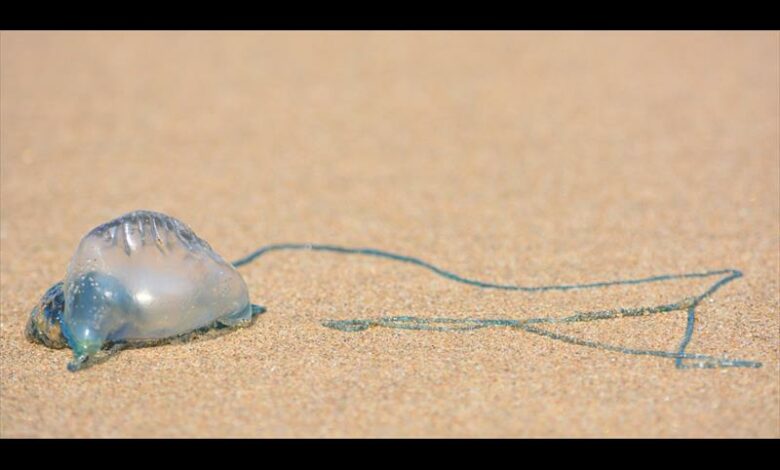
The South African Association for Marine Biological Research (SAAMBR) has noted an increase of bluebottles on beachfronts in Durban, with numerous sightings on the South Coast as well.
According to SAAMBR, bluebottles are blown onto the shore by northeasterly winds.
It is not a single animal but a colony of animals living together, each performing a specialised function such as hunting, digestion and reproduction.
The float (which is the bag-like part) is filled with air and carbon monoxide and acts as a sail in the wind, the very reason why bluebottles are also known as Portuguese man o’ war, after the war sailing ships.
Bluebottles can be either ‘right-handed’ or ‘left-handed’ depending on the position of this ‘sail’ which means not all bluebottles will end up on the beach during a strong on-shore wind as their sails won’t catch the wind.
The tentacles are armed with stinging cells and can reach many metres in length.
Out in the ocean, bluebottles feed on tiny fish and other floating animals that they immobilise with their stinging cells. Bluebottles are related to corals, anemones and jellyfish.
As many beachgoers have discovered, the stinging cells in their tentacles can still sting a person even when they are high and dry on the beach.
Although some people can have allergic reactions to the venom, the pain generally lasts no more than 10 minutes, with no long-term effects other than some welts on the skin.
There are a variety of different home remedies for a bluebottle sting, but SAAMBR believes that the best way to achieve some relief is to run fresh water over the area until the stinging subsides.
HAVE YOUR SAY
Like the South Coast Herald’s Facebook page, follow us on Twitter and Instagram