Welcome to the 50th blog in the series “Turning the Tide” of lifestyle diseases. I hope that you have found much ‘food’ for thought over the last almost year since the first blog appeared, and that it has at least encouraged you to make some positive changes towards a more responsible and health-promoting way of life and lifestyle.
ALSO READ : Turning the Tide – Diabetes: Complications, and how to tackle them
Today we will look at perhaps the most common complication of diabetes – heart disease and strokes. According to the Heart and Stroke foundation of South Africa:
- Cardio-vascular disease (CVD) is the leading cause of death in South Africa after HIV/AIDS.
- More South Africans die of CVD than of all the cancers combined.
- CVD is responsible for almost 1 in 6 deaths (17.3%) in South Africa.
- 215 people die every day from heart disease or strokes.
- Every hour in South Africa: 5 people have heart attacks, 10 people have strokes and of those events, 10 people will actually die from it.
According to the American Heart Association:
- At least 68 percent of people age 65 or older with diabetes die from some form of heart disease; and 16% die of stroke.
- Adults with diabetes are two to four times more likely to die from heart disease than adults without diabetes.
- The American Heart Association considers diabetes to be one of the seven major controllable risk factors for cardiovascular disease.
The sad fact is that even when diabetes is fairly well controlled by medications in terms of blood sugar, unfortunately the risk of heart disease is still significantly higher than in non-diabetics.(The ACCORD study had to be stopped because those on tighter control had a higher mortality than those on standard care). One may ask why this is. A number of explanations have been given. The most important is that medications don’t really address the underlying problem of insulin resistance and its causes. This blog supports the research findings that insulin resistance is primarily caused by excessive fat in muscle and liver cells.
Dietary advice for diabetics varies from the ketogenic extreme, through to the official dietary recommendation and then the opposite extreme, a plant-based low fat diet.
The ketogenic diet promotes a high fat, low carbohydrate and relatively high protein (especially from animal sources) type of diet. The more mainline recommendation cuts back on excessive fats, and more fruits and vegetables, whole grains, but also significant amount of lean animal proteins, with their accompanying saturated fats. The low fat whole-food, plant-based diet is on the opposite side of the spectrum from the ketogenic diet.
All of these varied recommendations leave most people quite confused. How do we negotiate through this confusion?
What we propose to do today is try to understand what causes cardio-vascular disease in the first place and how diabetes contributes to that state – in as simple a way as possible, and then discuss strategies to reverse that process.
Atherosclerosis is the term for damage to the blood vessels caused by deposits of cholesterol plaque. This is not a disease confined to just a few blood vessels, but in fact affects major blood vessels all over the body, including the heart, aorta, carotid arteries in the neck, and arteries in the brain. This is why heart attacks, strokes and peripheral vascular disease result. The blood vessels become progressively more narrowed and inflamed and eventually clots develop over the inflamed and damaged areas, resulting in obstruction of the blood vessels. This leads to heart attacks if in the heart, and strokes if it occurs in the brain. If it occurs in the leg it results in claudication (pain on walking) and even gangrene.
Although some people try to deny that dietary saturated fats and cholesterol have anything to do with atherosclerosis, there are masses of studies that prove the connection. Drs Michael Brown and Joseph Goldstein earned a Nobel prize in Medicine/Physiology in 1985 elucidating the biochemistry of atherosclerosis.
Insulin resistance is also associated with the Metabolic Syndrome which is characterised by high levels of fasting insulin, high serum cholesterol, high blood pressure, increased abdominal girth and often diabetes. There is probably a genetic predisposition to this condition, but genetics don’t determine the development of the disease without triggers. And the triggers are probably lifestyle factors – lack of exercise, high fat diet, lack of dietary fibre, and highly processed foods, including excess sugar.
So once again, as with fatty liver that we discussed last week, the typical western diet predisposes to insulin resistance, diabetes, but also to arterial endothelial damage.
The solution: A heart-healthy diet – rich in fruits, vegetables, whole grains, legumes, limited seeds and nuts, and low in fats, especially saturated fats. This diet not only reverses diabetes, but also significantly reduces blood cholesterol levels, and even reverses atherosclerosis. That last result is something you won’t obtain from the ketogenic diet.
Here is an article on WebMD that discusses reversal of heart disease.
ALSO READ : Turning the Tide – Diabetes – treat the cause to fix the symptoms
Exercise is also very important – the recommendation is 150 – 180 minutes of exercise a week – like walking, swimming, gym exercises, cycling or spinning, etc. But don’t overdo it to begin with. In fact it may be good to clear this with your doctor before you strain your dicey heart with too much exercise too soon.
Social support through happy families, friends, social groups like church or clubs can be helpful, as long as your support is not encouraging you to participate in harmful practices.
Stopping smoking and drinking alcohol is important as well. A recent large multi-centre study has debunked the belief that small amounts of alcohol are healthy. Read here
Some people believe changing your lifestyle is extreme. Well, if doing that can give you an extra 5 – 30 years longer of life, why would you not want to do it.
Here is a tribute to Evelyn Oswick who 30 years ago was told she must prepare to die because cardiologists could no longer do anything for her. She joined Dr Caldwell Esselstyn’s research programme and only died last year at the age of 90 after living a very full and productive life.
Watching this video is inspiring. I trust you can see a clear path to reducing your risk of heart disease, or if you have it already that you will discover ways of reversing that process.
To a week of hope.
Dave Glass
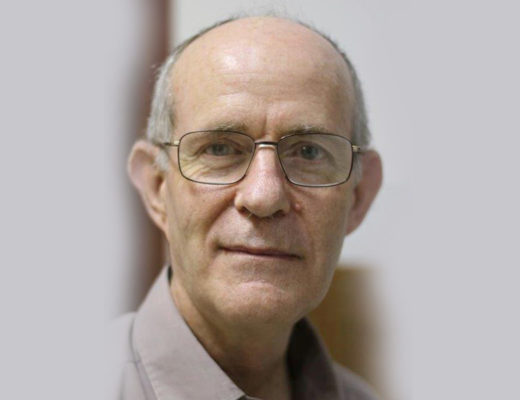
David Glass graduated from UCT in 1975. He spent the next 12 years working at a mission hospital in Lesotho, where much of his work involved health education and interventions to improve health, aside from the normal busy clinical work of an under-resourced mission hospital.
He returned to UCT in 1990 to specialise in obstetrics/gynaecology and then moved to the South Coast where he had the privilege of, amongst other things, ushering 7000 babies into the world. He no longer delivers babies but is still very clinically active in gynaecology.
An old passion, preventive health care, has now replaced the obstetrics side of his work. He is eager to share insights he has gathered over the years on how to prevent and reverse so many of the modern scourges of lifestyle – obesity, diabetes, ischaemic heart disease, high blood pressure, arthritis, common cancers, etc.
He is a family man, with a supportive wife, and two grown children, and four beautiful grandchildren. His hobbies include walking, cycling, vegetable gardening, bird-watching, travelling and writing. He is active in community health outreach and deeply involved in church activities. He enjoys teaching and sharing information.
HAVE YOUR SAY
Like our Facebook page, follow us on Twitter and Instagram