Turning the Tide – Dealing with the main lifestyle-related conditions in South Africa (Part 3)
The most ancient historical record of dietary recommendations is found in the book of Genesis in the Bible, written by Moses around 3400 years ago, but based on an oral tradition handed down from thousands of years before.

A Designer Diet
Last week we spoke about a rational way to control the obesity epidemic through the energy density approach to weight loss. Obviously the control of obesity is complex. It is not only about eating excess kilojoules – although that is the root of the problem – it is also about our environment as well as what drives us to eat what we do eat. We are surrounded by temptations to indulge in processed, high energy foods. Another important factor is addiction to sugar, salt and fat. These three substances have been found to be as addictive in some people as “recreational” drugs, pornography, smoking and alcohol! Just think how prevalent these three substances are in the snack foods we feed our children, and then we wonder why they have a problem with weight gain. Next time you buy a packet of chips (crisps) just have a look at the ingredients and nutritional value chart at how much sugar, fat and salt is in that one packet.
ALSO READ : Turning the Tide – Dealing with the main lifestyle-related conditions in South Africa (Part 2)
Now on to the subject of this week’s blog.
Whenever we buy a new gadget or piece of equipment, we will find a manual to explain how to use it and care for it. By sticking to the recommendations, we will get the best out of that gadget. If we decide we know better than the designer, we may well end up destroying the gadget or reduce its functional lifespan.
The most ancient historical record of dietary recommendations is found in the book of Genesis in the Bible, written by Moses around 3400 years ago, but based on an oral tradition handed down from thousands of years before. The very first chapter of Genesis (which means beginnings), verse 29 says “I give you every seed-bearing plant on the face of the whole earth and every tree that has fruit with seed in it. They shall be yours for food.” This interpreted to modern understanding would basically be a plant-based diet including fruits, nuts, seeds, vegetables and grains. Our bodies are designed for this diet – from teeth structure, to enzymes produced in our mouths and gastro-intestinal organs, to even the length of our gut – all are ideally suited to this original diet. It is thus understandable that the most long-lived and healthy people in the world eat a plant-rich diet not dissimilar to this original diet.
Dan Buettner, the adventurer/explorer who first coined the term the “Blue Zones”, came across pockets of long-lived, amazingly healthy communities in various parts of the world. After studying these communities with a group of scientists, he developed a list of Blue Zone common factors to health and longevity which he uses to improve the lives of various communities in the USA and other places. Common to all those Blue-Zone communities is a diet rich in plants and whole foods, not dissimilar to the Biblical injunction quoted above. It sort of makes sense, doesn’t it.
Here is the website to this fascinating programme.
So where does eating meat come from, according to the Biblical record. This was only introduced some 1500 years later after a total destruction of the then known world in a universal flood, and massive climate change, with a shortage of plant foods.
Genesis 9:3 introduces permission for the eating of animal products. However it is interesting that this injunction is accompanied by a report of significant and dramatic shortening of the long lifespans common to that original idyllic environment. Obviously it was not only diet that made the difference, but it was an important contributor.
To my knowledge the first diet-related scientific experiment ever recorded is found in the book of Daniel 1:8-16. Four of the many young Jewish captives removed to Babylon by conqueror Nebuchadnezzar decided to avoid the diet offered them in their new environment. The king had an ingenious programme of integration of the brightest young men of conquered nations into the educational and social opportunities within his kingdom. This programme aimed to produce future leaders that would support his ambitions. He thought that providing them with food from his sumptuous table would offer them the best advantages for health and vitality. However Daniel and his three friends asked their supervisor for a “case-controlled scientific experiment” to demonstrate the superiority of a simple diet of water and vegetables over the rich, animal-based diet of the king. After just ten days, the difference in physical appearance and mental function was dramatically obvious. After three years of intensive study, Daniel and his three vegetarian friends were streets above all their compatriots who had gone along with the lifestyle imposed by the king, in terms of mental acuity, learning and wisdom.
The Daniel Plan is a programme written by Drs Mark Hyman and Daniel Amen and popularised by Rick Warren, author of the well-known book “The Purpose Driven Life”. It is used in many Christian churches as a period of fasting and reflection. It has been shown to make dramatic changes to cholesterol levels and blood sugar control and general sense of well-being. Here is a website giving some practical information, written by a registered dietician.
ALSO READ : Turning the Tide – Dealing with the main lifestyle-related conditions in South Africa (Part 1)
There are many people who believe in a different world-view than that presented above – believing our ancestors originated through aeons of evolutionary trial and error. This is the basis of the Paleo diet which claims that our ancestors lived predominantly on a meat diet typical of hunter-gatherers. However there are increasing numbers of palaeontologists who are disputing the denial of the importance of plant foods amongst Palaeolithic communities. Studies of food sediments between the teeth of Neanderthal fossils have shown the presence of plant residues.
Of course there are no ancient records written about palaeolithic communities – and information about their history is obtained from palaeontologists who often change their stories depending upon the latest finds.
But the biggest proof that our bodies were designed for a predominant plant-based diet is the fact mentioned above that the longest-lived communities in the world subsist on this kind of whole-food diet. Our world view can make a bit difference in how we respond to this information, and whether we are willing to adopt a plant-based diet.
To a week living with a sense of grand history of origins and purpose to our lives,
Dave Glass
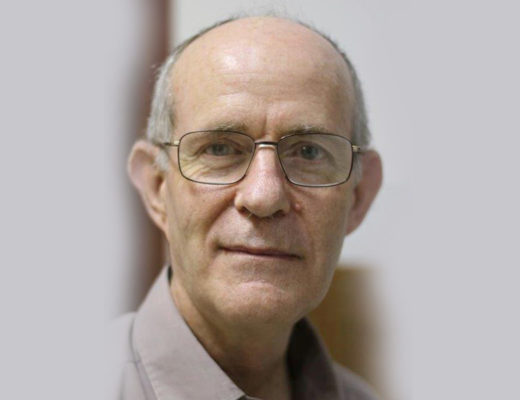
Dr David Glass graduated from UCT in 1975. He spent the next 12 years working at a mission hospital in Lesotho, where much of his work involved health education and interventions to improve health, aside from the normal busy clinical work of an under-resourced mission hospital.
He returned to UCT in 1990 to specialise in obstetrics/gynaecology and then moved to the South Coast where he had the privilege of, amongst other things, ushering 7000 babies into the world. He no longer delivers babies but is still very clinically active in gynaecology.
An old passion, preventive health care, has now replaced the obstetrics side of his work. He is eager to share insights he has gathered over the years on how to prevent and reverse so many of the modern scourges of lifestyle – obesity, diabetes, ischaemic heart disease, high blood pressure, arthritis, common cancers, etc.
He is a family man, with a supportive wife, and two grown children, and four beautiful grandchildren. His hobbies include walking, cycling, vegetable gardening, bird-watching, travelling and writing. He is active in community health outreach and deeply involved in church activities. He enjoys teaching and sharing information.
HAVE YOUR SAY
Like our Facebook page, follow us on Twitter and Instagram