The most healthy way to lose weight.
In last week’s blog we were informed about the frighteningly high incidence of obesity in South Africa, especially amongst our women. But this is also manifesting amongst men and more worryingly our children. Most overweight people are unhappy about their body size. I remember years ago reading about a Human Sciences Research Council study that found 95% of women in SA were unhappy with their body image. Of course it is not just about appearances, but also about a feeling of wellbeing – both physical and emotional, freedom of mobility, availability of comfortable and attractive clothes, presence of aches and pains and general health issues.
ALSO READ : Turning the Tide – Dealing with the main lifestyle-related conditions in South Africa (Part 1)
There are hundreds of diets claiming success with weight loss. There are also hundreds of pills and potions purporting to be the answer to excess weight. One is bombarded with adverts of numerous devices that vibrate off the fat with little effort on our part. Of course most of these interventions don’t address the predisposing causes, so after you have lost interest, the weight all tends to sneak back, often with an extra uninvited friend or two!
Many of the crash diets are also deficient in nutrients – things like natural vitamins, minerals, phytochemicals and fibre – all ingredients necessary for health and vitality. Perhaps the diet that gets the most exposure is the ketogenic diet (aka Banting). This seems not to be as popular as a couple years ago, but still has many proponents. We will deal with the issues around the ketogenic diet in 2 weeks’ time. Nevertheless, one of the biggest problems with the ketogenic diet is a lack of dietary fibre. Fibre is the main nutritional source for our intestinal microbiome, which has been found to have such important contributions to our health. The microbiome influences our brain function, immunity, gut health, and even diseases like obesity, blood pressure, cancer and auto-immune diseases.
The traditional recommendations to losing weight include the concept of portion control – limiting the amount of food on your plate.
Some people even recommend using a smaller dinner plate to reduce the surface area on which to place your food.
The problem with this method is that it doesn’t address the important mechanism of stretch receptors in the stomach for informing your brain of satiety. And if you never feel full, you are not likely to be motivated to keep on such a restrictive diet.
Jeff Novick, an American dietician came up with a rational view of weight loss, called the energy-density approach. It is based upon the kilojoule density of different foods. The most energy-dense food in the world is oil/fat, and the least energy-dense foods are fruits and vegetables. The second least-dense foods are whole-food starches, like beans, whole-grains and potatoes. A useful illustration shows how much of the stomach is filled with 500 calories (2100 kj). If you consider that one of the most important factors in satiety is whether the stomach is full or not, if you can fill up your stomach with nutritionally dense, but energy low foods like fruits and vegetables, you are far less likely to ingest excess kilojoules. And if you take in less kilojoules you will have opportunity to use up your excess body stores of fat, and stop depositing more in your fat cells.
See this article for more details.
The illustration in the above article shows how that 2100 kj ( a quarter of your daily energy requirements) in the form of oil, will only form a little puddle at the bottom of your stomach – leaving your stomach basically empty and crying out to be filled. If you then continue to fill it with other foods, you will be taking in excess kilojoules. The same applies to cheese (which has up to 80% of its kilojoules in the form of fat. That will fill your stomach a bit more – but still leave you feeling empty. The same amount of energy in the form of meat/chicken/fish will not even half-fill your stomach. Whole starches do pretty well at filling your stomach, but the best is fruits and vegetables. You can eat an enormous amount of these, to the point of feeling stuffed, but your kilojoule intake is relatively low. You won’t have much space to eat anything else to tip your energy intake into excess.
ALSO READ : Turning the Tide – Understanding Diabetes (part 15)
This makes weight loss through this approach much less dependent upon will-power and fighting the hunger pangs than other recommended methods of weight loss.
Some other tips provided by Novick include:
- Not allowing yourself to become starved. (The tendency then is to eat energy dense snacks). Plan your life to have regular meals, and take food with you – like fruits and healthy snacks to eat when you are travelling or at the office.
- Sequence your meals – start with low-density foods like salads, fruit and soups, then when you have nearly filled your stomach there won’t be so much room for high-energy dense foods.
- Don’t drink your kilojoules. Liquids don’t fill you up as much as solid foods of equal energy. This would include juices and cool-drinks.
- Dilution is the solution – dilute your higher energy foods, with lower-energy foods. Higher energy foods include whole grains, starchy vegetables and legumes. Half your plate would have these kinds of foods, and the other half vegetables and fruit.
- Be aware of fats/oils. Any form of fat (salad dressings/mayonnaise/olive oil or frying foods) will always significantly raise overall kilojoule density of a meal.
- Limit high energy-dense foods like dried fruits, foods high in plant fat (like avocado’s, nuts, seeds) and processed whole grains (like quick-cook oats, prepared breakfast cereals and breads). Dilute with low-density foods like salads and whole-grain cereals.
- Remember most foods processed and packaged for marketing are usually converted into kilojoule-dense foods.
A useful illustration to show how eating the right foods we were designed to consume is this: You have never seen an obese giraffe, or lion, or impala in the wild. Why? Because they are all eating the foods they were designed to eat. However, we humans think we are clever because we can process and re-manufacture foods into marketable formats. But we so transform the foods, that instead of providing the right concentration of nutrients and energy, they become obesity-promoting traps, enslaving us to a shortened life of ill-health.
A return to natural whole-foods gives us the freedom to enjoy plentiful and varied foods without worrying about calorie counting or portion control. These foods are also rich in an abundance of nutrients to keep us vibrant and healthy.
To a rational way of maintaining our weight.
Dave Glass
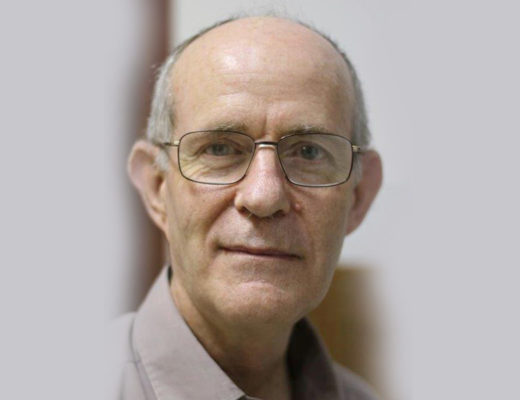
Dr David Glass graduated from UCT in 1975. He spent the next 12 years working at a mission hospital in Lesotho, where much of his work involved health education and interventions to improve health, aside from the normal busy clinical work of an under-resourced mission hospital.
He returned to UCT in 1990 to specialise in obstetrics/gynaecology and then moved to the South Coast where he had the privilege of, amongst other things, ushering 7000 babies into the world. He no longer delivers babies but is still very clinically active in gynaecology.
An old passion, preventive health care, has now replaced the obstetrics side of his work. He is eager to share insights he has gathered over the years on how to prevent and reverse so many of the modern scourges of lifestyle – obesity, diabetes, ischaemic heart disease, high blood pressure, arthritis, common cancers, etc.
He is a family man, with a supportive wife, and two grown children, and four beautiful grandchildren. His hobbies include walking, cycling, vegetable gardening, bird-watching, travelling and writing. He is active in community health outreach and deeply involved in church activities. He enjoys teaching and sharing information.
HAVE YOUR SAY
Like our Facebook page, follow us on Twitter and Instagram