
“The future is already here – it is just not very evenly distributed” – William Gibson
ALSO READ: OPINION: ‘We are grateful for the coverage’
South Africa is on the cusp the fourth industrial revolution (4IR), which differs in speed, scale, complexity and transformative power from the other revolutions. The 4IR has progressed at an exponential pace, contrary to the previous revolutions that have progressed at a linear pace from the mechanization of production in the first revolution (1760 – 1840); to mass production in the second (late 19th century); and then to automation of production; computing and telecommunication in the third (1960s -present).
The 4IR is defined by the Davos World Economic Forum (WEF) as a “fundamental shift in how we produce, consume, and relate to one another, driven by the convergence of the physical world, the digital world and humans.” What seems to be lacking in the discourse is a full understanding of capital and how it behaves in the international system. Commenting on the impact of 4IR, WEF founder Klaus Schwab argues that the greatest societal concern is that “there has never been a time of greater promise, or one of greater potential peril.”
The end game for each revolution has always been to create economic advantages for Western powers. The transatlantic slave trade is a primary example of how the African continent was pillaged to fuel the industrial revolution in England. The second and third revolutions continued to exploit the emerging markets of the Global South to benefit the developed world. Even when production was relocated to emerging markets and trade in those markets artificially boomed; control and capital remained within the hands of the developed countries.
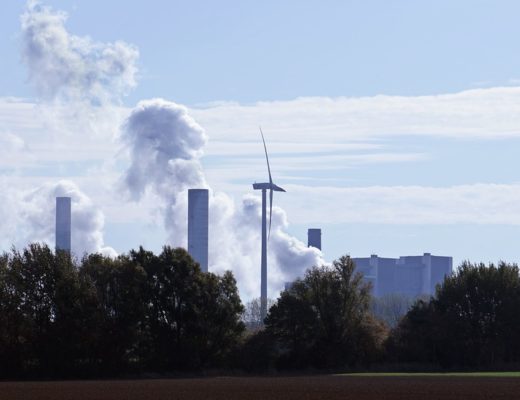
The political reality of the 4IR is that it will be business as usual. At the centre of the 4IR will be the developed countries that are determined to maintain their unassailable lead; and the poor suffering greater marginalization as a result of widening societal inequalities. The “winner-take-all” digital evolution will deepen the divide.
Similar to the technical architecture of classic colonialism, if the railways and maritime trade routes were the “open veins” of the Global South, today the digital infrastructure controlled by Big Tech Corporations will take on the same role. The infrastructure is engineered to advance their own needs the use of proprietary software, corporate clouds, and centralised internet services to spy on users, process their data, and produce manufactured service to users in their captured territory.
Proprietary software is the foundation of the digital colonialism; and Richard Stallman reasoned a “nonfree program is a yoke, an instrument of unjust power.” The closed-source software has limitations of use and distribution which means users cannot create or modify the software to add capabilities not envisaged by its originators.
However, open-source software alone is not enough to protect the public interest because surveillance capitalism has given rise to centralised internet services beyond the control of the user. The cloud service provides petabytes of information to corporations, who then use the data to train their artificial intelligence systems. So those with the best artificial intelligence services will be able to attract more users giving them even more data to make their services better, and so forth. The concentration of data becomes the concentration of power; in the sense that “data is the new oil.”
According to the World Bank Report 2018, Overcoming Poverty and Inequality in South Africa, South Africa is characterised as an unequal economy with one of the highest rates of inequality in the world, with a consumption expenditure Gini coefficient of 0.63 in 2015 an increased from 0.61 in 1996. The high inequality is perpetuated by a legacy of exclusion and the nature of economic growth, which is not pro-poor; does not generate sufficient jobs; and spatial inequalities. Big Tech Corporations are taking advantage of these socio-economic gaps to build server farms in emerging markets and shifting them towards the Silicon Valley model of centralized cloud economy and biases Global South software developers towards their software ecosystems.
Instead of addressing these inequalities South African elites are attempting to fast track Big Tech products into the classroom behind closed doors through Operation Phakisa Education. Millions of disadvantaged students are dependent on the state to provide an equal digital experience by subsidizing access to tech devices and high-speed broadband. Therefore, the technologies chosen will forge the path of dependency by shaping the habits, preferences, and knowledge base of the first tech generation from childhood.

The classroom is thus transformed into the ultimate breeding ground from digital colonialism. The youth will likely consume the products they receive in school as adults, while the future generation of tech developers will likely become developers of the products of the ecosystem, they grew up using with corporations thus tightening their stronghold on the market.
We cannot, as a nation, continue to assume that Western products and models will beneficial to everyone – so long as they are regulated. Through ownership and control of the digital ecosystem Big Tech Corporations will be able to harness technology for economic domination, imperial control, global surveillance capitalism, and imperial state surveillance. It is imperative to note that there isn’t a single country in history that became wealthy by having foreign corporations own their critical infrastructure and industries.
Equality within the 4IR can only be attained through developing and implementing free and open source software, decentralized internet services, and technologies designed for social justice and pro-poor development. When embarking on this revolution it will be important for government to keep in mind the Sustainable Development Goals and other agreements central tenant of “leave no one behind” which means re-designing technology for communal control.
Background: Community-oriented development practitioner with 6 years’ experience in the non-governmental and public sectors whose primary aim is to contribute towards the realisation of national priorities.
HAVE YOUR SAY
Like the South Coast Herald’s Facebook page, follow us on Twitter and Instagram
To receive our FREE email newsletter, click HERE