Turning the Tide – Getting back to basics (No 4)
You may have close relatives who have had this disease and have experienced many well-known complications, such as deterioration in eye-sight, kidney dysfunction, heart disease, gangrene, stroke or death - often 10 years before other non-diabetic people.

Making lifestyle change practical
- The most important milestone to achieve in any kind of lifestyle intervention is to acknowledge that you need to change.
Let us take the example of diabetes. Your doctor has given you the frightening news that you have diabetes mellitus type 2. You may have close relatives who have had this disease and have experienced many well-known complications, such as deterioration in eye-sight, kidney dysfunction, heart disease, gangrene, stroke or death – often 10 years before other non-diabetic people. To you this may seem as a life-sentence.
ALSO READ : Turning the Tide – Getting back to basics (No 3)
There are two ways you can deal with this:
- You can just become fatalistic and decide there is not much you can do to stop that hurtling train. Medication might just slow its progress a little. But the complications are inevitable.
- You can take the approach that diabetes mellitus type 2 is caused to a large extent by your diet and lifestyle, perhaps augmented by a genetic predisposition, but that you can reverse the disease if you are committed to making substantial changes to your diet and exercise habits.
- The second important milestone is to decide on your readiness to make these important changes.
Again the illustration of diabetes. If you have decided that you are not going to let this disease destroy your future, but that you are going to commit to making changes, decide on a scale between 1-10 how ready you are to transform. Level 1 is just wishing you could make alterations but it is not a very serious desire. Level 10 is all out commitment to make transformations.
- The next milestone is to assess how confident you are that you are going to implement the changes.
It is important to realise that you don’t have to necessarily adopt all the changes all at once. As you obtain information about lifestyle changes needed, you can start with the easiest interventions, then as you gain confidence, you can move on to more drastic transformations. Implementation is a process. You also can decide how far you want to go, and how important reversal of the disease is for you. This is where reading the stories of others who have conquered the disease can inspire you. Here are 31 articles about people who have reversed their diabetes:
- There is much you can learn from on-line resources, but it may be difficult to develop strategies and steps to implementation on your own. This is where having one-on-one counselling with a dietician who is on board with the concept of reversing the disease, rather than just managing it; or with a clinician who is Lifestyle Medicine orientated (rather than content with just controlling the disease), is helpful.
- Have a family council. Explain to your family the risks of uncontrolled diabetes (or high blood pressure, or high cholesterol, or early cancer, or arthritis, or obesity, or smoking – depending on your lifestyle condition), and inspire or implore them to come on board – not only to help you but also to help themselves live a more healthful and vital life. Here is an inspiring story about how a whole family changed for the better and reversed diabetes and had a huge new lease on life:
- Set small achievable goals over the next 4 weeks. Example: Cut out meat on 1 or 2 days of the week, and cut out packet chips on 6 days of the week. But replace these exclusions with other healthier options – like learning to make tasty legume dishes, or snacks like carrot/celery/cucumber sticks, or juicy, crunchy fruit. Increase your water consumption to 4 glasses of water per day. Start walking for 5 – 10 minutes briskly at your lunch break. The important thing is to make practical changes, and set goals. Once you have achieved those small goals, then you can set the bar a bit higher.
- Write down objections or excuses that pop up and work out appropriate responses. An example: The weather is too bad to go outside for a walk. Solution – stop at the mall on the way home, and walk briskly up and down the passages really for 15 or 30 minutes. The security officer may look at you a bit strangely but you can just smile at him every time you walk past. Another example: The kids after school have the habit of demanding chips and cool drink on their way home. Have a family council and work out healthier options for them, with them – fruit, or vegetables or nuts and water. It takes effort and planning, but the rewards are so much better in the long run.
- Find a mentor or buddy that can help to motivate you to sticking with your new changes. It could be your partner, or a friend or neighbour. It is so much easier to commit to a new way of life if you have someone who will hold you accountable and encourage you to continue.
- Journal your journey. From time to time reflect on the changes you have implemented and be inspired with the progress you have made so far.
- Make regular visits to your doctor/dietician to gain inspiration and adjust your medications, as you may well find that you need less and less medical treatment.
- Share your experience with others. This will further reinforce your commitment, and perhaps help someone else to begin the process of transformation.
- If you fall off the “train” and find yourself back in destructive habits, sit down, perhaps with a counsellor, and identify the causes and factors that broke your resolution. Acknowledge those factors and note them down. Write out why you want change in your life e.g. I want to be able to run around with the children; I want to be able to walk down the aisle with my daughter when she gets married; I want to enjoy my retirement with health and vitality, rather than sitting on a wheelchair, confined to a retirement home. I want freedom from aches and pains. I want to wake up feeling refreshed from my sleep, and have enthusiasm for life. I want to live my life with purpose.
You may feel trapped in your situation, but there is hope. Go and check out some of those personal stories under point 5, and be inspired.
Have a great week, viewing your future in a new light. Find a purpose for your life. Connect with people who seem to be living purposefully and gather inspiration from them.
Dave Glass
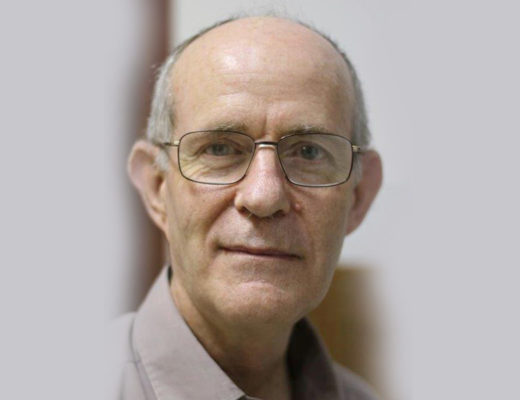
Dr David Glass graduated from UCT in 1975. He spent the next 12 years working at a mission hospital in Lesotho, where much of his work involved health education and interventions to improve health, aside from the normal busy clinical work of an under-resourced mission hospital.
He returned to UCT in 1990 to specialise in obstetrics/gynaecology and then moved to the South Coast where he had the privilege of, amongst other things, ushering 7000 babies into the world. He no longer delivers babies but is still very clinically active in gynaecology.
An old passion, preventive health care, has now replaced the obstetrics side of his work. He is eager to share insights he has gathered over the years on how to prevent and reverse so many of the modern scourges of lifestyle – obesity, diabetes, ischaemic heart disease, high blood pressure, arthritis, common cancers, etc.
He is a family man, with a supportive wife, and two grown children, and four beautiful grandchildren. His hobbies include walking, cycling, vegetable gardening, bird-watching, travelling and writing. He is active in community health outreach and deeply involved in church activities. He enjoys teaching and sharing information.
HAVE YOUR SAY
Like the South Coast Herald’s Facebook page, follow us on Twitter and Instagram
To receive our FREE email newsletter, click HERE