QUOTE
‘Dogs do speak, but only to those who know how to listen’ – Orhan Pamuk
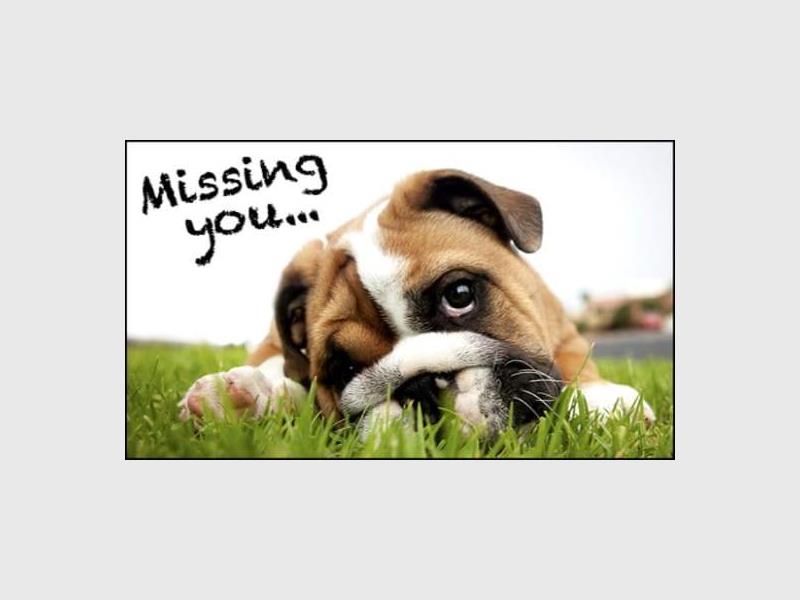
This week we will be looking at ways to deal with separation anxiety in dogs, which might affect some dogs after lockdown.
Families have been at home with their dogs and the dogs have become used to having their humans at home, giving them more attention than usual.
ALSO READ: You and Your Dog: Occupied dogs are happy dogs
Here are some behaviours we may observe in dogs suffering from separation anxiety: disruptive behaviour, such as digging up your garden, destroying furniture, howling and incessant barking, urination or defecating in the house.
These behaviours are all signs of anxiety.
It’s a result of everyone being home and giving the dog plenty of attention, and then suddenly the dog finds himself all alone at home – when everyone has once again gone back to work, and the children are also no longer at home to play with him as they have returned to school.
Before lockdown is lifted and life returns to some kind of normality, you should practise the following routine as prevention is always better than cure.
Some dogs will become very agitated when their owners prepare to leave.
Some dogs will show signs of depression prior to the departure of their human pack members.
Often after the owner has left, the dog will begin to bark or howl, and may display other distress behaviours, often within minutes of the owner’s departure.
When the owner returns home the dog usually goes crazy, acting as if he had been parted from his owner for years, even when the owner has been gone for only 10 minutes.
The ultimate goal when treating a dog suffering from separation anxiety is to resolve the underlying anxiety by teaching the dog to enjoy or at least tolerate being left on his own.
If your dog exhibits any signs of separation anxiety after lockdown, it is more than possible it is due to the change in his routine.
Dogs are creatures of habit and they live by a strict routine.
CHANGE OF ROUTINE DUE TO LOCKDOWN
How you handle this from the outset is going to be very important, to both you and your dog.
Look at how your dog sees the situation, for many weeks now, he has had your undivided attention, going for walks, being taught to do tricks, being groomed more often than normal – and now he is being left to his own devices.
Pre-departure cues
Dogs are extremely sensitive to our actions, it is almost as if they can mind read, so if your dog begins to show any signs of stress when you – say for example pick up your keys to leave home, you can use the method of counter conditioning.
In other words teach your dog that when you pick up your keys it does not always mean you are going to leave him.
Pick up your keys, put on your coat, pick up your bag and just go and sit at the TV instead of leaving.
When your dog is more relaxed – hang your keys up, take off your coat, put your bag away.
Do not praise your dog or give him treats.
You have started the process of teaching your dog that it does not mean that you are leaving home every time you pick up your keys or bag, or put on your coat.
Gradual departure
I have personally applied this method with many dogs.
Start by going into your bathroom or any other room and do not let the dog into the room with you.
Close the door, in the beginning only stay in the room for a few seconds before returning to the dog; when you return, praise him and give him a treat.
Repeat the process and increase the time away from him until he is more comfortable with the fact that you are leaving him.
It is important not to make a big issue about leaving him, many owners will compound the anxiety by making a fuss of the dog before leaving.
Progress to doing out-of-sight stays by putting him in a down and giving him the command to stay.
Now you leave him and exit the house, only staying for a few seconds to begin with, return and praise him for staying, increase the time period of the stay very gradually.
Keep your dog occupied during your absence.
In summer take your dog for a long walk before you leave home.
This is beneficial to both you and your dog.
If it is not possible to do the walk, go into the garden and play the game of fetch.
Put up a small, home-made agility course. Let him do some agility, play tug; he needs to have some exercise and interaction with you before you leave.
Buy a Kong (available at the vet or the local pet shop).
Fill it with some yummy treats add water, put it in the freezer overnight and just before you leave give it to him, this will keep him occupied for a good amount of time as it will also give him something to chew on, instead of him destroying your patio furniture!
Take some of his daily food and hide little piles all over the garden – telling him to go find, dogs love to search so you can keep him occupied as well as getting exercise, by the time he has completed his search he will be too tired to be anxious.
Join a reputable dog school that offers obedience, scenting and agility, all these activities will help your dog to overcome his anxiety.
If you have a friend that knows your dog and is willing to walk your dog during the day, while you are at work, that will also help to reduce his separation anxiety.
Things you should never do to a dog suffering from separation anxiety:
Never punish or scold your dog – anxious behaviours are not as a result of disobedience, they are distress responses, the dog is under stress, and by punishing him you will only compound the problem.
Be calm and assertive at all times and never make a big issue about leaving your dog.
When you leave home do not put your dog in a stay – you do not want him to stay in a down or a sit all day.
Just calmly walk away after giving him his Kong or telling him to find his food in the garden.
Yvonne Eland
ACDIPCBM (UK) With distinction. Specialising in Canine Behaviour and Management
HAVE YOUR SAY
Like the South Coast Herald’s Facebook page, follow us on Twitter and Instagram