
A very warm welcome to everyone. In this article I will explain how dogs learn in two different ways and how most of us humans actually reinforce behaviours that we do not want in our dogs. Learning by association means learning that things go together – when one thing happens another thing will follow. If you take the dog’s leash out of the cupboard, not saying a word to the dog, your dog will react happily as he has learned that this will lead to his walk.
ALSO READ: You and Your Dog: Both fleas and insecticides can harm your dog
You open the jar containing the dog’s kibble he reacts in an excited manner, because he has associated the opening of the jar with suppertime – you have not taught the dog to react to either the jar of kibble or the leash – he has put two and two together and has come to his own conclusions. The dog has learnt to respond to the first event in anticipation of the second event. This is known as classical conditioning (learning by association) discovered by Ivan P. Pavlov, a Russian physiologist.
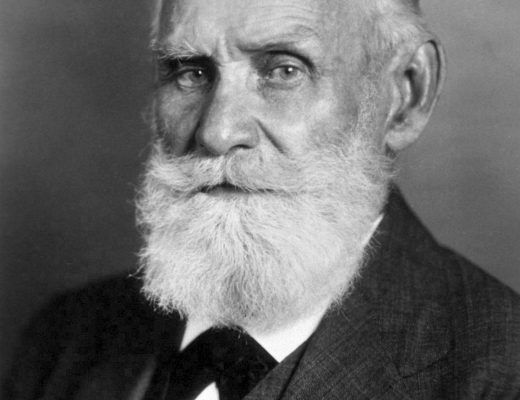
While working with animals in a laboratory, he noticed that each time he sounded a bell the dogs would salivate. They had learnt that when they heard the sound of the bell a treat would follow.
Why it is important to understand the concept of learning by association…
If you understand how dogs learn, you will be better equipped to live harmoniously with them.
OPERANT CONDITIONING (YOU TEACH THE DOG)
If an owner returns home and the dog begins to jump all over her, the owner in desperation pats the dog and might say ‘good boy, mommy is home’. The owner has unintentionally reinforced the jumping. Now the dog will anticipate a petting if he jumps on the owner. The consequence of his actions has earned him a petting.
The family is at the dinner table and the dog is begging. Someone at the table gives the dog some food and this behaviour has now been rewarded and the dog will continue to beg.
The method of operant conditioning is an extensively used method of training dogs, not only for civilian dogs but also for dogs used by the military and the police.
Let us look at the uses of operant conditioning and how dogs learn about the consequences of their actions.
If you ask your dog to sit, and when she sits she gets a yummy treat, the next time you ask her to sit she will more than likely perform the action. The consequence to her action (sitting) is a yummy treat.
I am often approached by owners of young puppies who bite their owners. Although puppy biting is usually not a sign of aggression it should not be tolerated and I would advise the owner to immediately leave the room. By doing this you are giving the puppy a good signal – that this is not a behaviour you will allow.
The puppy will not like the fact that the owner has left the room and she is being left on her own and will soon get the message: ‘If I bite I get left on my own and I don’t like that.’
Here the puppy is learning that her action leads to a negative consequence, so now we have seen that we have positive and negative consequences to actions.
CLASSICAL CONDITIONING
Dogs are usually aware of what predicts what. This is known as classical conditioning. In many instances owner’s classically condition their dogs without realising it. As we discussed earlier, opening the jar of treats predicts a treat, the leash predicts a walk. These are both things that the dog enjoys but they can also learn to predict things they dislike. For dogs that are afraid of storms rain might predict thunder and the dog becomes disorientated and afraid.
You pick up your keys to leave for work… this predicts that you will be away from home for the rest of the day, leaving the dog on his own. Whether we intend it or not, dogs will learn about associations in their environment.
Owners often ask why their dog does not want to get into the car or seems to be afraid of the car. If an owner has taken the dog to the vet for a procedure that may have been painful, and the owner does not take the dog anywhere else (except the vet) in the car – such as a ride down to the park for a walk, or taking the dog to a friend’s house to play with the friend’s dog, this dog has only experienced an unpleasant result after being in the car. He now predicts car = fear = vet = pain.

Classical conditioning is very powerful and can be used to help dogs to overcome many fears and scary things, but it has to be carefully used and our dogs need to be treated with the utmost care. In the example of the dog only going in the car for a procedure to the vet, the owner has taught the dog to predict that the car is something to fear. Harsh training methods should never be used. The use of a prong collar to stop a dog from pulling on his leash is barbaric.
Prong collars work on the concept that each time the dog pulls on the leash the prongs dig into his flesh. Try to imagine what the dog is experiencing each time he sees another dog approaching and pulls on his leash to greet the other dog. He experiences pain, this happens over and over, what will the dog predict? This dog will associate seeing other dogs with pain and he might become very upset when he sees other dogs. He has now been conditioned by the owner not to be friendly but upset when he sees other dogs.
By far the best method is to use treats or a dog’s favourite toy. When he pulls on the leash offer him a treat and walk calmly past the other dog. The dog is learning by classical conditioning in both instances, but his predictions are very different. The use of any pieces of equipment designed to hurt or scare the dog are short term solutions that can cause long term problems.
Yvonne Eland
ADIPCBM (UK) with distinction
Specialising in Canine Behaviour and Management