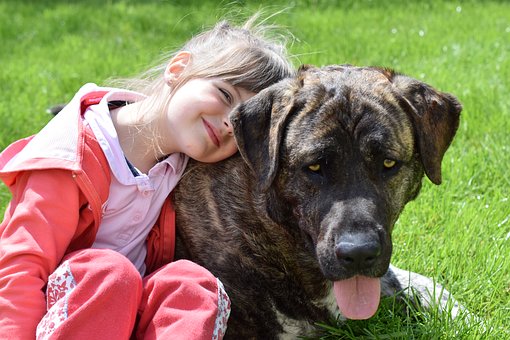
Previously in this column I have dealt with dogs who are fearful of humans, or any scary things such as fireworks and thunder. In this article I am going to try and help you to understand, and deal with children who have a fear of dogs.
ALSO READ: You and Your Dog: It’s all about association
The fear of dogs is not as common as the fear of spiders and snakes. Spiders look scary, with their eight hairy legs and some of them are venomous. As as for snakes – well, most people are terrified of snakes, they are venomous, and have a bad reputation – even if they are harmless house snakes.
HOW PEOPLE BECOME PHOBIC (A brief explanation)
If puppies are not socialised and do not have interaction with people, they become withdrawn and fearful. The same applies to children. If a child is not given the opportunity to interact with dogs from an early age, chances are the child will grow into adulthood fearing dogs. Genetics cannot be ruled out, but the chances are not as great as the experience the child will have had with dogs from an early age.
If a person has had an unpleasant experience as a child, e.g. felt threatened or witnessed a dog chasing or attacking someone, this could have left a lasting impression on the child. The child could also have acquired the fear of dogs from a parent who suffers from the condition. A person with this phobia will experience dread, anxiety and worry about being exposed to a dog. Signs could include increased heart rate, nausea, sweating, being unable to breathe, shaking and crying or screaming.
HOW DOGS KNOW WHEN SOMEONE IS FEARFUL OF THEM
When a person is nervous and sweating, a hormone associated with adrenaline will pump through the body, the dog will detect the adrenaline scent which is not a scent humans can smell. There has been much debate as to dogs detecting the scent of fear in a person, so what other explanation could be given?
BODY LANGUAGE
Dogs are masters at figuring out our emotions by observing our body language, a person’s body will communicate to the dog exactly what the person is feeling – in this case FEAR.
HELPING A CHILD TO OVERCOME CYNOPHOBIA
Firstly, not all dogs are dangerous and if you are afraid of all dogs you encounter, it is more than likely a psychological problem. For example, you were bitten as a young child or witnessed another person being attacked by a vicious dog. Remain calm and do not show fear, keep emotions and reactions under control when confronting a dog. This is fine in theory but it is also almost impossible for a child to understand. This is why they need careful guidance. Dealing with children who are fearful of dogs is not much different to dealing with dogs that are fearful of people. Getting a child to accept the fact that the dog is not a monster can be done in the following manner: A good place to start would be a visit to a pet shop, showing them pictures in books or watching positive dog programmes on TV. Choose a quiet environment with no distractions for the introduction between child and animal. A hall is an ideal venue. You will need an adult dog which is calm, not hyperactive but friendly, handled by the owner. The dog should be dressed in funny clothes, with a hat on his head, which should immediately draw the child’s attention, and relieve some of the tension. The behaviourist can comment, ‘Hey, look! Is that Paddington Bear??
SESSION 1
Once the handler and dog are ready for the introduction the child and a suitable person (an animal behaviourist) enter the hall. In this way you will be allowing the child to approach the dog in their own time. The dog should be approached from the side, so no eye contact is made between the child and the dog. If the child shows fear or discomfort with the situation, back off and talk calmly to the child. There is no reason to rush. If you do rush or force the child you could increase the child?s fear. The time period for this session should not be more than 30 minutes, or until the child shows fatigue.
SESSION 2 (repeat session 1)
When the child has progressed to the stage where she can happily approach the dog from the side, the animal behaviourist can pat the dog. Here it is important that the dog be kept very calm by the handler. Do not ask the child to pet the dog, wait for a positive response from her.
SESSION 3 (repeat sessions 1 and 2)
Accompany the handler and walk with the dog and handler around the hall. If the child shows any signs of fear increase the distance between yourself and the handler and dog. Slowly move closer to the handler and dog.
SESSION 4 (repeat sessions 1,2, 3)
Change position so that the child is walking next to the dog. This should be done at a safe distance so that the child does not feel under any stress – decrease the distance slowly until the child is close to the dog. The child should be comfortable with the situation. If she is not increase the distance.
SESSION 5 (repeat 1, 2, 3, 4)
It is now time for the behaviourist to walk the dog on one side and the child on the other. In this way the child is becoming more at ease in the dog’s company. The behaviourist gives the dog the sit command when the dog sits the behaviourist treats the dog.
SESSION 6 (repeat 1, 2, 3, 4, 5)
The child now gets to treat the dog. The behaviourist places the treat in her own hand, letting the child put her hand under that of the behaviourist. The dog takes the treat from the behaviourist and if the child is showing no fear, let the child give the dog a treat. The correct manner is to always place the treat in the open palm of the child’s hand. This will prevent the dog from grabbing the treat and rather eat the treat out of her hand. When success has been achieved in session 6, the child is approached by the handler and dog. If she is completely comfortable with the situation, she is allowed to walk the dog. This is the most rewarding thing a behaviourist can ever experience. This whole procedure could take weeks or even months before it is 100% – it all depends upon the severity of the fear. These sessions should be under the supervision of a qualified animal behaviourist.
Yvonne Eland ADIPCBM (UK) with distinction
Specialising in Canine Behaviour and Management
HAVE YOUR SAY
Like the South Coast Herald’s Facebook page, follow us on Twitter and Instagram