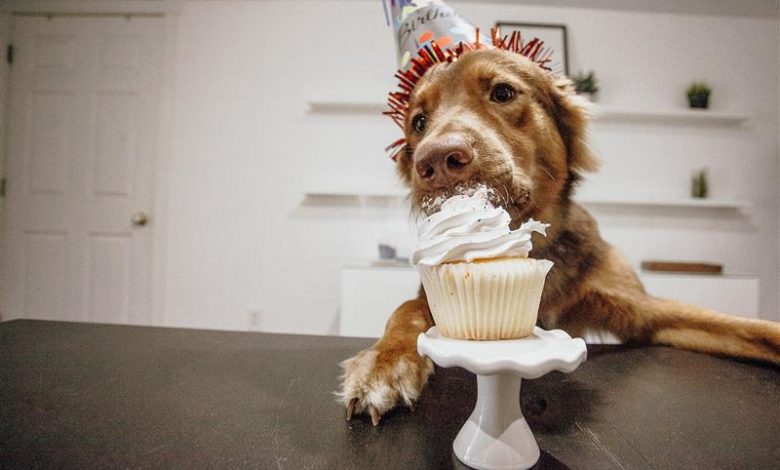
Dogs by nature are always on the lookout for food – they are genetically wired this way.
Dogs who ‘counter-surf’ can be the most frustrating pets. Owners often refer to them as sneaky as they will usually steal from the counter when the owner is not looking or has left the room.
Because they are seldom caught in the act this behaviour is difficult to correct.
ALSO READ : You and your Dog: Treat your dog like a human but please feed him like a dog
Counter-surfing can be very dangerous to your dog’s health. As I discussed previously, some foods meant for human consumption are not good for dogs.
A few years back, I walked into my kitchen to see that my standard poodle – an opportunist of note – had tipped over a litre of milk which I had forgotten to return to the fridge.
The milk was running out of the box all over the floor and the poodle was lapping up the milk on the counter, while the smaller dogs (three of them) were cleaning up the floor – talk about team work!
Some particularly curious dogs will not only search for food, they will take anything off the counter or the coffee table including the TV remote or even a cell phone – in fact ANYTHING that takes their fancy.
HOW TO MANAGE THE COUNTER-SURFING POOCH
As most of us are aware, canines are genetically programmed to eat any food they see, but this does not give them the right to help themselves.
The behaviour will have to be modified, and it is not difficult to do.
Begin by not leaving food where it is easily accessible to your dog. If you are going to leave food out for any reason, remove the dog from the area.
Again, it goes back to puppyhood. If you had not made food or other interesting items easily accessible to your puppy, the chances are very good that he will not steal things from counters or tables when he reaches adulthood.
But, having said that, do not tempt your dog unnecessarily, with hard-to-ignore items. Good behaviour can turn into bad behaviour if given the opportunity.
A dog which counter surfs is actually just behaving naturally – dogs are by nature scavengers and opportunists and any yummy smelling food is just too good an opportunity to pass up.
Important to bear in mind – counter-surfing is a self-rewarding reinforcement of the behaviour. If the dog gets the food on the counter, he is rewarding his own behaviour and he will carry on doing it.
Usually a dog will counter-surf when the owner is not around, and this makes the behaviour very difficult to correct, as he has not been caught in the act.
If the dog is not caught in the act there is no point in trying to scold him, he does not connect the scolding with the act of taking the food.
Rather take preventative measures – prevention is always better than cure!
HOW TO PREVENT COUNTER-SURFING
Teaching your dog not to take food off the counters is all about teaching him incompatible behaviours.
It is all about association – jumping up on the counter and getting a tasty snack will teach him that this behaviour is worth trying again. He only has to success once and the game is on, so do not let your dog learn the behaviour in the first place.
Block the dog’s access to the counters or any other area where he is likely to take items off tables. This should be done right from the start, especially with puppies.
Remove temptation – keep counters clear of food and wipe all food residue from the counters, making sure there are no crumbs or lingering food smells. Remember that your dog’s nose will detect the slightest smell, encouraging him to investigate.
By removing the temptation there will not be any reinforcement of the behaviour and you will be setting your dog up for success.
My personal choice is to teach my dog incompatible behaviour/s, with the aim of teaching your dog that another behaviour is more rewarding.
1 Teach your dog to lie on his mat while you are preparing your meal.
2. Instead of him jumping on the counter, get your dog to sit.
3. Teach your dog to leave it.
4. Teach your dog to stay out of the kitchen.
Choose only one of the above behaviours, and begin with no distractions.
RELAX ON YOUR MAT
If you choose this option, first teach him the “go to your mat command”. Start with no distractions. Make the mat a pleasant place to be, treat him while he is relaxing on his mat, and eventually he will realise that by staying on his mat he is rewarded with a treat.
Slowly increase the distractions by preparing small amounts of your food and rewarding him constantly with some tasty dog treats, not the food you are preparing. After consistently training him, when you enter the kitchen – give him the command ‘Go to your mat’ and he will be quite happy to do that as he now knows he will be rewared with a treat for good behaviour. To start with only let him stay on his mat for a short time, increasing the length of time as he improves.
LEAVE IT
I personally teach,the relax on the mat and the leave it commands. I do believe dogs should be allowed to think, and in my opinion, restricting the dog from the area is no achieving discipline as you are not teaching the dog anything. Teach the “leave it” in the following manner.
Put a leash on your dog for this exercise. As with the previous exercise, make sure there are no distractions. Do not use your dog’s food dish. Place a small bowl of treats on the floor, and give the command ‘leave it ‘. If he moves towards the bowl, pull on his leash saying uh-uh at the same time. Build up slowly until you can walk away from him, leaving the treat in front of him. Return and allow him the treat. Now, if you are preparing food and you need to answer your phone, just give the ‘leave it’ command.
Reward good behaviour – if he chooses to sit while you are preparing your food of if he lies down of his own accord, praise and treat him. The more a behaviour is reinforced, the more a dog will choose to practise it.
It’s all about association, and patience and consistency are crucial in modifying behaviour. If you are not able to control the situation, consult a professional animal behaviourist to assist you.
Yvonne Eland ADIP (UK) with distinction
Specialising in Canine Behaviour and Management
HAVE YOUR SAY
Like the South Coast Herald’s Facebook page, follow us on Twitter and Instagram