
Last week we introduced the subject of motivation for change and why it is hard for us to change our behaviour. I did a survey of the attitudes towards lifestyle changes of some of the people I care deeply about. It was quite revealing. One of the responses was that “I will be willing to take change more seriously if I develop the disease – cure rather than prevention”. Another was “I’m expecting I’ll have to implement changes as problems are fairly likely to happen”.
ALSO READ : Turning the Tide – Change can bring benefits
The problem is the foods we know are not healthy, and the behaviours we do we know are problematic! But it is so “nice” to eat those foods, and it is so hard to get off our couches to do some exercise! We can find a hundred excuses to postpone the inevitable.
The reason that we have an explosion of lifestyle-related diseases in the world is that our media, marketing, “normality” are all geared towards unhealthy behaviours. How do we start? Sometimes it takes the death of a family member, or the diagnosis of a disease like diabetes, or a heart attack, or cancer in someone close to us, that wakes us up to the reality of our mortality.
And those events should certainly make us re-evaluate our health status. But the question we need to ask ourselves is why should we wait for something to break before we do something to interrupt the inevitable?
Our body has an amazing ability to repair and regenerate, but there are limitations to that gift. Dr Dean Ornish in his evidence-based programme of lifestyle healing says that it has been adopted by thousands: “…because it’s based on pleasure, not pain; abundance, not deprivation; science, not myth; freedom and power, not restriction and manipulation…sacrifice is not sustainable. Love is.”
His lifestyle-based programme is the first in the USA to be funded by Medical lnsurance (medical aids) because it has been proven to be successful and cost-effective in reversing heart disease, high blood pressure, diabetes and even some early cancers. How can we make change pleasurable and positive?
We tend to think of healthier living as being unpleasant, boring, hard work – pain and deprivation. And yet so many of the people who have spoken to me about their adoption of lifestyle changes speak of amazing vitality, clarity of mind and freedom from pain and lethargy, enthusiasm for life, better sleep, better relationships, and yes even better intimacy.
The problem is the mountain between our present condition and that sweet spot at the top of the mountain.
Sometimes the thought of climbing the “mountain” can be daunting. We don’t even want to begin. But the great thing is that when we take a few steps at a time, already those steps have brought us to a higher “elevation” and we already begin to experience some benefits – new vistas of health, easier breathing of the “fresher air”, a feeling of accomplishment. Even losing 2 kg can make an appreciable difference to how we feel, let alone 5 or 10 kg.
A good place to start is to sit down and honestly contemplate the present state of your life and health. Do you want to be around to accompany your daughter down the aisle at her wedding? Do you want to be able to play with your grandchildren, and tell them stories of your younger days, still with a clear mind and lucid memory to make it interesting for them?
Do you still want to be fit enough to enjoy your retirement, to appreciate the ability to do hobbies, and visit new places and achieve new feats? Or will you be one of those senior citizens who spends their latter lives imprisoned in a wheelchair, or bed-ridden.
I have come across some incredible people in my life. One of them is a great uncle of mine, Dr Eric Webster, theologian, and long time former editor of “The Signs of the Times”. He was interviewed two years ago at the age of 90, at the start of the Two Oceans half marathon in Cape Town – Watch this interview
Recently I was out dragging myself up a long hill in Ramsgate on my bicycle, when Tony came powering up on his mountain bike, and slowed down to join me for a few km. At the age of 84, he has had to give up jogging because his knees won’t allow that anymore, but he can still ride a bike.
He has been a competitive triathlete in his life. I think “fit” is his second name. He rides on average 25 km every day, and some of that is in the sugar cane fields all on his own. I wouldn’t recommend that for anyone, especially at his age. But he says he is not afraid of falling – he has done it too many times to remember.
He can contact someone if he does, but he isn’t going to allow a few falls to interfere with his zest for living. So, the first step in change is to make some long term goals. Where do you want to be health-wise in 5 or 10 years time. How do you envision your life at that time.
The wisest man who ever lived, King Solomon said: “Where there is no vision, the people perish.” Proverbs 29:18. Modern science has confirmed the truth of that statement. When we lose our purpose for living our health of body and mind deteriorates rapidly.
Next week we will look at the next step in our change for the better.
Have a great week, envisioning a brighter future.
Dave Glass
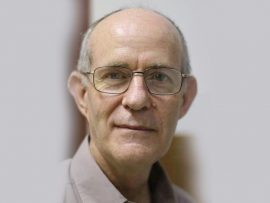
Dr David Glass graduated from UCT in 1975. He spent the next 12 years working at a mission hospital in Lesotho, where much of his work involved health education and interventions to improve health, aside from the normal busy clinical work of an under-resourced mission hospital. He returned to UCT in 1990 to specialise in obstetrics/gynaecology and then moved to the South Coast where he had the privilege of, amongst other things, ushering 7000 babies into the world. He no longer delivers babies but is still very clinically active in gynaecology. An old passion, preventive health care, has now replaced the obstetrics side of his work. He is eager to share insights he has gathered over the years on how to prevent and reverse so many of the modern scourges of lifestyle – obesity, diabetes, ischaemic heart disease, high blood pressure, arthritis, common cancers, etc. He is a family man, with a supportive wife, and two grown children, and four beautiful grandchildren. His hobbies include walking, cycling, vegetable gardening, bird-watching, travelling and writing. He is active in community health outreach and deeply involved in church activities. He enjoys teaching and sharing information.
HAVE YOUR SAY
Like the South Coast Herald’s Facebook page, follow us on Twitter and Instagram