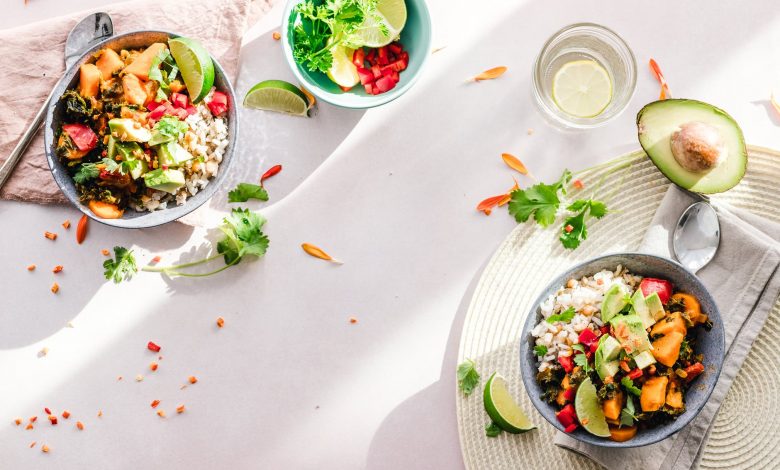
Last week we discussed the fact that lifestyle medicine is based upon scientific evidence. It is not founded on hear-say, or traditional knowledge – not that the latter doesn’t have some benefits. I am always amazed at the observational powers of our forebears and how much wisdom and insight they demonstrated, in spite of absence of all the technology with which we are so blessed.
Today we will cover, somewhat broadly, the first and perhaps most important lifestyle intervention in terms of preventing and reversing non-communicable diseases – a whole-food, plant-based diet. What does that mean?
What is a whole-food diet? Our ancestors lived close to the land. Many grew their own food, and regularly harvested fruits and vegetables in season to supplement their diet.
If they did not have a garden, there were plenty of people nearby who did, and they were able to purchase or trade fresh produce for other goods or services. (I remember, growing up in rural Tanzania, how one day every week villagers would come to the local market to sell their produce, or handiwork, or home-made carpentry, or baking.) Then came along urbanisation and the industrial revolution.
Factories were built to modify foods and change their characteristics to preserve them, to make them more palatable and more marketable. But this processing of foods came at the expense of nutritional value of the original foods. Natural foods were stripped of vitamins, minerals, water and plant fibre.
Of course for marketing purposes, these foods were sold as “fortified with extra vitamins and minerals” – but in fact most of the nutrients had been stripped away first. It was back in the early 1970’s that a brilliant surgeon with keen powers of observation and interpretation, Dr Denis Burkitt came up with the fibre hypothesis for many of the diseases becoming so common in the West.
Burkitt had been working in Uganda for a number of years, and was the first to elucidate the cause of a devastating lymphoma (type of cancer) that affected so many young Ugandans. He was the one who proposed that the cause of the lymphoma was viral – later confirmed to be an insect-borne Epstein-Barr virus. He was not the first to identify the importance of plant fibre in preventing disease – others who were working in Africa – Drs ARP Walker and GD Campbell in South Africa, and Hugh Trowell, also in Uganda shared his enthusiasm, and perhaps influenced Burkitt’s understanding.
Burkitt identified colon cancer, diverticular disease, irritable bowel syndrome, appendicitis, varicose veins, haemorrhoids, diabetes, obesity, atherosclerosis and dental caries as being caused by lack of dietary fibre.
Fibre is not the only ingredient that is removed from natural foods through processing.
More than 25,000 phytonutrients have been identified, and probably many more are not yet known which could play important roles in keeping us healthy – carotenoids, ellagic acid, flavonoids, resveratrol, glucosinolates and phytoestrogens to name a few – not the subject of your daily conversation! These phytonutrients are found abundantly in fruits, vegetables, whole grains, legumes, seeds, nuts, spices and herbs and mushrooms.
That is one reason why fruits and vegetables come in so many different colours – so many of these phytochemicals are connected to the colour of foods – thus the recommendation to have rainbow colours in our diet. Another important factor is that natural plant foods are packaged with just the right mix of ingredients for health – carbohydrates are encased in fibre capsules to allow for gradual release of digested sugars. The right amounts of vitamins and minerals are packaged together to promote health.
Many studies have shown that trying to replace removed vitamins and minerals with supplements can actually bring harm. See this article.
#TOC_TITLE_HDR_5 As you may have noticed in the above, there is very little mention of animal products. That is because the longest-lived people in the world eat a predominantly plant-based diet, with a little fish, or dairy, red meat or chicken now and then mostly on special occasions.
We don’t have time to delve into the risks of a high intake of animal fats and proteins today but there is no doubt from many, many studies that the risks of high blood pressure, diabetes, obesity, auto-immune diseases, Alzheimer’s disease and cancer are strongly correlated with the amount of animal products consumed. See this very comprehensive study.
One of the foundations of a healthy life, therefore, is the consumption of a wide spectrum of minimally processed, whole foods, predominantly of plant origin. That gives us a solid base to our health. Next week we will talk about another foundation – exercise. Stay well, actively exploring new healthful recipes. Here is one resource that shows healthy food does not have to be boring.
David Glass
Dr David Glass graduated from UCT in 1975. He spent the next 12 years working at a mission hospital in Lesotho, where much of his work involved health education and interventions to improve health, aside from the normal busy clinical work of an under-resourced mission hospital. He returned to UCT in 1990 to specialise in obstetrics/gynaecology and then moved to the South Coast where he had the privilege of, amongst other things, ushering 7000 babies into the world. He no longer delivers babies but is still very clinically active in gynaecology. An old passion, preventive health care, has now replaced the obstetrics side of his work. He is eager to share insights he has gathered over the years on how to prevent and reverse so many of the modern scourges of lifestyle – obesity, diabetes, ischaemic heart disease, high blood pressure, arthritis, common cancers, etc. He is a family man, with a supportive wife, and two grown children, and four beautiful grandchildren. His hobbies include walking, cycling, vegetable gardening, bird-watching, travelling and writing. He is active in community health outreach and deeply involved in church activities. He enjoys teaching and sharing information.
HAVE YOUR SAY
Like the South Coast Herald’s Facebook page, follow us on Twitter and Instagram