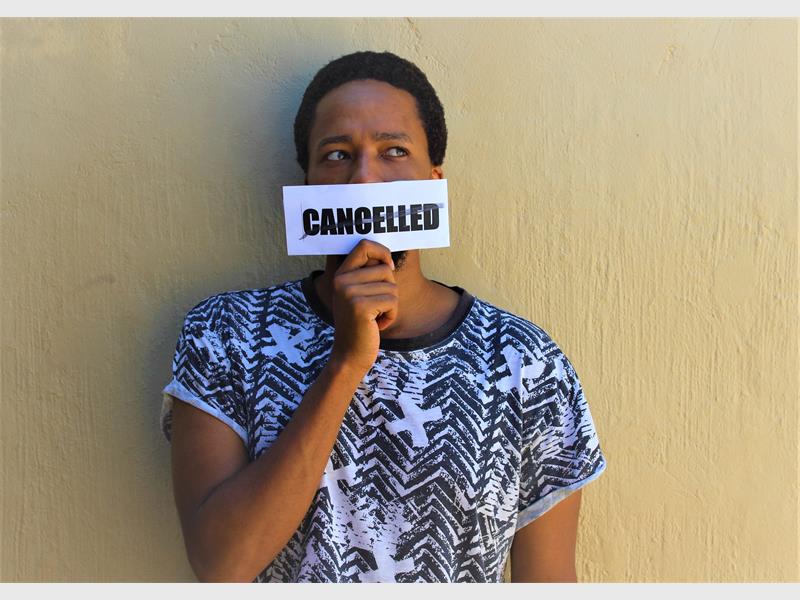
Nowadays, the word ‘cancel’ is thrown around very casually.
We cancel subscriptions, contracts, appointments, that trip you’ve been planning with your friends for the last eight months and lunch dates we had no intention of ever attending.
In more recent times, we have started cancelling human beings, yes, human beings.
As a result, the cancellation of humans, is thus referred to as ‘cancel culture’.
The term ‘cancel culture’ can be described as such: the termination of one’s subscription (be it romantic, platonic or even storgic) to another human, mostly based on intolerance of previous moral or social transgressions committed by the cancelled individual. Most (if not all) cases occur and are driven by people on social media.
I admit, the ‘termination of one’s subscription to another human being’ is as ridiculous as it sounds.
However, to fully understand the concept of cancel culture one must comprehend the basis of its origin.
It is often said that true power lies with the masses.
I believe cancel culture arose as a counter to the use of violence.
Instead of mob justice, why don’t we all just pretend the person never existed?
But if cancel culture’s essence truly lies in counteracting violence, why would one find it detrimental to human existence?
As previously mentioned, this culture is driven by intolerance, which is most evident on social media.
How often have you wanted to post a view that you stand by, but end up clearing all your characters because you are afraid that it might come out wrong? I’ll let that simmer.
This fear is stimulated by what many social media users refer to as being ‘dragged’.
This term refers to the backlash that is unleashed during one’s cancellation ordeal, where members of the social media public take turns to throw insults to remind you how horrible a person you are.
No one is ever safe from cancel culture, with public figures, mostly, on the receiving end of it.
It is also important to remember that it matters not when a statement was made, be it last week or 10 years ago.
It is bound to resurface the moment the individual says or does something the masses disapprove of, and can also occur when one has a motive to socially destroy the other, or to simply settle a score.
I believe an alternative definition, or synonym, for the term, ‘cancel culture’ is ‘passive violence’.
There’s no denying that some deserving perpetrators have been brought to justice through this culture.
However, many have been wrongfully persecuted on social media, due to premature judgements made by users.
Public figures and ordinary citizens alike have had reputations tarnished, jobs and sponsorships lost, and more – all because of one allegation or rumour made by someone we did not know prior to the day of cancellation.
One may also find that public figures will also abuse their influence by getting their followers to turn on other people.
However, if we believe that spreading love is the key to world peace in the real and digital world, why do we opt to go out of our way to ensure that people are brought to justice, even if it means losing our own sense of self and destroying other peoples lives?
Is it not enough to call the person into attention without spreading negativity and insults?
Are we really about bringing bringing people to justice, or are we more driven by ensuring that vengeance is carried out, no matter the cost?
I believe that as humans, we really need revisit these ideas and distinguish between what is justice and what is vengeance.
I’ll let that simmer, too.
HAVE YOUR SAY
Like the South Coast Herald’s Facebook page, follow us on Twitter and Instagram