Public encouraged to screen blood pressure
“Measure your blood pressure accurately, control it and live longer.” This is the theme for World Hypertension Day 2022. Since 2005, the World Hypertension League (WHL) promoted World Hypertension Day on May 17 annually. The Heart and Stroke Foundation South Africa said in a statement that it will commemorate World Hypertension Day 2022. The foundation
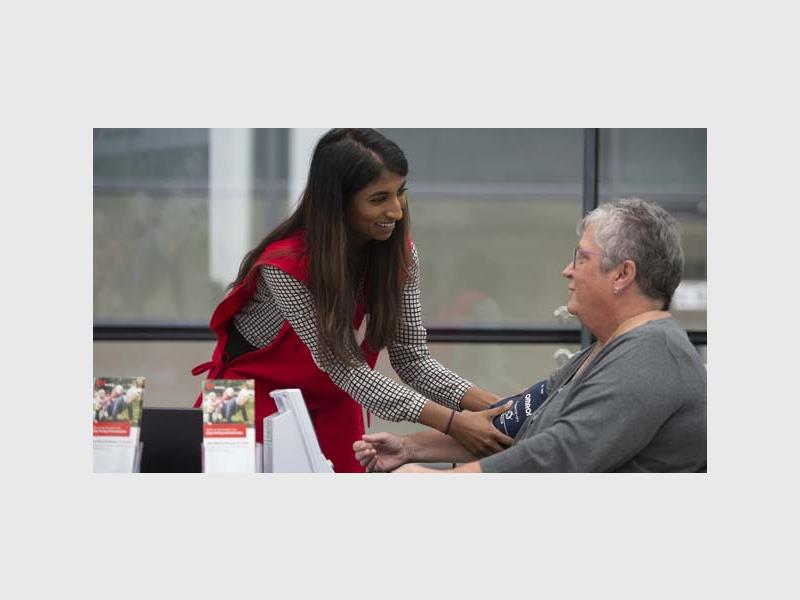
“Measure your blood pressure accurately, control it and live longer.” This is the theme for World Hypertension Day 2022.
Since 2005, the World Hypertension League (WHL) promoted World Hypertension Day on May 17 annually.
The Heart and Stroke Foundation South Africa said in a statement that it will commemorate World Hypertension Day 2022.
The foundation said the primary aim of the health event is to increase the awareness of the dangers of high blood pressure (BP) or hypertension in populations around the world.
It added that the call to action for World Hypertension Day is to promote best practices to stay up to date with global standards in hypertension prevention, and measurement and to standardise these measures globally in order to monitor the prevalence within countries and across countries, saying that key stakeholders in the health space are set to achieve the goal for hypertension control in Africa by 2030.
“In 2022, the focus is on low to middle-income countries (LMICs) as the consequences of hypertension in these countries lead to very poor health outcomes, in particular making individuals more vulnerable to heart disease, strokes, and other circulatory diseases. Given the rise in the prevalence of hypertension in LMICs over the past 25 years, interventions for hypertension control are urgently needed.
One in three people is aware of their hypertension status with only approximately 8% of them having their blood pressure controlled. It has been projected that three-quarters of all adults with hypertension will be living in LMICs by the year 2025,” read the statement.
It further read that as hypertension is the leading preventable risk factor for cardiovascular diseases in Africa and globally, it is important to stimulate all countries to address social impact, disease burden, and costs for national health systems.
The foundation also noted that hypertension is responsible for 13% of all deaths globally, saying that in South Africa more than one in three adults live with high blood pressure and it is responsible for one in every two strokes and two in every five heart attacks.
The organisation also said high blood pressure is known as a ‘silent killer’ because there are rarely any symptoms or visible signs to warn that blood pressure is high.
“That is why more than 50% of people with high blood pressure are unaware of their condition. Hypertension is defined as the high persistent force of the blood flowing through the blood vessels. Fluctuations in blood pressure are normal which is why it is only diagnosed when it remains high on several occasions or when it is dangerously high on one occasion. It is important to understand the pathophysiology of hypertension as this will prove the urgency of appropriate action to address it,” said the foundation.
It added: “When trying to understand the risk factors of hypertension in relation to LMICs, it is a combination of both risk factors that have already been well established and those that are not emphasised enough. Established risk factors include unhealthy diets which in LMICs can be associated with affordability and availability of healthy foods, as well as physical inactivity. Another prominent risk factor is tobacco smoking with over 80% of all tobacco users residing within LMICs. Further to this, excessive alcohol consumption has been linked to hypertension and heavy episodic drinking has been found to be high in LMICs. With LMICs facing a double burden of malnutrition.”
Also, the foundation said familial hypertension (FH) is often also not discussed as an important risk factor.
It said FH is a rare, genetic form of hypertension caused by mutations in particular genes, many of which help control the balance of fluids and salts in the body and affect blood pressure.
It added that the heritable component of blood pressure has been documented in familial and twin studies suggesting that 30% – 50% of the variance of blood pressure readings are attributable to genetic heritability and about 50% to environmental factors. Similarly, familial aggregation of hypertension is well recognised and a family history of hypertension has been associated with an increased risk and earlier onset of hypertension, highlighting the importance of genetic factors in hypertension.
“Amongst the known risk factors, evidence states that the likelihood of high blood pressure increases with age. Nearly eight in 10 South Africans over the age of 55 years have high blood pressure. The Heart and Stroke Foundation SA, therefore, urges the public and especially those over the age of 45 years to get screened and know their numbers. Furthermore, our message stands simple and strong to adhere to medications prescribed by your doctor should you already be diagnosed,” read the statement.