December 17: On This Day in World History … briefly
In spite of an underwhelming audience of five people, the Wright brothers made aviation history when their aircraft managed the first powered flight.
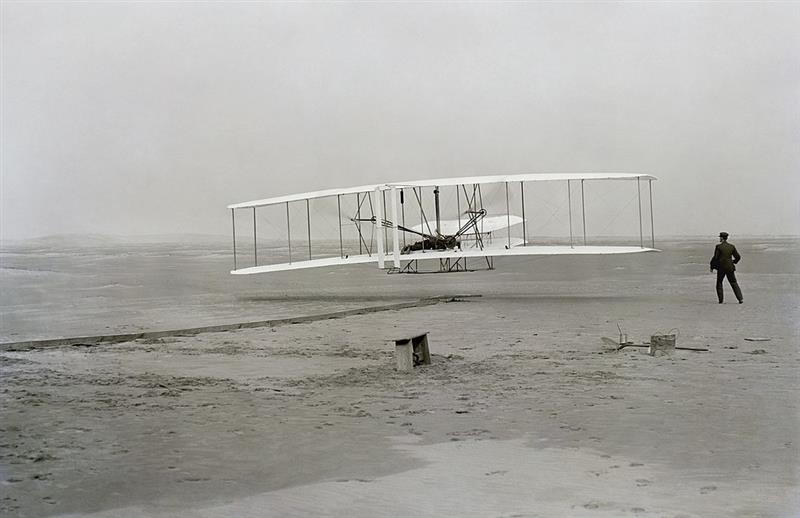
1903: First powered flight catapults the Wright brothers into history books
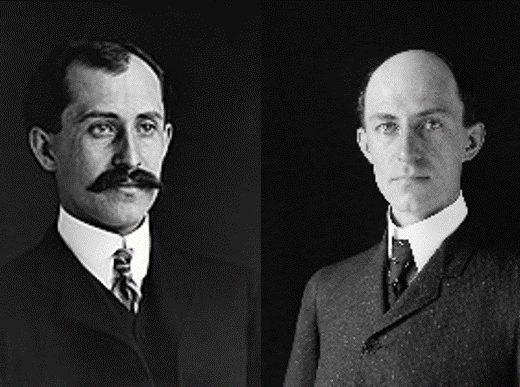
The Wright brothers, Orville (August 19, 1871 – January 30, 1948) and Wilbur (April 16, 1867 – May 30, 1912), were two American aviators, engineers, inventors, and aviation pioneers who are generally credited with inventing, building, and flying the world’s first successful airplane. They made the first controlled, sustained flight of a powered, heavier-than-air aircraft on December 17, 1903, four miles south of Kitty Hawk, North Carolina. In 1904–05 the brothers developed their flying machine into the first practical fixed-wing aircraft. Although not the first to build experimental aircraft, the Wright brothers were the first to invent aircraft controls that made fixed-wing powered flight possible.
The brothers’ fundamental breakthrough was their invention of three-axis control, which enabled the pilot to steer the aircraft effectively and to maintain its equilibrium. This method became and remains standard on fixed-wing aircraft of all kinds. From the beginning of their aeronautical work, the Wright brothers focused on developing a reliable method of pilot control as the key to solving ‘the flying problem’.
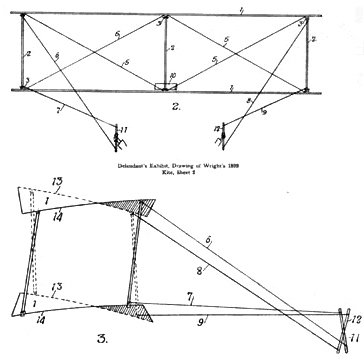
This approach differed significantly from other experimenters of the time who put more emphasis on developing powerful engines. Using a small home-built wind tunnel, the Wrights also collected more accurate data than any before, enabling them to design and build wings and propellers that were more efficient than any before. Their first US patent, 821 393, did not claim invention of a flying machine, but rather, the invention of a system of aerodynamic control that manipulated a flying machine’s surfaces.
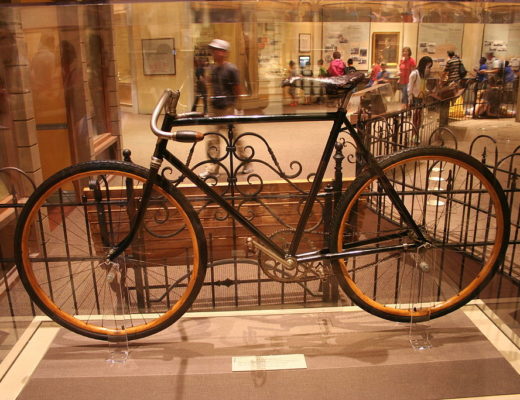
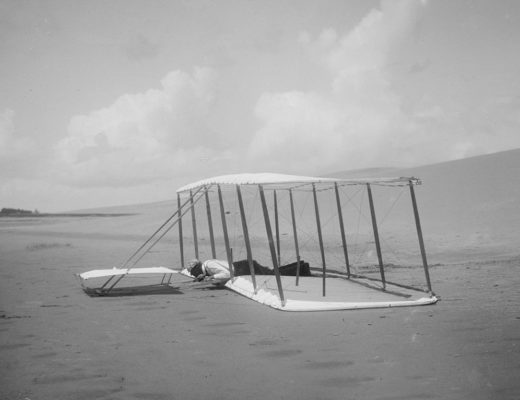
They gained the mechanical skills essential for their success by working for years in their shop with printing presses, bicycles, motors, and other machinery. Their work with bicycles in particular influenced their belief that an unstable vehicle like a flying machine could be controlled and balanced with practice. From 1900 until their first powered flights in late 1903 with the Wright Flyer, they conducted extensive glider tests that also developed their skills as pilots. Their bicycle shop employee Charlie Taylor became an important part of the team, building their first airplane engine in close collaboration with the brothers.
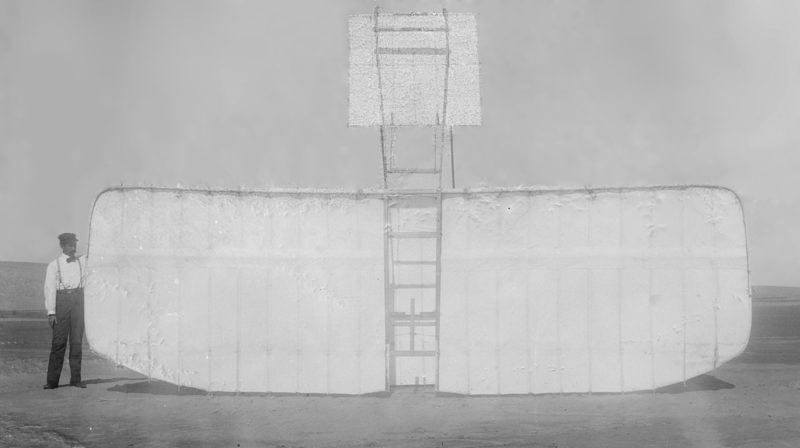
The Wright brothers’ status as inventors of the airplane has been subject to counter-claims by various parties. Much controversy persists over the many competing claims of early aviators. Edward Roach, historian for the Dayton Aviation Heritage National Historical Park argues that they were excellent self-taught engineers who could run a small company, but they did not have the business skills or temperament to dominate the growing aviation industry.
Most notable historic snippets or facts extracted from the book ‘On This Day’ first published in 1992 by Octopus Publishing Group Ltd, London, as well as additional supplementary information extracted from Wikipedia.
HAVE YOUR SAY
Like our Facebook page, follow us on Twitter and Instagram
For news straight to your phone, add us on WhatsApp 082 421 6033