
Get to know all about the African jacana in this week’s birding column
The jacana's nest is a small pad of plant stems, on floating vegetation at water level. Two to four heavily streaked tan - yellow to brown eggs are laid.
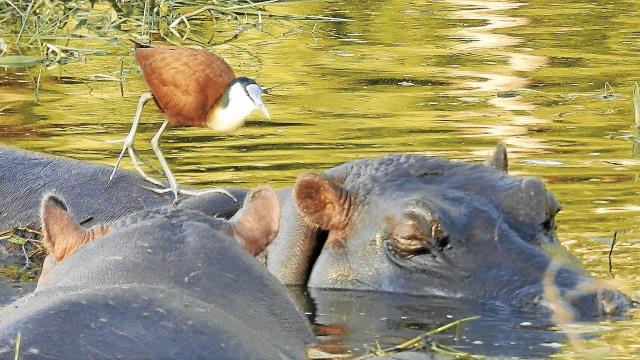
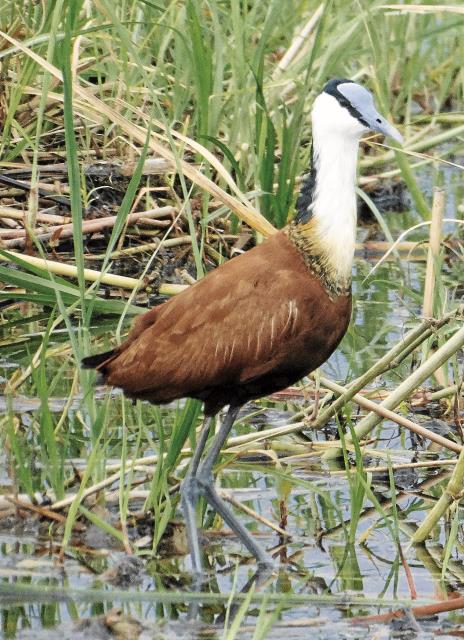
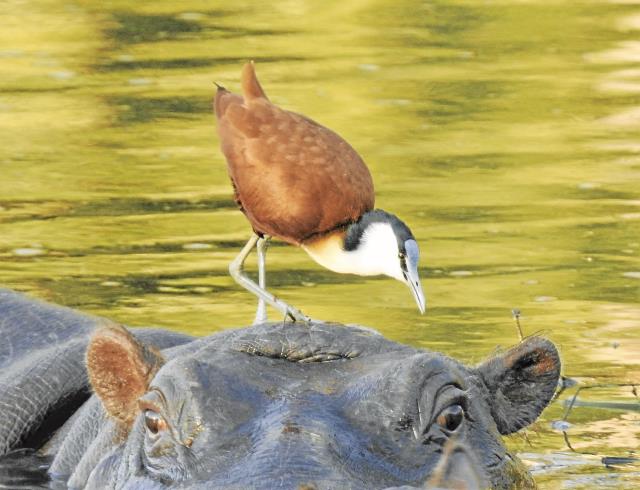
THESE jacanas are common to abundant residents, found from East London northwards through most of KZN, eSwatini, the Eastern low veld and Limpopo river regions.
They like lagoons, lakes, pans, river backwaters, usually with fringing water plant vegetation and floating waterlilies.
Moving in loose small groups, solitary or in pairs, they walk quickly over floating plants (hence the name lilytrotter) pecking at surfaces or turning up edges of leaves for food. Their flight is quick, with irregular wing beats, the long toes trailing behind and raising their wings briefly on landing.
Jacanas feed on insects, molluscs, crustaceans, seeds, and waterlily bulbs.
Their highly vocal call is a noisy sharp krrrek, a rasping krrrrrk, and a barking yowk yowk.
Breeding takes place from October to April. The nest is a small pad of plant stems, on floating vegetation at water level. Two to four heavily streaked tan – yellow to brown eggs are laid.
The male performs all parental duties after the female lays the eggs. Incubation period is 22 to 26 days and they are fledglings for 35 to 40 days. The male may carry small chicks under his wings when threatened. The chicks swim and dive well.
The isiZulu name is iThandaluzibo and in Afrikaans die grootlangtoon.
DID YOU KNOW?
Click on the words highlighted in red to read more on this and related topics.
To receive news links via WhatsApp or Telegram, send an invite to 061 694 6047
The South Coast Sun is also on Facebook, Twitter, Instagram– why not join us there?
Do you have more information pertaining to this story?
Feel free to let us know by commenting on our Facebook page or you can contact our newsroom on 031 903 2341 and speak to a journalist.
(Comments posted on this issue may be used for publication in the Sun)