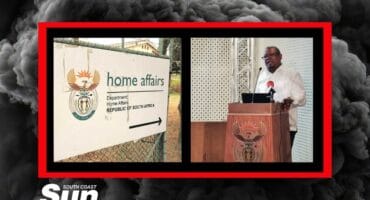
Health council rejects ethics claim against Toti bombing doctor
THE Health Professions Council of South Africa (HPCSA) will no longer pursue Afriforum’s complaint of unprofessional and unethical conduct against former surgeon general, Lt Gen Vejaynand Ramlakan and KZN MEC for health, Dr Sibongiseni Dhlomo.

“The HPCSA decision is a political decision without sound legal basis. AfriForum has asked its legal team to formulate arguments and submit it to the HPCSA to reconsider their decision. Our legal team will also be asked to look at the possibility to review the HPCSA’s decision in court, should they continue to refuse to reconsider the matter,” said CEO, Kallie Kriel.
AfriForum believes the TRC process only grants amnesty with regard to criminal and civil prosecutions, and not ethical procedures. “Section 31 of the ‘Truth and Reconciliation Act (TRC) Act’, which the HPCSA relies on in its decision, specifically refers to that evidence before the TRC which cannot be used in ‘criminal procedures’. The HPCSA cannot use this section to dodge its responsibility to look at ethical issues.
AfriForum’s complaint was laid to protect the constitutional principle of equality before the law. The HPCSA cannot act selectively regarding the conflict of the past. The protection of the principle of equality before the law cannot be bypassed by the HPCSA,” said Kriel.
Chief operations officer for the HPCSA, Adv Tshepo Boikanyo said the HPCSA is mandated to investigate all lodged complaints.
“The council has scrutinised the complaints received to establish whether it has jurisdiction as the contents of the complaints rely upon or are based on incriminating evidence that is derived directly from the questioning by the TRC, established in terms of Section 2 of the Promotion of National Unity and Reconciliation Act.
Subsection one of Section 31 of the Act compels any person who is questioned by the commission to produce any article or answer any question with regard to the subject matter of the hearing, notwithstanding the fact that the article or answer may incriminate him or her.
As a result a protection or indemnity was built into subsection 3 of Section 31 of the Act. This subsection is to the effect that any incriminating answer or information obtained or incriminating evidence directly or indirectly derived from a questioning in terms of subsection 1 shall not be admissible as evidence against the person concerned in criminal proceedings in a court of law, or before any body or institution established by or under any law. Subsection 3 of Section 31 of the Act applies to the council as the council is a body or an institution established by the Health Professions Act.
In order to prove on a balance of probabilities that Drs Dhlomo and Ramlakan are guilty of unprofessional conduct, the council will have to rely on the Commission’s transcripts. Relying on these transcripts will be a contravention of subsection 3 of Section 31 of the Act. The council will not be able to investigate and prosecute this complaint without simultaneously contravening the stated provisions of the Act.”
Read previous story here