
The decline of the honey bee
Ecological farming is the only solution for the global pollinators and agriculture crisis.
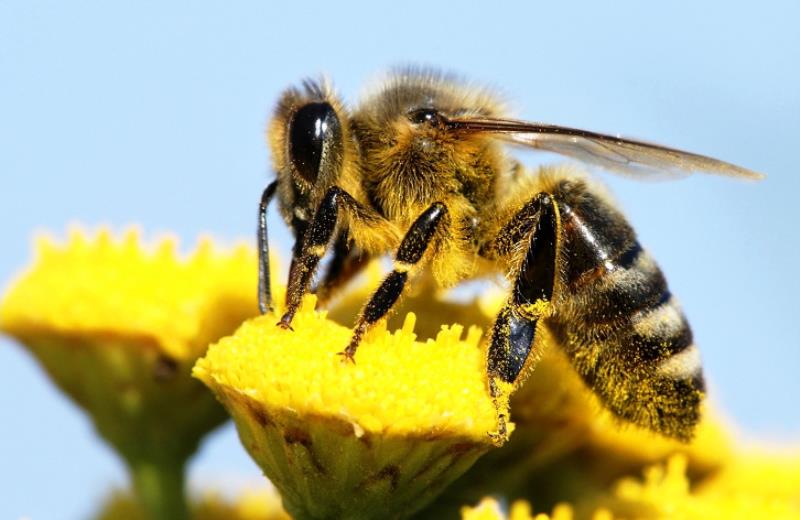
In light of today (Saturday, 15 August) being World Honey Bee Day, we focus on the decline of the honey bee and what can be done to halt its decimation.
Bees and other pollinating insects play an essential role in ecosystems.
A third of all our food depends on their pollination. A world without pollinators would be devastating for food production.
Since the late 1990s, beekeepers around the world have observed the mysterious and sudden disappearance of bees, and report unusually high rates of decline in honeybee colonies.
* 40% – Loss of commercial honeybee in the US since 2006;
* 25% – Loss of commercial honeybee in Europe since 1985;
* 45% – Loss of commercial honeybee in the UK since 2010.
Causes
Insecticides in particular pose the most direct risk to pollinators. These are chemicals designed to kill insects and they are widely applied in the environment, mostly around cropland areas.
The main reasons for global bees-decline are industrial agriculture, parasites/pathogens and climate change. The loss of biodiversity, destruction of habitat and lack of forage due to monocultures and bee-killing pesticides are particular threats for honeybees and wild pollinators.
Solution
Ecological farming is the only solution for the global pollinators and agriculture crisis.
There is an urgent need to stop chemical-intensive industrial agriculture and to shift towards ecological farming.
Ecological farming ensures healthy farming and healthy food for today and tomorrow by protecting soil, water and climate, and promotes biodiversity. It does not contaminate the environment with chemical inputs like synthetic chemical pesticides, fertilisers nor genetically engineered organisms.
Source: www.sos-bees.org