
Bird of the week – Cape canary
The flight is undulating, but less bouncing than smaller canaries.
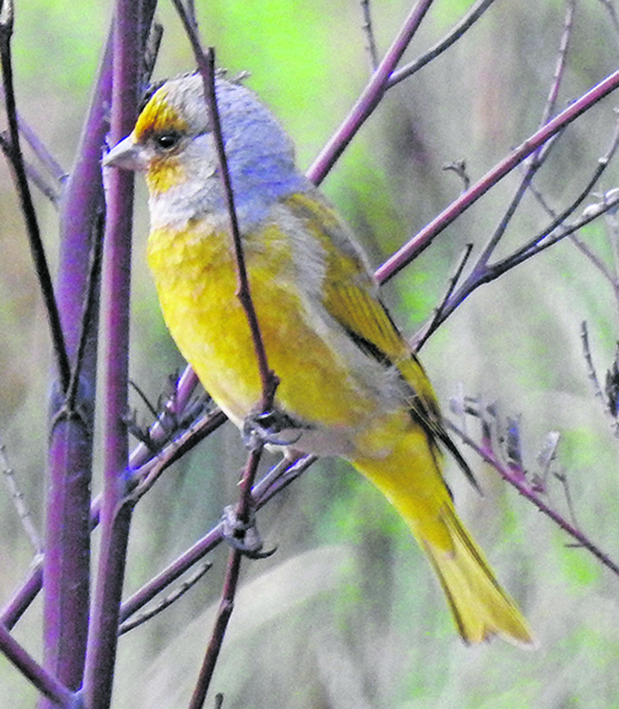
A common endemic resident from Western Cape, South Eastern Cape, the whole of KZN and Eastern Free State through to the Eastern escarpment as far as the Zoutpansberg region.
They like montane grassland, scrubby hillsides with proteas and trees. They also enjoy gardens, parks, exotic plantations and cultivated fields where they feed on seeds, buds, fallen grain, fruit and flowers.
These canaries are found in pairs or small family groups when breeding otherwise in large flocks. They forage on the ground or by perching on stems of seedling plants. The flight is undulating, but less bouncing than smaller canaries. When courting, males perform a slow winged butterfly flight.
The call is a very sweet peet, swee-eee or pee-eee. They also have a rich loud clear and fast jumble of rolling warbles, thrills and twitters often in chorus of several males in adjacent trees, much more sustained than songs of other canaries.
Breeding season is August to December. The nest is a thick walled cup of pine needles, weed stems, leaves, lichen or wool, lined with plant down, fur and feathers from one to 18 metre above the ground, built in fork or horizontal branch of bush or tree.
Three to four white or pale green spotted eggs are laid. Incubation is 12 to 16 days and nestlings from 15 to 19 days.
The Zulu name is umZwilili and in Afrikaans die kaapse kanarie.