
Bird of the week: Black stork
The black storks are generally silent, but have various tremulous whistles and croaks as well as bill clattering.
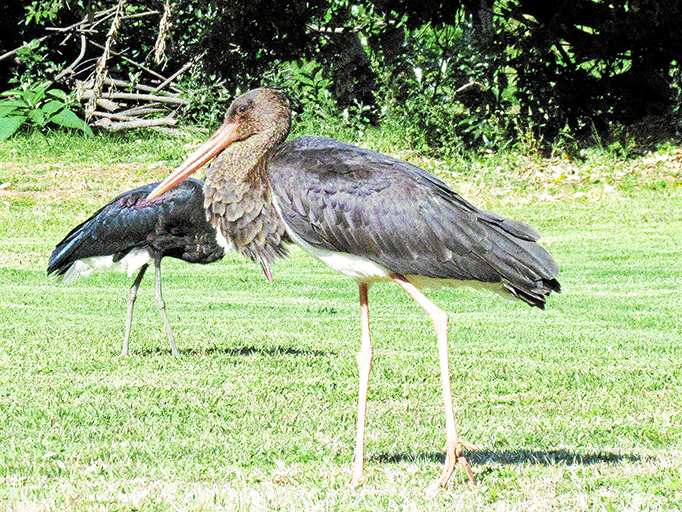
These storks are uncommon to rare and locally nomadic.
They are considered RDB (red data book) species throughout Southern Africa. They feed in and around marshes, dams, rivers and estuaries on fish, frogs, tadpoles, small mammals, nesting birds and tortoises.
Solitary or in pairs or small groups of up to 15 birds. They are gregarious only when not breeding. They forage by walking slowly in shallow water and stabbing at prey. In flight they soar while roosting in trees, cliffs or power pylons.
The black storks are generally silent, but have various tremulous whistles and croaks as well as bill clattering.
Breeding takes place in mountainous regions from May until July.
The nest is a large stick platform of about two metres diameter on cliff edge, cave or pothole and sometimes in colonies of nesting Cape griffons and bald ibises.
Usually three dull, chalky white eggs are laid. Incubation lasts from 35 to 36 days and nestlings from 63 to 71 days being fed by both parents.
The Xhosa name is Unocofu and in Afrikaans the grootswartooievaar.