
The eastern nicator makes it into this week’s bird of the week column
They are easily overlooked as they skulk in tangled and dense vegetation.
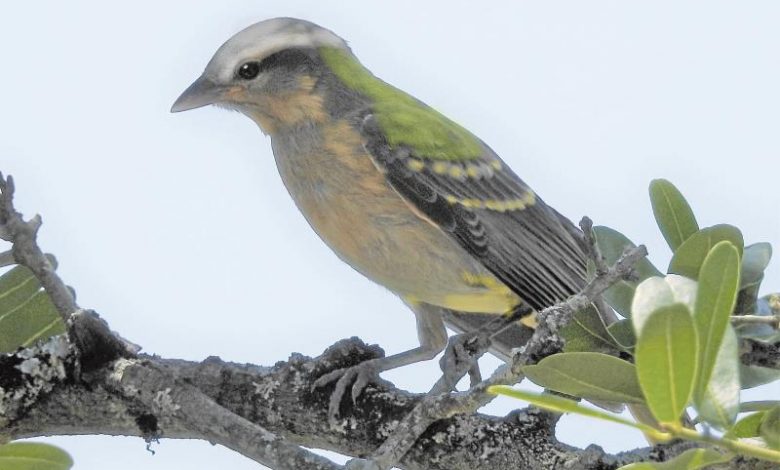
A FAIRLY common resident found from the Umfolozi River northwards throughout the lowveld of eSwatini and Mpumalanga, and all of Mozambique.
They like riverine forests, thickets in bushveld, where they feed on insects and invertebrates.
Usually solitary with females, sometimes joining mixed bird parties, but not males. They are easily overlooked as they skulk in tangled and dense vegetation. Foraging in low vegetation and on the ground, among leaf litter.
They dive for cover and flick wings when alarmed.
The nicators sing from concealed perches in upper branches of trees. The voice is a loud jumble of rich penetrating notes wip – chip – chop – rrup – chopchopchop – krrip – krrr.
Breeding season is November until January.
The nest is a shallow saucer of twigs, roots and moss, well concealed low down in the fork of a dense bush.
Usually two dull pinkish cream eggs are laid. Incubation and nestling period are unrecorded.
There is no tribal name and in Afrikaans die geelvleknikator.
DID YOU KNOW?
Click on the words highlighted in red to read more on this and related topics.
To receive news links via WhatsApp or Telegram, send an invite to 061 694 6047
The South Coast Sun is also on Facebook, Twitter, Instagram– why not join us there?
Do you have more information pertaining to this story?
Feel free to let us know by commenting on our Facebook page or you can contact our newsroom on 031 903 2341 and speak to a journalist.
(Comments posted on this issue may be used for publication in the Sun)