

Take a journey into the mindset of a drug addict
Do not assume, do not judge, make time and read their experiences and stories.
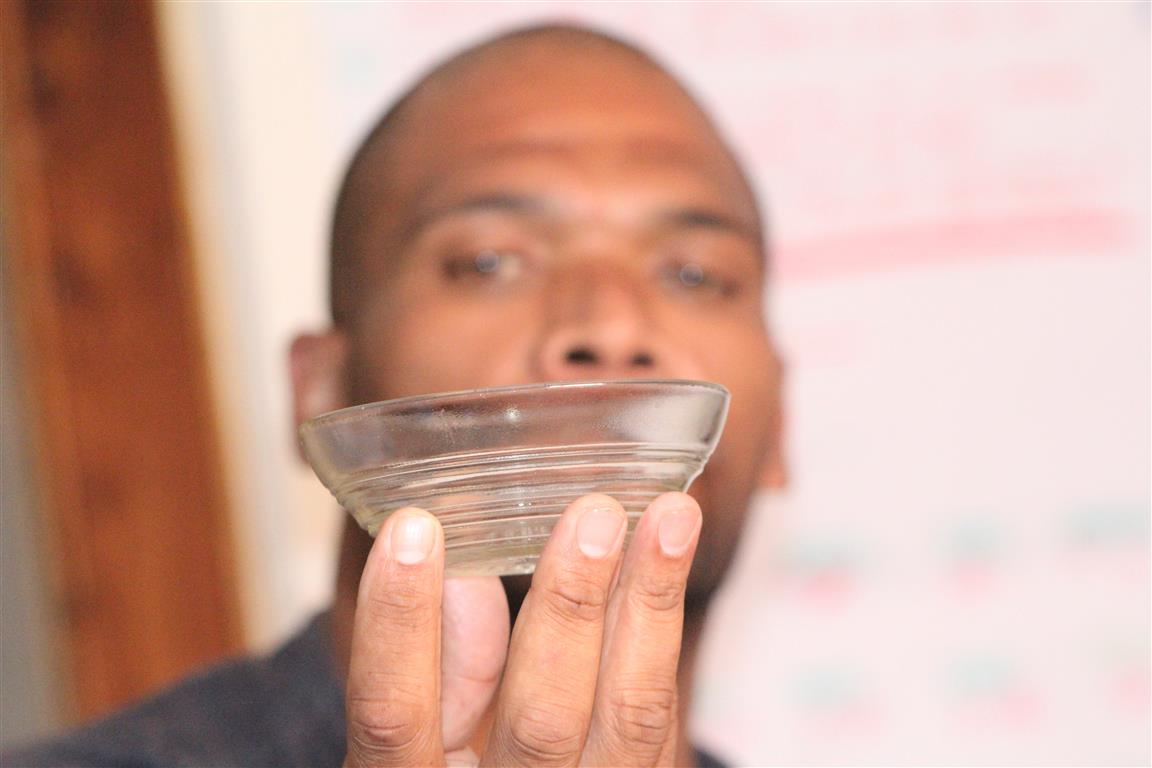
The Southern COURIER visited the Big Brother House in Forest Hill recently, on a quest to speak with graduates of the R.E.C Wellness Centre, in Robertsham – to gather insight that could help people understand what exactly happens in the mind of a drug addict.
This is the story told by a brotherhood made up of people including former government executives, businessmen, ex-small time criminals, husbands, fathers and children – people who lost it all, broke many hearts and wasted their loved ones’ money on rehabs.
Addiction madness
“Addiction makes a person do some of the craziest things ever!” said a former director at a government office. “I took home R52 000 a month, but got so hooked on drugs that I didn’t want to be around my family because they stood in the way of me getting high. I figured if I give them R15 000 a month, they would be off my back. I went from not being home for a week, to two weeks, to a month and eventually a whole two years.
“I would lock myself in the office, respond to people and the secretary via emails and just take drugs the whole day. Some of these drugs don’t make you sleep. I once went for nearly a month without sleeping; the entire time you are awake at night, all you do is clean and fix things that aren’t even broken. During that time, you eat just to meet a nutritional requirement, otherwise you’ll collapse and miss time to get high. You get to a restaurant, place an order and ask for the bathroom to quickly snort something up your nose – in all that time the substance is eating the flesh layer between your nostrils.
“The sad part is that the dealers of these drugs are right here in the South – and all kinds of drugs are available and the youth are experimenting with them. How did I get away with the habit at work?
“I was the director and the person who had to authorise drug tests; I never subjected myself and my colleagues to that,” said the changed man.
“The thing about drugs is that most addicts are sort of trying to numb something. I was a police officer and we kept taking the drugs, saying we were dealing with the job stress. You don’t see that you’re getting addicted,” said an ex-policeman.
Down and out
Going into the interview, the COURIER needed to understand what is that one thing, or that one moment, that actually makes an addict finally realise it’s time to change?
In a shocking consensus, the brothers responded: “It’s that moment when you’re down and out. That moment when the very next thing to happen is death. That moment when everyone who once cared about you, has finally shut you out.”
They believe it’s not that time when an addict is dragged to the nearest or best, or most expensive rehab. In fact, the brothers have mostly been in and out of rehab centres; in the first place, they went because someone convinced them that they needed to be clean.
“During that moment, for the first time you realise that you’re alone. And don’t get me wrong, you’ve been alone many times, high on drugs – but you didn’t even feel that you were alone, because your mind was fixed on just getting high.
“It’s the time everything hits you – that you have no one; you’re down and out. At that point in your life, you realise that you need to get your stuff together or you’re just going to die,” said a former director of a government office.
“At that point, a drug addict has already thought of suicide many times. In fact every one of my brothers in this room had suicidal thoughts during that time.
“I have in fact, poured alcohol on my body and sustained burns; and went through expensive plastic surgery procedures as a result. But before that, I’d failed to quit after being taken to some of the most expensive rehab centres – as expensive as R30 000 for just one day.
“And if there’s anything I learnt, it was that most of the patients were just like me: repeat offenders who would often fail again,” said a businessman who learnt that a person can start using drugs even at the age of 45.
Sadly, over the last couple of months, six young people – one of them a woman – who exited the programmed early before a minimum time of six months, went out to die in the streets or returned so damaged, that they could only be sent to a mental institution.
Behaviour is the biggest devil
The brothers want people to understand that the addiction of an addict is just a slice of the big problem; behaviour is the biggest devil that needs to be addressed and altered through spirituality, regardless of religion, as long as a person believes that there is a God – because that person can take on a moral compass which will install and maintain change within that person.
The brothers believe that the reason they were successful and are still successful in helping others, is because unlike most rehabs, they don’t address the addiction but the behaviour of an individual; by changing that person’s mindset.
“If you change your behaviour, you’re on the best route; because the addiction becomes a lifestyle. You’re then not getting high to be high, but to feel like you’re being yourself.
“And since it’s hard to change a person from being who they are, that’s why it’s hard to change an addict – because his or her addiction has become a lifestyle, not a choice.
That’s why the R.E.C Wellness Centre needs six months to work on the behaviour of that person – one can’t be around drug addicts or drug-using friends and think that one won’t end up using drugs,” said one of the brothers.
The brothers believe that the reason why most rehab centres didn’t help them and often fail to help other people, is because they address the addiction medically more than psychologically.
The line between confidence and arrogance is thin, the brothers warn.
Once you quit drugs, you need to maintain behavioural changes and not socialise with old drug-using friends – thinking one won’t use drugs again.
Hence they say, a rehab can administer medical intervention to make an addict feel clean and good, but that’s done nothing to that person’s mind.
Watch: A discussion on drug addiction
Cravings
“Most of us still get cravings and it’s mostly because we were addicts for most of our lives; but slowly but surely, the frequency of these cravings become less and less.”
The brothers say that cravings come and go and they can also be triggered, so much so that one could be walking and a big truck drives past – and because of the smell of the fumes, an addict may immediately crave heroin. Sometimes the body can get weak or the mouth gets wet and the taste of the drug is on the tongue, presenting a challenge to resist.
“They can also come in the form of euphoria from a dream – and you jump out of bed thinking you just used again, but it was just a crazy dream since you tasted the drug in your sleep and felt its effect on you.
“Hunger can also be a trigger because when you used to get high, you didn’t eat unless you were very hungry.
“When you are hungry you start cravings, because during the times when you waited for your fast food order, you would rush to the bathroom and take some drug; your body and mind now associate hunger and a fix,” said one of the brothers.
Addiction leads to most SA problems
The brothers say that they don’t remember a time when they were arrested, even for the smallest crimes – when drugs weren’t involved.
They believe that corporates and government should get involved and not just by providing funding, but by acknowledging that addiction leads to a lot of nationally important problems such as crime, poor health and low business investments.
They wish to see South Africa be among countries such as Singapore and UAE, which are addressing drug addiction to deal with problems related to drug abuse – problems that are a burden on the government’s resources and an obstacle in the business sector.
Honest talk
The brothers believe it’s important for them to talk to their siblings and children, because honesty is the one principle that helps them stay on the right course – since they maintained their addiction through lies and deceptions. They want most companies and families to acknowledge addiction, because they come from families and companies who were ashamed to talk openly about it.
Drugs young people are currently experimenting with
The COURIER will publish a follow-up article about substances that young people are experimenting with in the South – and how much they cost; how they get them; the type of high and of course, how those drugs then ruin their lives and future.
Let the brothers come to you
To speak to the brothers, or to invite them to speak to your company or organisation, contact Wayne Fearick on 084 316 4723; or Deon Kok on 073 843 1375; or Linda Hedley on 078 238 9377.
Small donations are accepted at Standard Bank; Account name: Phela Giving Back, Southdale branch, branch code: 006405; Account number: 003644359.
For free daily local news in the south, visit our sister newspapers Alberton Record, Comaro Chronicle, Southern Courier and Get it Joburg South Magazine.
Remember to visit our Facebook, Twitter and Instagram pages. You can also email our offices on cvdwalt@caxton.co.za, juliem@caxton.co.za or luckyt@caxton.co.za
Add us on WhatsApp today! Comaro Chronicle: 079 427 8074 and Southern Courier: 079 404 5789.