

Leading-edge stroke care secures International Gold Award for Netcare’s newest hospital
International best practices and measurements are key to improved stroke outcomes.
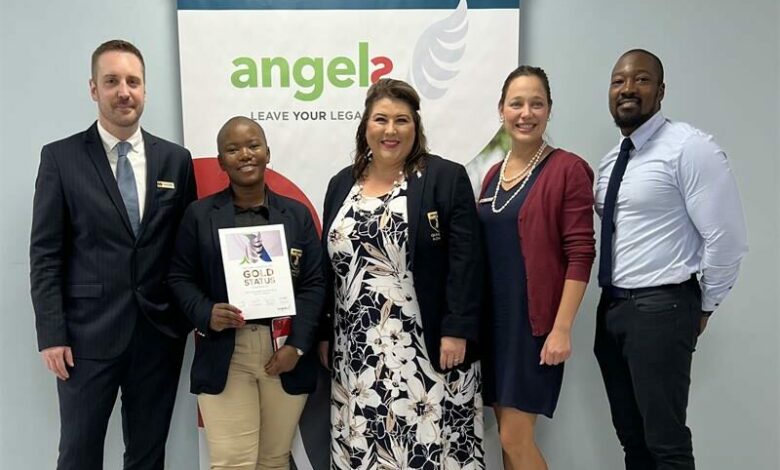
Renathe van der Merwe, the senior coordinator of the Angels Initiative South Africa, recently presented a gold award to the stroke team at Netcare Alberton Hospital’s new, purpose-built facility.
It was Richard Mulder, general manager at Netcare Alberton Hospital, who accepted the award on behalf of the stroke team. The award is given to hospitals worldwide that have created cultures and implemented systems to support continuous improvement to provide quality stroke care.
“We are honoured to be part of the globally run Angels Initiative, which is a remarkable, patient-centric intervention, dedicated to improving stroke patients’ chances of survival and living a disability-free life.
“The multidisciplinary team under the aegis of neurologist Dr David Djan, stroke coordinator Dineo Magasela and unit manager Katlego Tabana, achieved diamond status in all but one area where gold status was secured and are to be commended not only for their exceptional dedication and commitment but for the outcomes that they are achieving for their patients.
“We are proud and humbled to be the first Netcare hospital to receive this award which was achieved in just six months following the implementation of the initiative in July 2022,” he added.
The outcomes of stroke patients are improved by stroke-ready facilities
Netcare’s general manager of emergency, trauma, transplants, and CSI, Mande Toubkin, congratulated the stroke team at Netcare Alberton Hospital.
“As part of Netcare’s emergency and trauma programme, we actively participate in the RES-Q quality stroke care registry, a project that assists healthcare systems across the world to improve stroke outcomes for patients under the umbrella of the European Stroke Organisation Enhancing and Accelerating Stroke Treatment [ESO East].
“Stroke-ready facilities are of vital importance as they are equipped to provide advanced stroke interventions that can help reduce the severity of a stroke and save lives if initiated as soon as possible after the onset of a stroke. In the process they assure patients that their treatment is aligned to the highest international standards,” she noted.
“Since the inception of the Angels Initiative in 2016, an estimated 7.5 million patients have been treated in more than 6 000 hospitals worldwide while more than 1 400 new stroke-ready hospitals were established across the globe with the aid of the initiative,” said Zasskia Wiese, Netcare’s stroke programme manager.
“Improving the outcomes for stroke patients requires global collaboration and information sharing so that healthcare teams can continuously improve standards of care. The initiative involves the submission of data to an international stroke registry database (RES-Q) where it is benchmarked against some 7 320 participating hospitals worldwide.
“Data and outcomes are used to continuously monitor, evaluate and improve stroke care following strict criteria and timeframes,” said Wiese.
Urgent medical treatment can save lives and improve outcomes
Specialist neurologist Dr David Djan said more than 80 stroke patients were seen at Netcare Alberton Hospital’s stroke unit between July and December 2022 where they received seamless care underpinned by the Angels initiative.

“The multidisciplinary team, which includes a neurologist and neuro-interventionalist is supported by cardiologists, radiologists, speech therapists, physiotherapists, occupational therapists, emergency department doctors and nursing staff.
“The team confers to decide which treatment or combination of treatments are required, which may include medication to dissolve clots, a mechanical thrombectomy to remove a blood clot and restore crucial blood flow to the brain, or conservative treatments,” he noted.
“A stroke or brain attack is a vascular event, which occurs when blood flow to your brain is interrupted due to a blockage in, or rupture of, an artery in the brain thereby preventing oxygen and nutrient-rich blood from reaching your brain cells in that area, causing them to become damaged and start dying. The expression ‘Time is Brain’ is relevant – strokes require urgent medical treatment to reduce their impact.
“The sooner you receive appropriate emergency intervention and medical treatment in a hospital after the onset of a stroke, the better your chances of survival, minimising brain damage, and limiting other complications. Ideally, treatment should commence within 60 minutes following a stroke.
“As many as 85% of the strokes we see are ischemic which means they are caused by blockages. In these instances, thrombolytic therapy, which involves the use of drugs to break up or dissolve blood clots, is used. This treatment should commence between three and four and a half hours of a stroke and within a maximum of six hours,” added Djan.
“Nowadays much can be done to prevent a stroke and, with appropriate treatment and rehabilitation, limit its long-term effects. Some people recover fully from a stroke.
“Without specialised treatment, a stroke may, however, be debilitating and limit your ability to function normally again. This may also have a serious impact on your loved ones’ lives. We are glad to be of service to our patients in what is a dynamic environment where the more we do the better we get,” he noted.
Netcare hospitals fulfilling the requirements of stroke-ready units, all of which have an international set of measures in place, backed by the necessary systems, expertise and technology, include Netcare Milpark Hospital and Netcare Sunninghill Hospital in Johannesburg, Netcare Unitas Hospital in Centurion, Netcare uMhlanga Hospital in KwaZulu-Natal and Netcare N1 City in Cape Town.