
City apologises for the disruption and inconvenience caused by water shortages
The medium-term measure over the next two years is a R402m investment.
City of Joburg Executive Mayor Thapelo Amad and the MMC for Environment and Infrastructure Service Department, Jack Sekwaila, briefed the media on water service interruptions in the City of Joburg on March 26.
They were joined by Johannesburg Water managing director Ntshavheni Mukwevho.
A pump failure at the Eikenhof pump station in the early hours of March 20 resulted in critically low levels of water at several reservoirs across the city. This affected the Commando System that supplies water to the Brixton, Crosby and Hursthill reservoirs. This further affects the pumping capacity to the Forest Hill and Crown Garden reservoirs.
Sekwaila said Amad asked him to join him and reassure the residents that the leadership of the City of Johannesburg is taking this matter seriously and regards it as a priority to ensure water flows uninterrupted to the taps of our residents across the city.
Also, he requested Mukwevho to join him to collectively give residents hope that the full water supply was restored.
“Johannesburg Water’s system has been under immense pressure in the past 10 weeks due to Rand Water experiencing various failures on its bulk infrastructure. The City of Johannesburg is supplied from the Eikenhof, Zwartkopjes and Palmiet booster stations which were affected by frequent power failures, vandalism to its infrastructure, and planned infrastructure maintenance work which contributed to the low or empty supply of water in various areas across the city.
“Eikenhof, which supplies portions of the south of Johannesburg, west of Johannesburg, Randburg, Roodepoort and Soweto, was affected by frequent power failures. Zwartkopjes, which supplies the central and northern parts of Johannesburg, was affected by vandalism and power failures. Palmiet, which supplies portions of the south of Johannesburg, east of Johannesburg, Sandton, Midrand and Diepsloot, was affected by frequent power failures and vandalism,” he said.
He said they have noted with concern and sympathy the mounting frustrations from the residents and take this opportunity to apologise for the disruption to their daily lives and the inconvenience this has caused.
The delivery of good-quality water and sanitation services, which should be accessible to all, remained their main priority to the residents of Johannesburg.
“Johannesburg Water is working hard to get our water systems back on track and to stabilise the system. We will continue to supply residents with water via mobile water tankers and stationery tanks located in various strategic areas. The aim is to prioritise medical facilities, schools, old age homes, and then residential areas.
We have deployed 28 roaming water tankers and 12 stationary water tankers to areas affected by the Eikenhof system pump failure – Robertsham, Booysens, Crosby, Melville, and Crown Garden Clinic, to name a few.
We are working closely with the ward councillors in all affected areas to assist us in identifying a central area where we can deploy our stationary and roaming tankers,” he said.
The reservoir and towers are being recovered in that pumping into the towers started again on March 25, and the reservoir was opened at 50%. Robertsham, Ormonde and the surrounding areas were the most affected.
Johannesburg Water has a dedicated team that will regularly inspect and crack down on illegal connections to deal with theft and the loss of assets.
“While we continue to deal with these challenges and ensure taps do not run dry, let us ensure that we conserve water in our communities, and report irresponsible use of water and illegal connections. Johannesburg Water will implement the medium-term measures (over the next two years) within the Commando Supply System to ensure the sustainability of the water supply – a R402m investment,” he said.
Johannesburg Water will also invest in the following programmes:
1. Reservoir storage upgrades.
2. Water pipe replacement in various regions.
3. Water conservation (WC) and water demand management (WDM), which will include repairs of the leaking reservoirs and tower infrastructure. The WC/WDM strategy aims to reduce demand by 37 123Ml per annum from the technical interventions. WC initiatives will contribute to further demand reduction.
4. Bulk pipe renewal/ upgrades.
Johannesburg Water continues to have a big task of supplying 1.6b litres of potable water a day, procured from Rand Water through a water distribution network of 12 369km, 128 reservoirs and water towers and 37 water pump stations.
“We want our operations to normalise and to fulfil this mandate. We are here to serve you, the residents of Johannesburg,” noted Sekwaila.
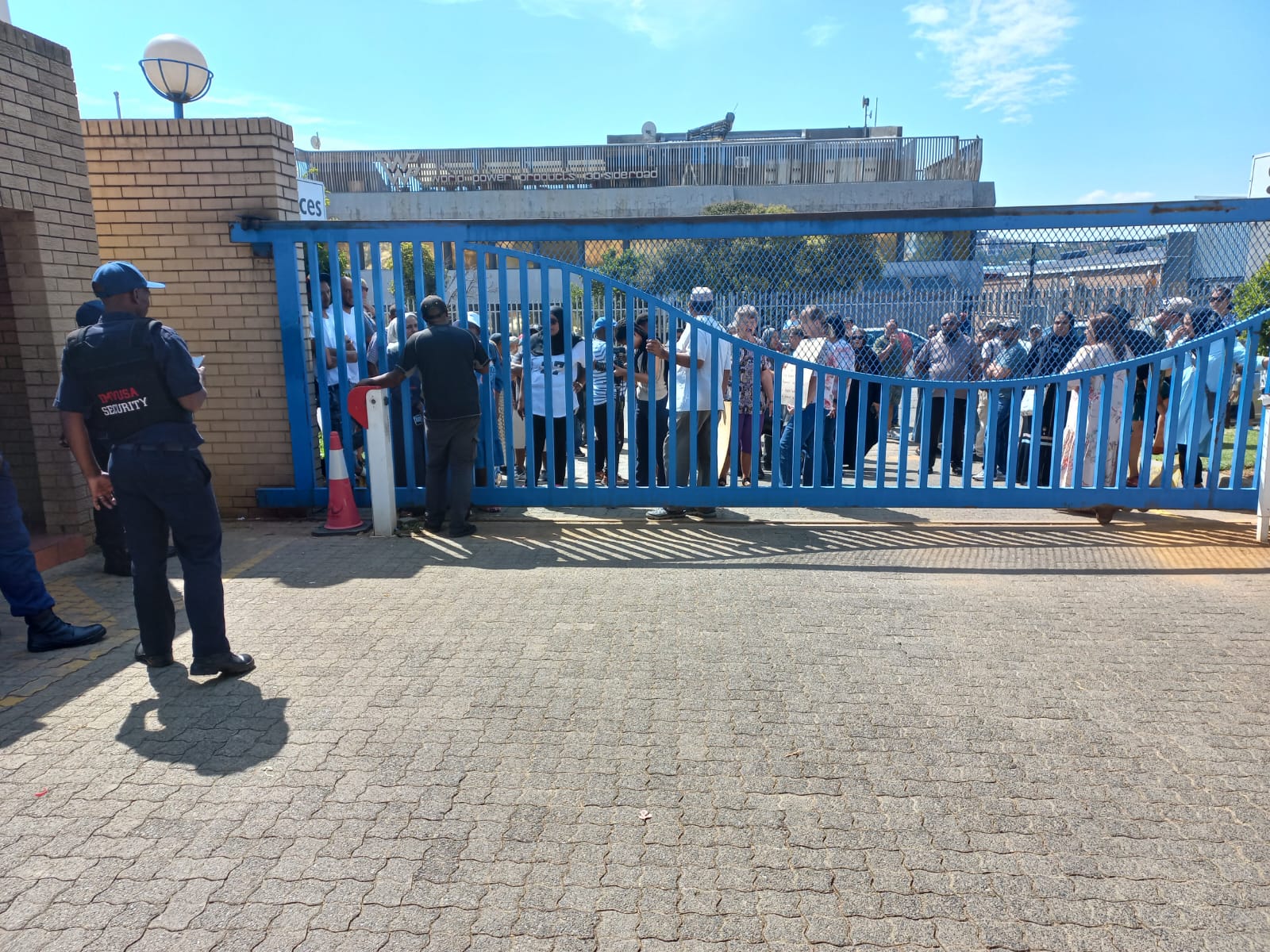
WATCH: “We want water” – Joburg south residents up in arms outside Joburg Water