
Women with disabilities still shut out of jobs despite Women’s Month celebrations
While tributes pour in for South Africa’s female leaders this Women’s Month, thousands of women with disabilities remain marginalised, battling discrimination, inaccessibility, and a job market that refuses to open its doors.
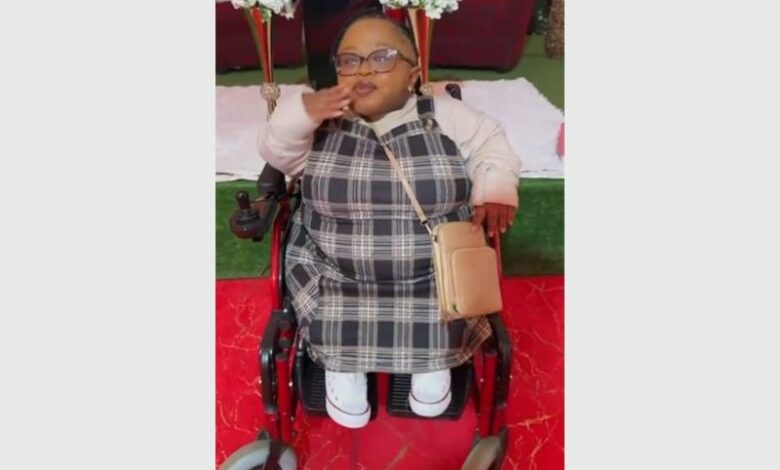
As South Africa marks Women’s Month with tributes to trailblazing leaders, entrepreneurs, and historical icons, one group continues to be overlooked: women with disabilities are still left knocking on doors that remain firmly shut.
Lungi Mkwani, 27, from a small township on the outskirts of Johannesburg, wakes up every morning to repeat the same routine: search, apply and hope.
Despite holding a qualification in Public Relations (N4), call centre training, and experience in business and office administration, Mkwani has struggled to find stable employment, not due to a lack of skills, but because she lives with Osteogenesis Imperfecta, commonly known as brittle bone disease.
“Living with a disability as a woman in South Africa is challenging. Most of our cries are rarely heard,” she said.
After volunteering at a local police station between 2022 and 2023, Mkwani hoped the experience would open the door to full-time employment. Instead, she was turned away.
“They used my disability as an excuse not to employ me. We’re always told, ‘We encourage persons with disabilities to apply,’ but the follow-through never happens,” Mkwani said.
According to Mkwani, many job opportunities for people with disabilities are limited to short-term learnerships, often with age restrictions and inadequate accessibility.
“These programmes only last 12 months, and once you’re over 28, you’re pushed out. Some buildings still have stairs, others don’t cater for people who are blind or deaf or have other specific needs,” she added.
Double disadvantage
Lana Roy, Programme Lead for 360: Disability Inclusion at Afrika Tikkun, said that Mkwani’s story is not unique and reflects a wider, systemic issue affecting thousands of women across South Africa.
“Women with disabilities face a double burden: gender and disability discrimination. They’re often the last considered and the first ignored,” said Roy.
Roy noted that when women with disabilities do secure employment, they are rarely offered leadership roles.
“Access and safety at work are major concerns, from restrooms and transportation to being taken seriously in male-dominated environments. They’re also more vulnerable to discrimination, exploitation, and gender-based violence, not because of their impairments, but because of how society responds to them,” Roy said.
Afrika Tikkun, which supports more than 1 200 children and young people with disabilities, runs a range of programmes from early childhood development to vocational training, work placements, and advocacy initiatives.
But Roy said that systemic change is still urgently needed.
A call for accountability
Roy said that from a policy standpoint, there needs to be far stronger enforcement of inclusive hiring practices.
“Inclusion shouldn’t be seen as charity or a box-ticking exercise for BBBEE points, but as a responsibility,” Roy argued.
She added that one of the greatest issues is that discussions around disability often exclude the voices of disabled people themselves.
We often speak about them, not with them. We must prioritise lived experience. The mantra ‘Nothing for us, without us’ exists for a reason,” she said.
Roy warns that the widespread belief that disability equates to incapacity remains a major barrier.
Investing in inclusion
At the organisation, the disability inclusion team, made up of administrators, therapists, social workers, and nursing staff, works to ensure every child or young person in their care is included in cradle-to-career programmes.
Children and youth with disabilities are engaged in everything from Saturday dance and acting classes to after-school learnerships in hospitality, farming, and vocational training.
Afrika Tikkun also runs weekly support groups and an annual Disability Pageant to foster confidence and visibility.
The organisation partners with families, schools, and communities to create an ecosystem of support and works closely with government departments to drive policy alignment and implementation.
The road ahead
Next month, Afrika Tikkun will host the Valuable 500 Summit, a landmark event bringing together government officials, corporate leaders, and civil society to tackle leadership, representation, and accountability around disability inclusion in the workplace.
“It’s about job creation for people with disabilities, especially young women. They’re often viewed as too vulnerable, too emotional, and too complicated. But these are not reasons; they are excuses rooted in bias,” Roy said.
Mkwani echoes the call for action.
“We want to work. We want to contribute. We want to be seen as capable. I don’t want to be a statistic but I just want a fair chance,” Mkwani expressed.
As South Africa continues to celebrate women during this month of reflection and recognition, it’s time to widen the spotlight to include those whose stories remain untold and whose potential remains untapped.
For more information on Afrika Tikkun’s disability programmes or the upcoming Valuable 500 Summit, visit www.afrikatikkun.org