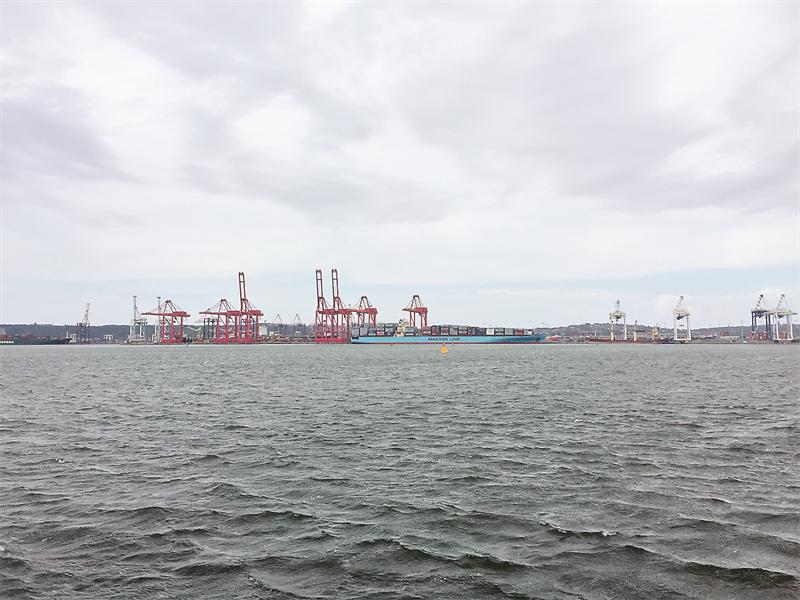
IN an effort to cater for bigger shipping vessels, the Transnet National Ports Authority’s (TNPA) dredging programme is in full swing, with half the Durban Container Terminal berths back to their original permissible draught.
“The vessels calling at our ports have gotten bigger and therefore require deeper draughts. But they also cause challenges for ports because of the manner in which they more aggressively displace material from the sea bed, thus causing shallow spots. Shallower berths can cut into the vessel payloads of ship owners because it means they cannot sail into the port with their vessels fully laden and have to wait for high tide to sail or berth,” said Durban port manager, Moshe Motlohi.
The permissible draught is the vertical distance between the sea bottom and the lowest part of the ship’s underside. According to the TNPA, four of the eight container berths at Durban Container Terminal (107, 200, 202 and 205) are back to their original permissible draught of 12.2 metres, while Berth P at the Point Terminal, Berth MW9 at Maydon Wharf Terminal and bulk Berth BCA 4 in Island View are back to 10.3m, 9.3m and 10m respectively.
“Ultimately the safety of vessels must take priority for us as TNPA, which is why the harbour master took the safety precaution to review the permissible draughts of some berths earlier this year.”
Plans are underway to continue the extensive dredging plan, with more dredgers being called into service at a later date.
The long-term plan, expected to start next year, is for the berths to be able to handle the megaships now in use. Along with deepening, the berths will be lengthened to allow three big vessels to be berthed, compared to the current two.