WATCH: Residents unhappy with Wentworth refurbishment project
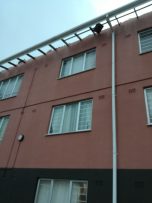
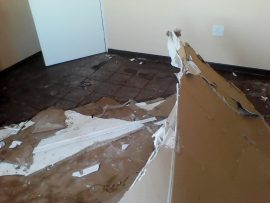
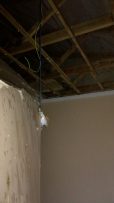
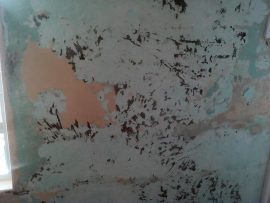
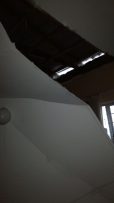
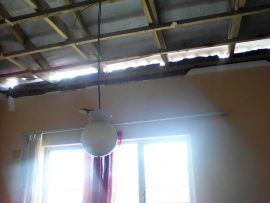
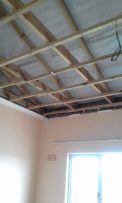
Caved-in roofs, cracked walls, improperly installed geysers and electrical faults are the most common issues the residents highlighted.
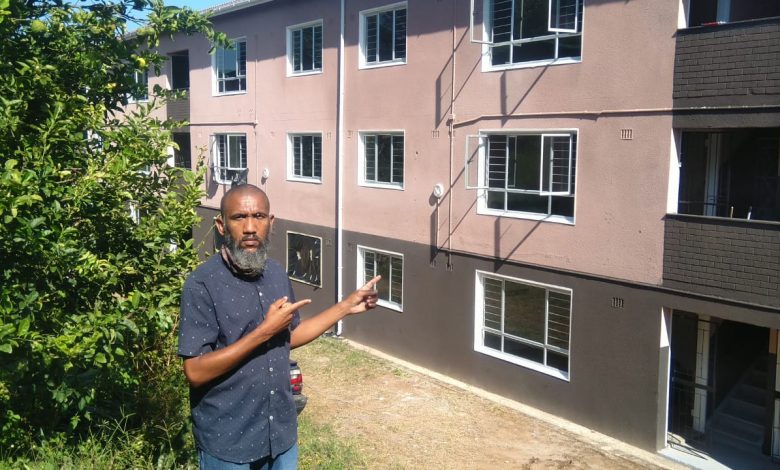
WENTWORTH’S refurbishment project has allegedly caused residents more harm than good.
Initiated more than 10 years ago, a number of residents said they have had enough of the shoddy workmanship and are calling for the project to be halted until matters are resolved.
Caved-in roofs, cracked walls, improperly installed geysers and electrical faults are the most common issues highlighted by the residents.
Spokesperson for the aggrieved residents, Marlon Nero, said they’ve had to endure decade-old problems that the residents had to pay for even though the government had already fit the bill.
“Prior to the renovations, the residents said they had not experienced the problems they are dealing with now. Some of the flats are in a worse condition than before but there was a budget that was spent to renovate the flats. Most issues are with plug points, voided geysers and cracks on the walls,” he said.
Nero said four years ago the situation was dire for a few families when their roof caved in. This occurred less than a year after they’d moved back into their refurbished homes.
“This was during the terrible storm in 2017. The same residents who endured that now have birds in their ceilings and when they die, attract maggots. These then trickle down into their home and sometimes inside light bulbs.
“Because of the incorrectly installed geysers, residents have had to incur the costs to either replace or buy geyser buckets. The contractor who is supposed to be still there to give them their warranty and report backs on the issues they’re having has since been taken out of the picture. A new contractor was put in place. The residents are in a situation where they have no geyser nor warranty, so for the rest of their days, they are going to have to boil water,” he said.
However, the project steering committee’s (PSC) chairman, Dr Desmond D’Sa, there is a process in place to deal with complaints and protocol should be followed.
“As a leader, the block of flats I stay in will get done last. When we talk about marching and fighting for flats, it’s me. I’ve been there from the beginning and it has been over 35 years of working in the community. Each block of flats has its own paperwork which includes minutes, stakeholder registers and housing policies. I have all these documents and letters to prove it,” he said.
He said before residents move out of their flats, etiquette meetings are held. Then residents have their say on what they want specifically done in their homes.
After that, documents are signed and the PSC ensures that the decanting units are clean before residents move in.
“We have meetings regularly and don’t take our mandates from any organisations but the people who live in the flats. Ninety per cent of those people, if they say want their homes refurbished, irrespective of one person, we go ahead.
“Majority rules because this project was built on the understanding that people in Wentworth wanted the development. This is the only community that got R140 million towards improving their houses and they already have houses. It’s not as if they’re building new houses for people, they already have them. You can’t go to a project and say shoddy workmanship when the flat is not completed,” he said.
Dr D’Sa added that the project will be finalised once stakeholders have done follow-ups to check the work standard. He pleads to residents to make complaints at the completion of the project.
“I’m not going to get the government to stop the project because the money will not be used and it’ll go back to the treasury or elsewhere. It will not be kept in Wentworth and my job is to make sure that people get the money.
“I fight with the government all the time, but there is a time to acknowledge when people are doing good. I’m not saying the government does right in all they do but if they’re trying give them the credit that is due,” he said.
Media liaison for the office of the MEC for Human Settlements and Public Works, Mbulelo Baloyi, said the block of flats was still under construction therefore it is a work-in-progress. He said the project is a 40 per cent local contract that is held with the main contractor and makes provisions for the engagement of locally based contractors.
Forty per cent local contract:
“The contract held with the main contractor makes provisions for the engagement of locally based contractors who possess the necessary skills and aptitude including compliance requirements for government-related work.
“Since the commencement of the project, the implementing agent in consultation with the PSC has placed adverts in the local media inviting service providers to submit a company profile for consideration for work on the project.
“To date, the response was very poor since most of the applications received were not compliant in terms of government SCM requirements or are requesting rates higher than the tendered amount. Since the beginning of 2021, the PSC and the implementing agent have been holding meetings to ensure that 40 per cent of the work on this project is made available to local contractors.
“At a meeting held on Thursday, 11 March, between the PSC and the implementing agent it was resolved that a list of local contractors together with their profiles be submitted by no later than Friday, 19 March for consideration.
“A list of 68 contracts was submitted to the Department of Public Works and Infrastructure (DoPW) on Friday, 26 March, and is currently being assessed for compliance in terms of supply chain management (SCM) requirements.”
Very high electricity bills:
“Some tenants came back home after their units were refurbished only to receive very high light bills. Electrical meter readings are taken before the tenant moves out of the unit and are verified after the tenant returns to the unit by the social facilitator.
“Any claims of usage is usually reported to the contractor who is responsible to reimburse the occupant if there is a variance in the readings recorded.”
Clerk of works VS appointed community liaison officer:
“A clerk of works is not warranted on this project since the project is managed by the Department of Public Works and Oxygen Solutions as the project manager and there is no allowance on the project cost for the provision of a clerk of works.
“A community liaison officer (CLO) is employed on all projects who is a local person whose responsibility is primarily to facilitate communication between the residents, the contractor and the project team. It must be noted that all Covid-19 protocols are being observed on the project and a safety officer who is part of the project ensures compliance thereof.”
Roles and responsibilities of the PSC and their shortcomings:
“The PSC comprises of various persons from the respective blocks who were elected to serve on this committee and it is chaired by Dr Desmond D’Sa from the community.
“A social compact agreement has been concluded with the members of the PSC, the ward councillor, the impact assessment, the project management team and the Division of Occupational Health and Safety (DoHS) which stipulates the roles and responsibilities of the PSC and the other stakeholders on this project.
“With regard to the shortcomings of the PSC and the project overall, this must be lodged with the ward councillor so that it can be ventilated at the monthly project stakeholders’ meeting. In respect of the snags – a list of all outstanding snags on all the refurbished units, to date, have been compiled by the chairperson of the PSC and was submitted to the project team. The attendance of the snags and the progress thereof is being monitored and reported monthly at the project stakeholders’ meeting,” Baloyi said.
Nero urged affected residents to get in touch with him via WhatsApp on 074-443-8222 or email austervillerectification@gmail.com.
PICTURES