Community voices concerns at School Safety Imbizo
Eldorado Park stakeholders demand action on school violence and substance abuse.

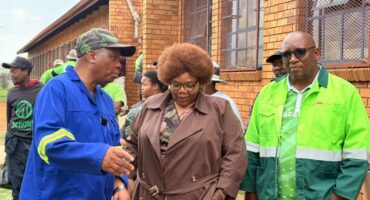
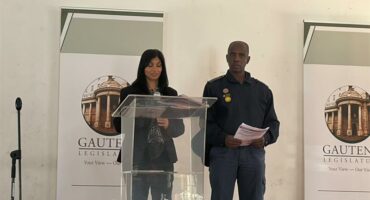
The recent School Safety Imbizo (SSI) meeting at St Ives Primary School, in Klipspruit West, brought together concerned parents, government officials and learners to discuss pressing crime issues affecting Gauteng schools, on November 2.
The meeting provided a platform for individuals to share their experiences and propose solutions to combat crime and violence in schools.
Eldorado Park is well known for its unsafe schools affected by gangs that directly and indirectly influence learners to carry weapons like guns and knives, and perpetrate violence and bullying.
Gauteng Education, Sport, Arts, and Culture MEC Matome Chiloane has reaffirmed his commitment to addressing the pressing issue of school safety in the province.
ALSO READ: Sowetans urged to take part in Community-Based Planning sessions
Speaking at an imbizo attended by various stakeholders, including the provincial commissioner of police, school governing body and schooler transport associations, principals, teachers, and parents, Chiloane emphasized the need for collective action to protect schools from the social challenges impacting communities.
“Our schools are reflections of the communities surrounding them. What occurs in these communities inevitably influences what happens within our schools,” Chiloane said.
“We must recognise that issues like violence and substance abuse cannot coexist with a healthy, conducive environment for learning and teaching.”
Chiloane highlighted the department’s efforts to secure schools, including securing access, search and seizures, deploying security guards, and partnering with community structures and law enforcement agencies.
Despite these interventions, he acknowledged that incidents of violence, bullying, arson, vandalism, and substance abuse continue to plague schools.
“We need to develop multifaceted approaches that consider issues in the community. We must create a buffer and a protective hedge around our schools.”.
ALSO READ: Partnerships brings food donations to Eldos community
The MEC outlined various challenges, including:
• Insufficient community and parental involvement.
• Inadequate implementation of school safety policies.
• High prevalence of gangsterism.
• Inactive School Governing Body substructures.
• Inadequate education and training programmes.
• High rates of substance abuse.
• Lack of confidence in SAPS.
Concerns raised by parents and stakeholders
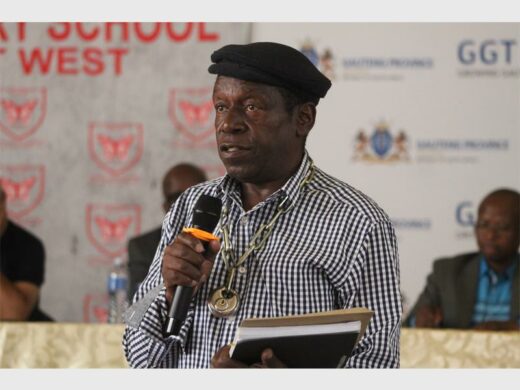
Miles Bhudu, acting secretary of the Greater Eldorado Park Steering Committee, introduced the committee to Chiloane, explaining that it formed in response to the erection of mobile classrooms at Kliptown Primary School without public participation.
Bhudu emphasized that school issues like gang violence, bullying, substance abuse and dropouts are not solely due to lack of resources, but also human, financial, managerial and infrastructural support.
ALSO READ: Community outraged over the brutal death of young Deipkloof mother
He criticised the department for returning half a billion rand to the treasury, suggesting it should have been used to address school challenges.
Bhudu submitted a funding proposal tackling anti-gangsterism, bullying, substance abuse and more, urging the department to create dedicated desks for school governing bodies, transport, parents, learners and unions.
The challenge of learner discipline and mental health
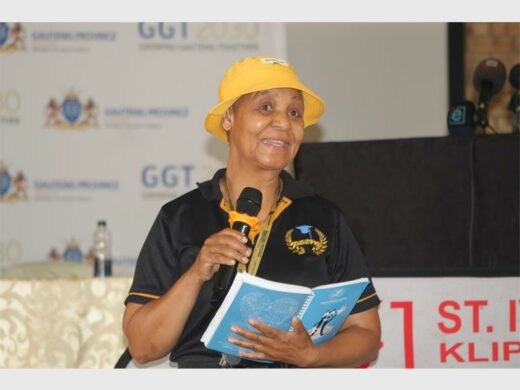
Lucy Mufubetsoana, a member of the National Gardener’s Association and former School Governing Body (SGB) member, highlighted the challenge of learner discipline.
She noted that learner discipline is a big challenge, adding that some learners have mental issues based on the treatment or abuse by their parents.
Mufubetsoana stressed the importance of addressing these underlying issues to prevent unruly behavior in schools.
She also emphasized the need for teachers to be trained to identify and support learners with mental health issues.
Support for SGBs
Victor Maimela, a member of the SGB, expressed frustration with the lack of support for School Governing Bodies.
He called out the Department for undermining them, citing the importance of stakeholders taking SGBs seriously and providing necessary support to enable them to effectively govern schools.
He said the department promised to hold quarterly meetings with the SGB but it never materialised.
Maimela urged the stakeholder meeting, particularly the SGB and association, to address this matter.
“As stakeholders, we have the right to participate in school leadership through the SGB, as enacted by the South African Schools Act of 1996,” he added.
ALSO READ: Community left devastated at the memorial service of five Naledi children
“The SGB’s role is crucial in school governance, and their leadership style and framework can drive the school’s ethos and culture. We request that the SGB provide a report on their activities, as required by law, at least once a year,” Maimela concluded.
Addressing dyslexia and mental health in schools
Tshepiso Molifi, an SGB member from Willow Crescent Secondary School, echoed the sentiments of previous speakers, highlighting the need to address mental health issues, particularly dyslexia.
“Most of these learners that are problematic in schools cannot read and write. They end up becoming bullies or finding activity outside of academics.”
Molifi emphasized the importance of providing proper support and accommodation for learners with dyslexia, citing the example of successful dyslexic individuals, including billionaires.
MMC gives feedback after listening to stakeholders concerns
The MMC’s remarks demonstrate a deep understanding of the complexities surrounding school safety and discipline.
By emphasizing the importance of parental involvement, community engagement, and decisive discipline, the MMC has outlined a comprehensive approach to addressing the challenges facing schools.
The recognition of the need for social workers and psychiatrists in schools is particularly noteworthy, as is the commitment to exploring alternative solutions to corporal punishment.
However, the MMC’s assertion that “we care about our children, and they are my responsibility” rings hollow for some, who argue that actions speak louder than words.
The proof of the MMC’s commitment will lie in the implementation of tangible measures to address the concerns raised by stakeholders.
Ultimately, the success of these initiatives will depend on the collaborative efforts of parents, educators, law enforcement, and the community at large.
The MMC’s call to action is a step in the right direction but sustained engagement and accountability will be crucial in driving meaningful change.