
Solar power growth signals shift in South Africa’s energy landscape
South Africa’s growing demand for solar power is reshaping the country’s energy landscape, with households and businesses increasingly viewing renewable energy as a long-term investment.
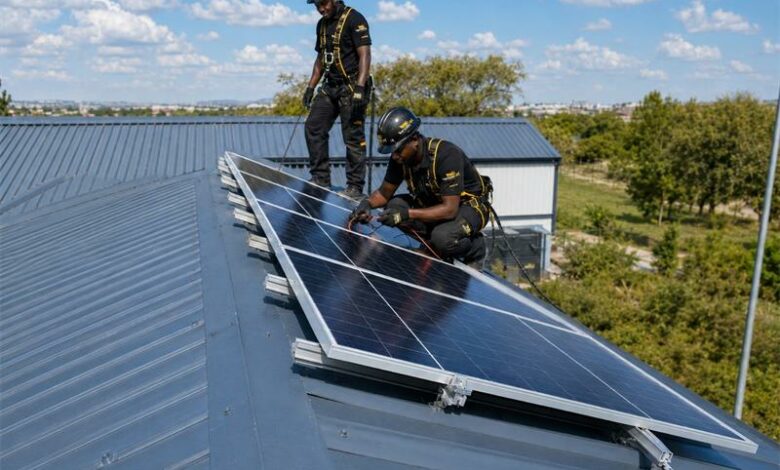
South Africa’s solar energy sector is experiencing significant growth as households and businesses increasingly turn to renewable energy, signalling a shift in how the country approaches electricity generation, energy security and long-term costs.
The expansion comes as consumers move beyond viewing solar power as simply a response to load-shedding, with growing interest in energy independence, electricity cost management and a more reliable power supply.
According to figures cited by the South African Photovoltaic Industry Association (SAPVIA), the country’s installed solar photovoltaic (PV) capacity surpassed 10.12GW during the 2025/26 financial year, representing annual growth of approximately 19%.
The figures highlight the expanding role of solar energy in South Africa’s electricity landscape and the growing contribution of privately installed renewable energy systems.
ALSO READ: Solar lights handed over to Pimville schools ahead of exams
SAPVIA, which represents the interests of South Africa’s photovoltaic industry, is an important industry voice as the country’s solar market continues to develop.
Its figures provide an indication of the scale of growth within the photovoltaic industry.
Meanwhile, government household survey figures cited in industry commentary indicate that approximately 675 000 South African households had installed solar panels by 2025.
Townships such as Soweto have reportedly also experienced significant growth in solar installations.
Together, these developments point to a changing energy market in which households and businesses are increasingly exploring alternatives to relying entirely on conventional electricity supplies.
Marius Rudolph, founder of Your Solar SA, believes the market is entering a new phase in which consumers are becoming more informed about the financial and practical implications of installing solar systems.
According to Rudolph, demand is increasingly being driven by the desire for predictable electricity costs, greater energy security and the ability to generate and store electricity for use when needed.
“People are becoming far more informed about solar. They want to understand what an installation can mean for their monthly electricity expenses, how much independence it can offer them and what the long-term benefits are,” Rudolph said.
South Africa’s electricity landscape has created conditions in which energy independence has become an increasingly important consideration for households and businesses.
ALSO READ: Users of solar energy urged to register before March 31
Unpredictable electricity expenses, rising operating costs and concerns about the reliability of electricity supplies have encouraged consumers to explore alternative energy sources.
Solar installations, particularly when combined with appropriately sized battery storage systems, can allow households and businesses to generate electricity and store excess energy for later use.
However, the effectiveness of these systems depends on several factors, including electricity consumption, roof orientation, available space, battery capacity and individual energy requirements.
Rudolph cautioned that solar should not be viewed as a one-size-fits-all solution.
He said installations needed to be assessed according to each property’s specific requirements, with appropriate system design and technical expertise playing an important role in determining performance.
As the solar market becomes more competitive, installation quality and after-sales support are becoming increasingly important considerations.
Rudolph believes consumers should pay closer attention to the equipment being installed, the technical capabilities of installation teams, workmanship, warranties and the availability of support after a project has been completed.
He said greater emphasis should be placed on consumer education and responsible service delivery, particularly as more households enter the solar market.
ALSO READ: Diepkloof residents learn about solar energy
The growing number of suppliers and installation companies has also made it increasingly important for consumers to understand the differences between systems and the services being offered.
For homeowners, this means considering more than the initial installation cost.
System performance, long-term reliability, maintenance requirements and equipment suitability all contribute to the overall value of an installation.
Despite the industry’s expansion, the transition towards decentralised energy generation is not without obstacles.
The upfront cost of solar installations remains a significant barrier for many households, particularly those unable to finance the initial investment.
Municipal registration requirements, grid connections and system compliance can also present additional administrative challenges for consumers.
As more households and businesses generate their own electricity, questions about grid integration, municipal regulations and the relationship between private generation and the national electricity supply are likely to become increasingly important.
These challenges highlight the need for clear information, consistent standards and appropriate technical guidance as the market continues to expand.
The growth reflected in SAPVIA’s reported installed capacity figures points to the increasing significance of photovoltaic energy in South Africa.
With installed capacity exceeding 10GW, solar power has become an important part of the country’s evolving energy mix.
The reported annual growth of approximately 19% also illustrates the pace at which the sector is expanding.
However, continued growth will depend on more than the installation of additional solar panels.
Affordability, technical standards, responsible installation practices, consumer awareness and the regulatory environment will all influence the industry’s long-term development.
Rudolph believes the next phase of the sector’s development will depend on technical expertise, customer education and systems designed around individual energy requirements.
“Solar is not just a trend that emerged because of load-shedding. It is part of a much bigger change in how the world produces and consumes energy,” he said.
As South Africa’s solar industry continues to expand, SAPVIA’s figures offer an important measure of the transformation taking place.
The broader challenge will be ensuring that this growth translates into a more accessible, reliable and sustainable electricity supply for households and businesses across the country.